The Silicon Shield: Why IBM and Anthropic Are Digging In for an AI Arms Race
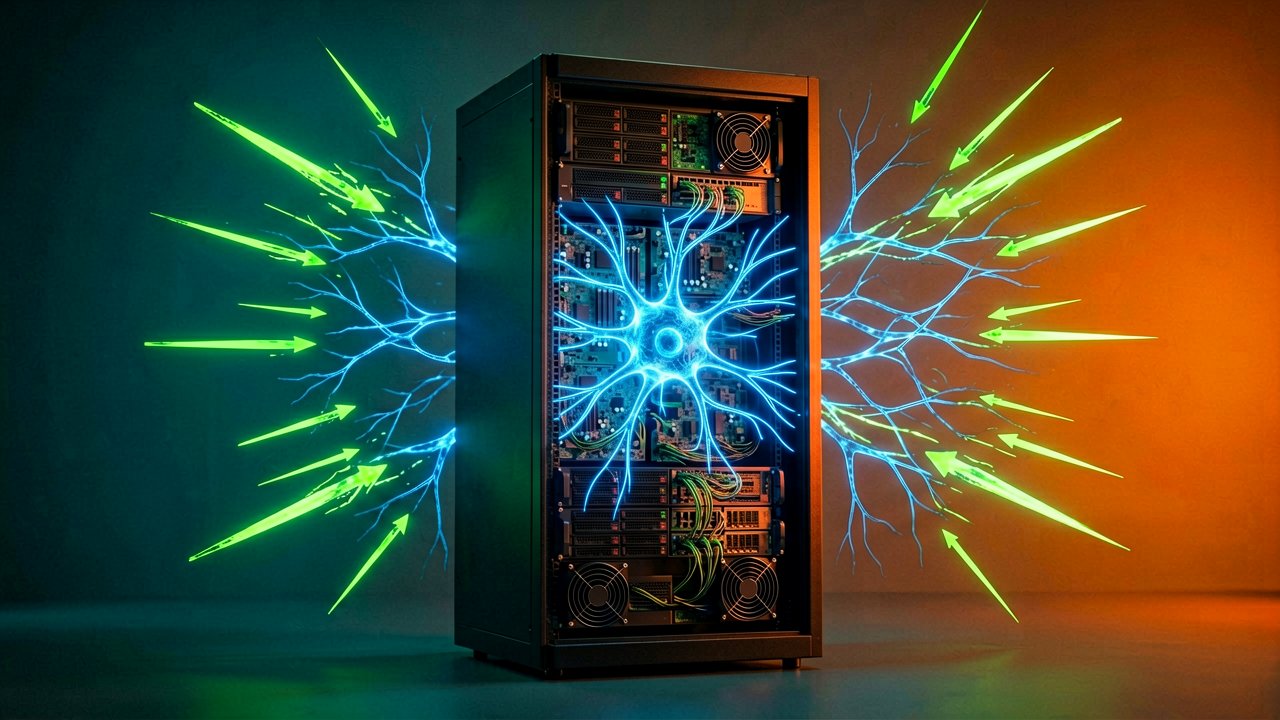
In a world where state-sponsored hackers are increasingly letting "agentic" AI do the heavy lifting, the partnership between IBM and Anthropic isn't just another corporate handshake—it’s a defensive bunker. By integrating Anthropic’s Claude models into IBM’s massive security portfolio, the two giants are betting that "good" AI can patch holes faster than "bad" AI can find them. This isn't theoretical, either; recent data from IBM Newsroom highlights a shift toward autonomous security services designed to counter threat actors who have already weaponized large language models for modular, automated intrusions.
What Most Reports Miss: The Mythos Factor
The Real High Stakes: While most headlines focus on productivity gains, the true core of this alliance is a push toward "defensive frontier" capabilities. Anthropic’s latest specialized model, Mythos, has shown a chilling ability to achieve full control-flow hijacks on fully patched targets during evaluations by the UK AI Security Institute. It’s a classic case of the double-edged sword: the same reasoning that allows an AI to find a forty-year-old vulnerability and suggest a patch can also be used to craft an exploit in minutes. IBM is stepping in to provide the enterprise-grade "rails" for this power, ensuring that when Claude scans a codebase, it does so within a governed environment that won't accidentally leak secrets to the public web.
Beyond the code itself, the partnership addresses a growing "trust deficit" in the C-suite. According to recent industry surveys, nearly 67% of executives report they've already been targeted by AI-driven attacks, yet many still lack adequate protection for their own internal AI models. By joining Project Glasswing, IBM is aligning with a coalition specifically built to defend critical software infrastructure. This group-effort approach is a direct response to the reality that a single model's guardrails are often insufficient against sophisticated "jailbreak" attempts, where hackers trick AI into believing they are legitimate security researchers.
Historically, IBM has thrived by being the "boring" backbone of enterprise tech—the reliable choice for banks and government agencies. This tie-up with Anthropic brings a dash of Silicon Valley agility to Big Blue’s veteran experience. We’re seeing the birth of the "Agent Development Lifecycle" (ADLC), a new framework that treats AI agents as living employees rather than static tools. It’s an admission that the old ways of manual auditing are dead; if the adversary is running at machine speed, the defenders have no choice but to let go of the steering wheel and trust their own algorithms to take the lead.
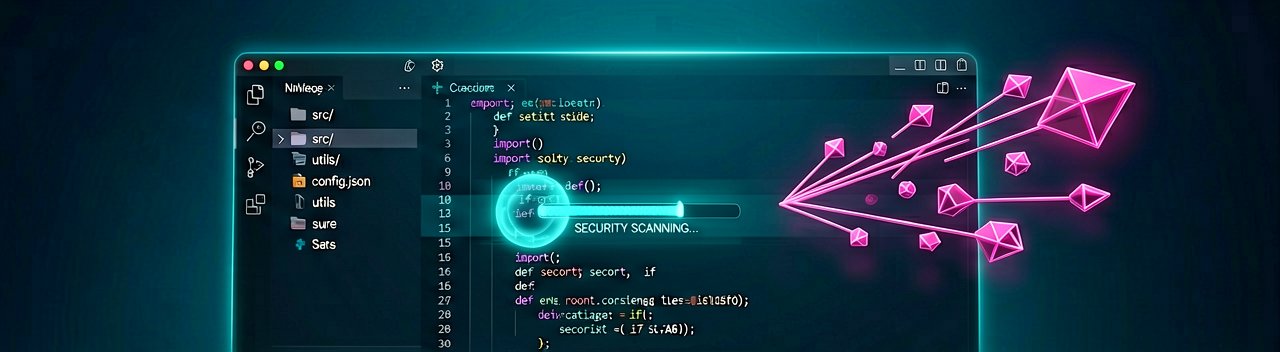
There’s also a significant "shift-left" philosophy at play here. By embedding Claude directly into developer environments, IBM wants to stop vulnerabilities before they even reach a production server. This preemptive strike is crucial as "autonomous" malware becomes more common—malware that doesn't just wait for a command but actively searches for new targets and pivots through networks independently. The collaboration aims to turn the developer's IDE from a simple text editor into an active security partner that flags risky logic as it’s being typed.
Ultimately, this partnership serves as a bellwether for the next decade of digital conflict. It’s no longer about who has the best firewall, but who has the smartest "brain" watching that firewall. As Reuters recently noted, the ability for partners like IBM to share findings from these AI models across the industry might be our only hope of maintaining a collective defense. In the AI era, being a "lone wolf" defender is essentially a retirement plan for your data.
The move also signals a maturing of the AI industry. We are moving past the "wow" factor of chatbots into the "how" of hardened, mission-critical infrastructure. For IBM, it’s a way to remain relevant in a landscape where traditional software is being "eaten" by labor-replacing agents. For Anthropic, it’s a vital bridge to the world’s most sensitive data, proving that their focus on "Constitutional AI" and safety can actually survive the brutal reality of the global threat landscape.
Reading Between the Lines: The Illusion of Total Immunity
The Great AI Paradox: While IBM and Anthropic market this alliance as a definitive shield, it rests on a shaky premise: that defensive AI will naturally outpace its offensive twin. History suggests otherwise. In the cybersecurity world, the "first-mover advantage" almost always belongs to the breaker, not the builder. By providing Anthropic’s models with a front-row seat to enterprise data, IBM is essentially training a brain that is—by its very nature—capable of dual use. The skepticism here lies in the "black box" problem; we are entrusting the keys to the castle to a system whose decision-making processes are still largely opaque, even to the engineers who built them.
There is also a glaring contradiction in the industry’s push for "transparency" while simultaneously locking these models behind proprietary enterprise walls. IBM claims that sharing findings through Project Glasswing will bolster collective defense, but corporate interests often stifle true information sharing. If IBM discovers a critical "zero-day" vulnerability via Claude, the temptation to use that knowledge as a competitive differentiator—rather than a public service—is immense. We have seen this play out before with traditional threat intelligence, where "exclusive" data becomes a marketing tool rather than a communal safeguard.
Furthermore, the move toward autonomous agents introduces a terrifying new variable: the "hallucination exploit." If a defensive AI misinterprets a spike in network traffic as an attack and autonomously shuts down a hospital’s database or a power grid’s control system, the "cure" becomes more lethal than the disease. Anthropic’s commitment to safety is admirable, but enterprise environments are messy, legacy-laden, and unpredictable. Applying a "clean" model like Claude to the "dirty" reality of global infrastructure is a recipe for unforeseen friction that no amount of synthetic testing can fully predict.
Projecting forward, we may be entering an era of "Algorithmic Stagnation." As defenders and attackers both use the same underlying models—Anthropic, OpenAI, or Meta—we risk a strategic stalemate where every move is anticipated by a twin intelligence. This doesn't necessarily make the world safer; it just makes the cost of entry higher. Smaller firms that cannot afford the "IBM-level" tax on AI security will be left as the low-hanging fruit in a landscape where only the giants can afford the premium for digital survival.
Ultimately, the partnership highlights the industry's desperate need for a silver bullet in an age of lead. We are effectively outsourcing our critical thinking to Claude in hopes that it won't be tricked by a version of itself wearing a digital mustache. It is a necessary gamble, perhaps, but one that assumes the "rails" will hold even when the train is moving at the speed of light. The reality is likely to be a lot more chaotic than the polished press releases suggest, as we wait to see if an AI-powered shield can actually stop an AI-powered sword.
In the end, we’ve reached a peak tech milestone: we are now building incredibly expensive, hyper-intelligent machines to protect us from the incredibly expensive, hyper-intelligent machines we built last week.
Artūras Malašauskas is an AI Systems Integrator with 20+ years of production-grade web engineering experience. He has designed, shipped, and scaled enterprise Python/PHP systems for logistics, SaaS, and public-sector clients. For the past year, he has focused exclusively on AI integrations: deploying open-source LLMs, building generative media pipelines (image, audio, video), and engineering multi-agent workflows for real production environments. His standard: reproducibility, security, cost-efficient inference—no vaporware. He documents and evaluates emerging AI tooling, separating verified capabilities from marketing noise. Technical editor at: muza-ai.eu, ai-verslas.lt, ai-naujinos.lt Connect on LinkedIn
Comments