Seekr CEO Pat Condo Pushes Trusted AI as National Security Priority

The tech world is currently obsessed with the size of large language models, but Pat Condo, the CEO of Seekr, is sounding the alarm on something far more fundamental: whether we can actually trust them. In recent high-profile appearances, including a notable segment on Fox Business, Condo framed the current AI arms race not just as a matter of commercial dominance, but as a critical pillar of U.S. national security. He argues that we are sleepwalking into a vulnerability similar to the one created by foreign telecommunications infrastructure a decade ago, warning that "unchecked" AI models from adversarial nations could become the next great "Trojan horse" within American systems.
Condo’s thesis is refreshingly blunt. He compares the current Wild West of AI deployment to releasing a new drug without clinical trials or taking a company public without a financial audit. For Condo, the solution isn't just better code; it’s a rigorous, auditable framework for "explainable" AI—technology that doesn't just give an answer but shows its work. As reported by , Seekr is pushing for a shift toward "vertical" AI systems designed for high-consequence environments like defense and healthcare, where a "hallucination" isn't just an inconvenience—it's a mission failure.
The Case for an AI Vetting System
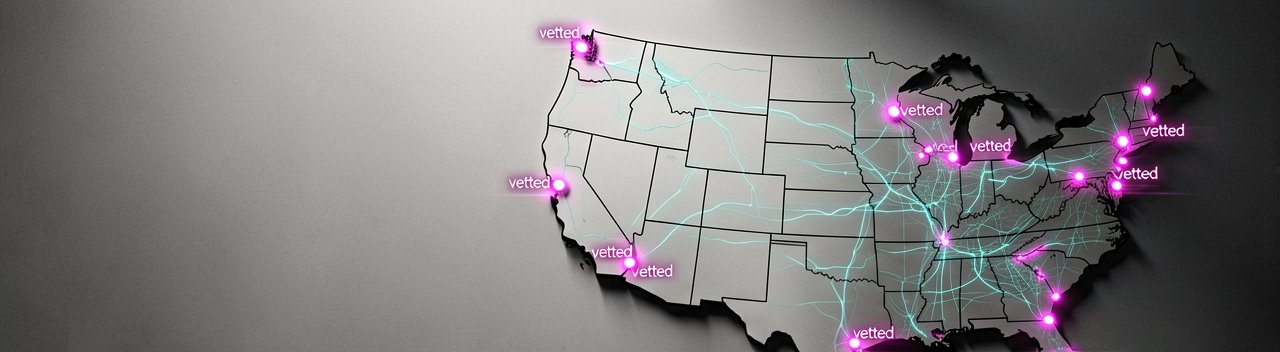
Behind the Scenes: Pat Condo’s perspective isn’t born from abstract theory; it’s rooted in a career spent navigating the intersection of intelligence and search technology. Long before the current generative AI boom, Condo was acquiring firms with deep ties to the NSA, giving him a front-row seat to how global adversaries exploit information spaces. This background informs his current push for a national vetting system—a public-private partnership that would subject foundation models to standardized "stress tests" before they are cleared for use in sensitive federal or infrastructure applications.
What most reports miss is that Seekr is pivoting away from the "bigger is better" philosophy of the Silicon Valley giants. While the industry leaders chase trillions of parameters, Condo is betting on smaller, transparent models that can run at the "edge"—in deep space, under the sea, or on remote battlefields—where real-time human oversight is impossible. In these scenarios, the ability to audit the AI’s decision trail isn't a luxury; it’s the only way to ensure the system hasn't been compromised or subtly influenced by biased training data sourced from adversarial origins.
This strategy has already led to significant institutional momentum. Seekr has forged strategic partnerships with heavyweights like Intel to develop "responsible" AI infrastructure and has teamed up with federal resellers like ORI and PCI Government Services. These alliances aim to bring "mission-ready" AI to the Department of Defense, replacing opaque, "black box" systems with tools that prioritize accuracy and data provenance over sheer generative flair.
Ultimately, Condo’s mission is about reclaiming the "truth" in a landscape increasingly cluttered by cognitive warfare and AI-driven disinformation. By advocating for a new national defense imperative that includes the vetting—and potentially the banning—of adversarial AI models, he is positioning Seekr as more than just another software company. He is framing it as a safeguard for democratic resilience, arguing that the credibility of the digital order depends on whether we can embed trust directly into the architecture of machine intelligence today, rather than waiting for a crisis to force our hand tomorrow.
The tech world is currently obsessed with the size of large language models, but Pat Condo, the CEO of Seekr, is sounding the alarm on something far more fundamental: whether we can actually trust them. In recent high-profile appearances, including a notable segment on Fox Business, Condo framed the current AI arms race not just as a matter of commercial dominance, but as a critical pillar of U.S. national security. He argues that we are sleepwalking into a vulnerability similar to the one created by foreign telecommunications infrastructure a decade ago, warning that "unchecked" AI models from adversarial nations could become the next great "Trojan horse" within American systems.
Condo’s thesis is refreshingly blunt. He compares the current Wild West of AI deployment to releasing a new drug without clinical trials or taking a company public without a financial audit. For Condo, the solution isn't just better code; it’s a rigorous, auditable framework for "explainable" AI—technology that doesn't just give an answer but shows its work. As reported by ExecutiveBiz, Seekr is pushing for a shift toward "vertical" AI systems designed for high-consequence environments like defense and healthcare, where a "hallucination" isn't just an inconvenience—it's a mission failure.

The Case for an AI Vetting System
Behind the Scenes: Pat Condo’s perspective isn’t born from abstract theory; it’s rooted in a career spent navigating the intersection of intelligence and search technology. Long before the current generative AI boom, Condo was acquiring firms with deep ties to the NSA, giving him a front-row seat to how global adversaries exploit information spaces. This background informs his current push for a national vetting system—a public-private partnership that would subject foundation models to standardized "stress tests" before they are cleared for use in sensitive federal or infrastructure applications.
What most reports miss is that Seekr is pivoting away from the "bigger is better" philosophy of the Silicon Valley giants. While the industry leaders chase trillions of parameters, Condo is betting on smaller, transparent models that can run at the "edge"—in deep space, under the sea, or on remote battlefields—where real-time human oversight is impossible. In these scenarios, the ability to audit the AI’s decision trail isn't a luxury; it’s the only way to ensure the system hasn't been compromised or subtly influenced by biased training data sourced from adversarial origins.
This strategy has already led to significant institutional momentum. Seekr has forged strategic partnerships with heavyweights like Intel to develop "responsible" AI infrastructure and has teamed up with federal resellers like ORI and PCI Government Services. These alliances aim to bring "mission-ready" AI to the Department of Defense, replacing opaque, "black box" systems with tools that prioritize accuracy and data provenance over sheer generative flair.
The Skeptic’s Lens on AI Sovereignty
Reading Between the Lines: While the narrative of "Trusted AI" as a national security bulwark is a masterstroke of positioning, it glosses over the inherent contradiction of modern machine learning: true transparency often comes at the cost of performance. By insisting on models that can "show their work," Condo is effectively proposing a regulatory gatekeeper role that could stifle the very speed of innovation required to keep pace with adversaries who have no such ethical or auditable baggage. There is a fine line between a security vetting process and a bureaucratic bottleneck that leaves American forces holding a perfectly explained, but ultimately inferior, tool.
Furthermore, the push for "sovereign" AI creates a fractured global landscape where data portability dies at the border. If every nation demands its own vetted, localized LLM, we risk creating a series of digital echo chambers that reinforce national biases rather than correcting for them. Condo’s advocacy for federal oversight also raises the thorny issue of who, exactly, defines "truth" in an auditable system. In a polarized domestic environment, the jump from "trusted AI" to "government-approved narratives" is uncomfortably short, suggesting that the cure for adversarial disinformation might inadvertently invite a homegrown version of the same problem.
The financial reality is equally complex; building specialized, high-integrity models is an expensive endeavor that lacks the viral scalability of consumer-grade chatbots. Seekr’s reliance on partnerships with legacy giants like Intel highlights that "Trusted AI" is currently a luxury good for the public sector rather than a democratic default for the masses. For this vision to truly serve national security, it must transcend the beltway and become economically viable for the private sector, which remains the primary target for foreign intellectual property theft and influence operations.
"We’ve spent decades teaching machines to lie to us with the confidence of a seasoned politician; it seems only fitting that our next great national project is spending billions of dollars to ask them for a receipt."
Artūras Malašauskas is an AI Systems Integrator with 20+ years of production-grade web engineering experience. He has designed, shipped, and scaled enterprise Python/PHP systems for logistics, SaaS, and public-sector clients. For the past year, he has focused exclusively on AI integrations: deploying open-source LLMs, building generative media pipelines (image, audio, video), and engineering multi-agent workflows for real production environments. His standard: reproducibility, security, cost-efficient inference—no vaporware. He documents and evaluates emerging AI tooling, separating verified capabilities from marketing noise. Technical editor at: muza-ai.eu, ai-verslas.lt, ai-naujinos.lt Connect on LinkedIn
Comments