Claude Mythos: Why AI is the New Frontline of Global Security

The silicon curtain has officially dropped. For decades, global security was a game of throw-weight and troop counts, but the emergence of Large Language Models like Anthropic’s Claude has flipped the script. We aren't just talking about chatbots anymore; we're looking at the democratization of high-level strategic intelligence. As these models evolve from digital assistants into sophisticated reasoning engines, the barrier to entry for complex cyber operations and disinformation campaigns has plummeted, forcing intelligence agencies to rewrite their playbooks on the fly. It’s a classic double-edged sword: the same tech that can patch a zero-day vulnerability in seconds can also be coached to find one.
The real anxiety in the halls of power isn't just about what the AI can do, but who gets to hold the leash. Washington and Beijing are currently locked in a frantic sprint to secure the supply chains for the chips that power these "mythic" models. This isn't just about economic dominance; it’s about "compute sovereignty." If a nation loses its edge in AI training capacity, it effectively loses its ability to defend its digital borders. We’ve seen this play out in real-time as regulators scramble to implement guardrails that are often obsolete by the time the ink is dry, struggling to balance the need for open innovation with the terrifying reality of AI-assisted bioweapon design or autonomous kinetic warfare.
The Architecture of Influence
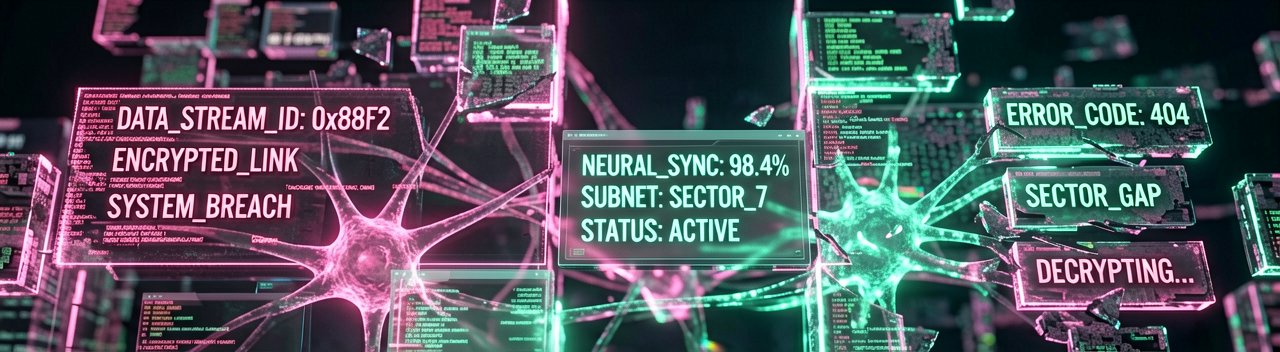
Modern security isn't just about stopping a hack; it’s about the integrity of the information ecosystem itself. Claude and its peers have shown an uncanny ability to generate hyper-persuasive content that can be weaponized to tilt elections or destabilize social cohesion. Unlike the clumsy bot farms of the past, AI-driven influence operations are nuanced, adaptive, and nearly impossible to distinguish from human discourse without specialized detection tools. This shift has turned the internet into a permanent gray-zone theater where the "truth" is whatever the most optimized algorithm says it is.
Experts argue that the only way to counter this is through "defensive AI"—using the technology's own reasoning capabilities to sniff out anomalies and malicious intent. It’s a high-stakes game of cat and mouse where the feline is made of code and the mouse is moving at the speed of light. To understand the gravity of this transition, one must look at how international bodies are struggling to define what constitutes an "act of war" in an era where a model's output can be more damaging than a missile strike. For a deeper dive into the geopolitical implications of this tech race, check out the analysis from Foreign Affairs.
The Sovereignty Stakes
As we move forward, the "Claude Mythos" will likely be defined by the tension between corporate labs and national interests. While companies like Anthropic preach safety and alignment, the pressure to maintain a competitive edge often pushes the envelope of what is considered secure. We are witnessing the birth of a new kind of arms race, one where the ammunition is data and the high ground is a massive server farm in the desert. The stakes couldn't be higher, as the winner of this race won't just lead the market—they’ll likely dictate the terms of global stability for the next century.
The Hidden Architecture of Digital Deterrence
What Most Reports Miss: The transition from kinetic warfare to algorithmic friction isn't just about speed; it’s about the erosion of the "human-in-the-loop" safety net. In the traditional Cold War model, the time it took to fuel a missile provided a crucial window for diplomacy. Today, AI models can identify a network vulnerability, synthesize a custom exploit, and deploy it across a continent’s power grid before a human analyst has even finished their first cup of coffee. This collapse of the decision-making window is forcing military leaders to consider delegated autonomy—handing the "keys" to the defense systems themselves to keep pace with an automated adversary.
Historical context tells us that every leap in communication technology—from the telegraph to the internet—has been immediately co-opted as a theater of war. However, Claude and its peers represent something fundamentally different because they aren't just tools; they are proxies for expertise. In the past, a nation-state needed a vast department of linguists and psychological specialists to run a believable influence campaign. Now, that entire apparatus is compressed into a single API call. This democratization of high-level tradecraft means that mid-tier powers and non-state actors can suddenly punch well above their weight, destabilizing the long-standing nuclear-led hierarchy of global power.
The boardroom battles within labs like Anthropic and OpenAI are just as pivotal as any summit in Geneva. There’s a palpable tension between the silicon-valley ethos of "move fast and break things" and the existential gravity of the technology being built. When companies talk about "alignment," they aren’t just solving a math problem; they’re making a profound ethical choice about whose values the AI should defend. This has led to a fragmented global landscape where different jurisdictions are building AI according to their own cultural and political image, creating a "Splinternet" of intelligence where models are hard-coded to ignore or prioritize specific geopolitical truths.
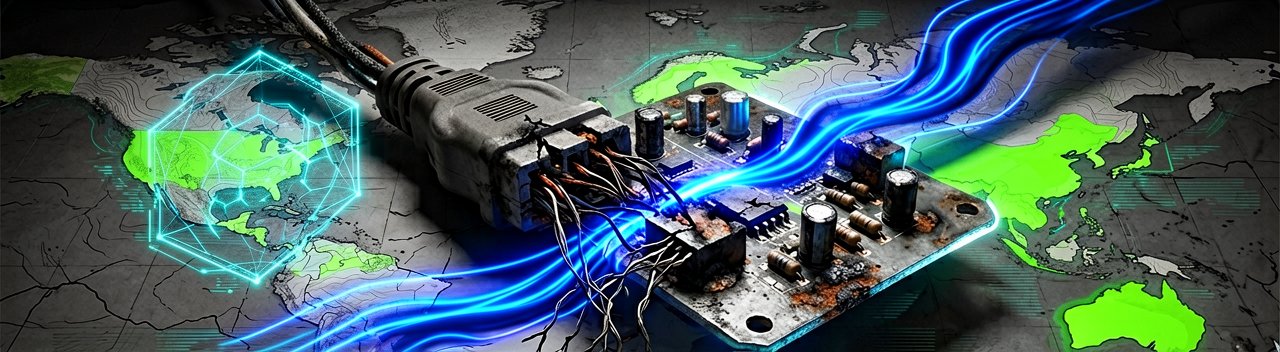
For those on the ground, the immediate threat isn't a Terminator-style uprising, but a slow-motion collapse of trust. Intelligence officials are increasingly worried about "synthetic fatigue," where the sheer volume of AI-generated misinformation makes it impossible for the public to agree on basic reality. When everything can be faked with high fidelity—from a leader’s voice to satellite imagery of troop movements—the default human reaction is to trust nothing. This vacuum of certainty is the ultimate playground for bad actors, as it allows them to operate in the shadows of universal skepticism, effectively winning by making sure no one else can see the truth. Experts at ACM Interactions emphasize that maintaining human critical thinking is the only viable firewall against this total loss of context.
Ultimately, we’re looking at a world where security is no longer a status you achieve, but a constant state of computational flux. The "Claude Mythos" suggests that the most secure nations won't be those with the biggest bunkers, but those with the most resilient data ecosystems and the quickest ability to re-train their defensive models against emerging threats. It’s an exhausting, never-ending sprint that requires a total rethink of what it means to be a "sovereign" nation in a world governed by code. The scramble for talent, compute, and clean data is the new gold rush, and the winners will be those who can harness the brilliance of AI without losing the essential, unpredictable nuance of the human spirit.
The Paradox of Managed Intelligence
Reading Between the Lines: The prevailing narrative suggests that layering more "safety" filters onto models like Claude will act as a sufficient bulkhead against global instability. This is largely a comfortable fiction designed to appease congressional subcommittees. In reality, the more we sanitize public-facing AI, the faster we drive malicious actors toward "jailbroken" or open-source variants that operate without a moral compass. We are creating a digital prohibition: the more rigorous the gatekeeping at the top of the market, the more valuable the unregulated black-market models become for those looking to bypass ethical constraints.
There is also a glaring contradiction in the way nation-states approach AI sovereignty. While world leaders give somber speeches about the need for international cooperation and "AI for good," their defense budgets tell a different story. Behind the scenes, the race is to develop "offensive alignment"—optimizing models not to be polite, but to be ruthlessly efficient at identifying structural weaknesses in an opponent’s economy or infrastructure. This hypocrisy undermines any chance of a global treaty similar to the Non-Proliferation Treaty for nuclear weapons, as the very technology required to verify compliance is the same technology being weaponized for edge-of-seat competition.
Furthermore, the industry’s obsession with "artificial general intelligence" (AGI) often distracts from the very real, very present damage caused by current "narrow" intelligence. We don't need a god-like machine to spark a global crisis; we only need a highly competent reasoning engine that can automate social engineering at a scale that overwhelms human cognition. The skepticism should not be directed at whether the AI will "wake up" and turn against us, but rather at our own gullibility in believing that we can control a system whose complexity already exceeds our ability to fully audit its decision-making pathways.
The long-term implication is a world of "asymmetric stability," where the gap between AI-haves and AI-have-nots creates a new class of failed states. If a country cannot afford the compute power to run its own defensive bureaucracies or educational systems, it becomes a digital colony of whichever tech giant provides its infrastructure. This isn't just a corporate monopoly; it is the outsourcing of national governance to private entities that are ultimately accountable to shareholders rather than citizens. The transition from citizen to "user" in the eyes of a state-aligned AI is a shift that most political analysts are woefully unprepared to navigate. Insightful critiques of this power shift can be found at MIT Technology Review.
In the end, the "Claude Mythos" might just be a mirror held up to our own fragmented global order. We are attempting to build "perfectly aligned" machines in a world that cannot even agree on a basic definition of the common good. The friction isn't between the human and the machine, but between our desire for the convenience of AI and our refusal to address the underlying geopolitical grievances that make such a tool so dangerous in the first place. The tech is moving at light speed, but our diplomatic structures are still stuck in the era of the handwritten note, creating a mismatch that is the definition of a security nightmare.
As we pivot toward a future where algorithms manage everything from our power grids to our political perceptions, the only certainty is that the "off" switch is becoming a historical relic. The struggle to maintain human agency in an automated world is the defining conflict of our time, and so far, the machines are winning by simply being more patient than we are. We are building a world where the most important decisions are made by systems we can neither see nor fully understand, hoping all the while that the math remains in our favor.
"We spent decades worrying that computers would eventually start thinking like us, only to realize the real danger is that we’ve started trusting them so much we’ve stopped thinking altogether—which, to be fair, is a very efficient way to save on brain cycles."
Artūras Malašauskas is an AI Systems Integrator with 20+ years of production-grade web engineering experience. He has designed, shipped, and scaled enterprise Python/PHP systems for logistics, SaaS, and public-sector clients. For the past year, he has focused exclusively on AI integrations: deploying open-source LLMs, building generative media pipelines (image, audio, video), and engineering multi-agent workflows for real production environments. His standard: reproducibility, security, cost-efficient inference—no vaporware. He documents and evaluates emerging AI tooling, separating verified capabilities from marketing noise. Technical editor at: muza-ai.eu, ai-verslas.lt, ai-naujinos.lt Connect on LinkedIn
Comments