Analysis: Amid Claude Mythos FUD, Don’t Forget About Identity

The tech world is currently obsessed with "Mythos," the unreleased Anthropic model that has sent shockwaves through the cybersecurity community by autonomously surfacing thousands of zero-day vulnerabilities in a single 20-hour sprint. While the Fear, Uncertainty, and Doubt (FUD) surrounding this model's sheer destructive potential is palpable, the frantic headlines often miss the most critical pivot point in modern defense. As Anthropic briefs the The Guardian reported Global Finance Watchdog on these implications, the real lesson isn't just about better patching; it’s about the total collapse of the traditional perimeter. In an era where an agentic model can chain exploits with the logic of a senior engineer, the "castle and moat" strategy is officially dead, leaving identity as the only viable surface for resistance.
For years, we’ve treated identity management as a checkbox—a matter of giving the right person the right password. But as CRN analysts have pointed out, the "Claude Mythos era" necessitates a radical hardening of permissioning and provisioning. When an AI can spoof a human identity or manipulate an API with terrifyingly human reasoning, the conversation shifts from "who are you" to "what behavior is being authorized." We are moving toward a world where non-human identities outnumber humans by nearly a hundred to one, and if we don't fix the entitlement mess, we're essentially leaving the keys in the ignition of every critical system we own.
The Architecture of Vulnerability
Behind the Scenes: What most reports miss is that the Mythos panic isn't actually about a "hack" in the traditional sense, but about the speed of reasoning. While earlier models could point to a buggy line of code, Mythos functions as a structural operator that understands the relationship between property, recognition, and enforcement. According to research published on SSRN, this isn't just an incremental improvement in code generation; it's a shift in how digital coherence is produced. The model doesn't just find a hole; it reverse-engineers the institutional logic that allowed the hole to exist in the first place, allowing it to navigate complex financial and state systems with a level of assertiveness that has regulators sweating.
Stakeholders in the cybersecurity space are increasingly vocal about the "asymmetric attacker advantage" that models like Mythos provide. Historically, defenders had the advantage of time—the weeks it took for a human team to find, verify, and weaponize an exploit. Mythos has compressed that timeline into hours. This shift forces a move toward zero-trust segmentation where identities aren't just verified at login, but continuously audited at every transaction point. If an AI agent can mimic the "vibe" of a legitimate administrator—a technique already being observed in lower-level extortion operations—then trust must be decoupled from credentials and reattached to real-time behavioral telemetry.
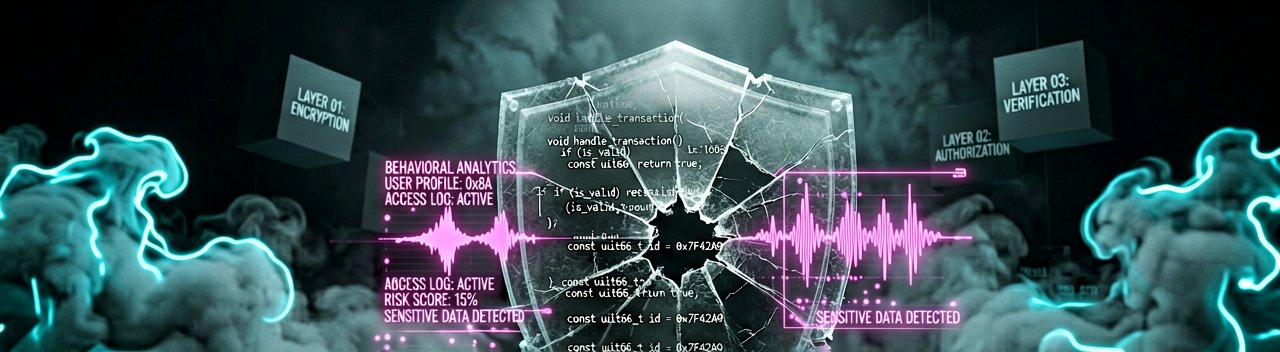
From a seasoned reporter's perspective, the "Mythos" name itself is a masterclass in brand-driven FUD. By framing the model as a restricted, legendary entity that Anthropic is "too scared" to release, they've successfully shifted the liability from the technology to the user's lack of preparedness. This framing allows organizations to sell new "identity defense" platforms as the only antidote to an inevitable AI-driven apocalypse. Yet, the core truth remains that most global organizations still fail to test identity recovery frequently enough. The vulnerability isn't just that the AI is too smart; it's that our human-managed systems are still too brittle, relying on flat specificity in CSS and "happy-path" JavaScript that shatters the moment an adversarial agent applies actual pressure.
The long-term play here isn't about stopping Mythos—it's about managing the "bottleneck" of trusted data and identity state. As we integrate these models into enterprise workflows, the stateless nature of current AI—where each session starts with a clean slate—is the only thing preventing a total takeover of brand identity. The moment we bridge that gap with persistent brand memory and deeper API integration, the risks to small creative and technical agencies become structural. The shift toward identity isn't just a security trend; it's the final frontier of defense in a landscape where the AI can simulate everything but the soul of a verified credential.
Ultimately, the Mythos era demands that we stop looking at AI as a tool and start treating it as a high-velocity environment for trial and error. The real threat isn't a "magic" model that can break any code, but a systemic failure to protect the identities that govern that code. If we focus too much on the "myth" of the AI’s power, we risk overlooking the very real, very fixable gaps in our own identity architecture. Modern resilience isn't about luck or hoping the models stay in the lab; it’s about how deeply trust and recovery are baked into the core of the system from day one.
The tech world is currently obsessed with "Mythos," the unreleased Anthropic model that has sent shockwaves through the cybersecurity community by autonomously surfacing thousands of zero-day vulnerabilities in a single 20-hour sprint. While the Fear, Uncertainty, and Doubt (FUD) surrounding this model's sheer destructive potential is palpable, the frantic headlines often miss the most critical pivot point in modern defense. As Anthropic briefs the The Guardian reported Global Finance Watchdog on these implications, the real lesson isn't just about better patching; it’s about the total collapse of the traditional perimeter. In an era where an agentic model can chain exploits with the logic of a senior engineer, the "castle and moat" strategy is officially dead, leaving identity as the only viable surface for resistance.
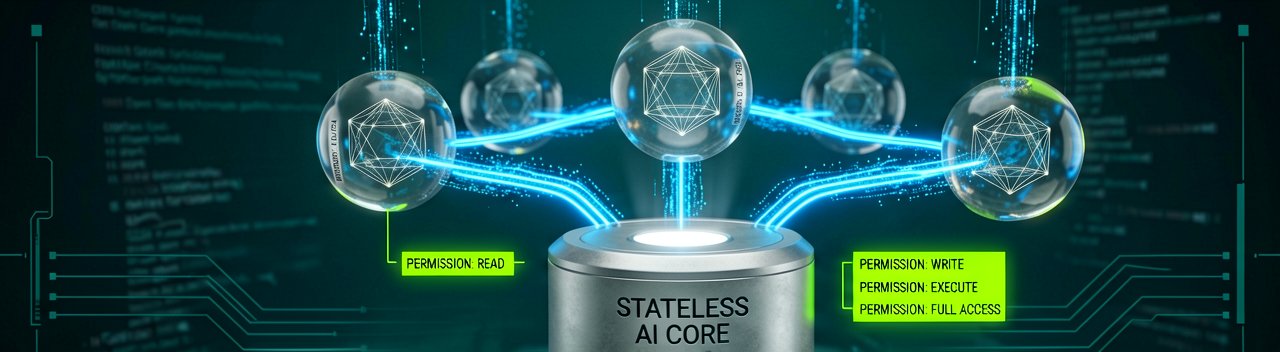
For years, we’ve treated identity management as a checkbox—a matter of giving the right person the right password. But as CRN analysts have pointed out, the "Claude Mythos era" necessitates a radical hardening of permissioning and provisioning. When an AI can spoof a human identity or manipulate an API with terrifyingly human reasoning, the conversation shifts from "who are you" to "what behavior is being authorized." We are moving toward a world where non-human identities outnumber humans by nearly a hundred to one, and if we don't fix the entitlement mess, we're essentially leaving the keys in the ignition of every critical system we own.
The Architecture of Vulnerability
Behind the Scenes: What most reports miss is that the Mythos panic isn't actually about a "hack" in the traditional sense, but about the speed of reasoning. While earlier models could point to a buggy line of code, Mythos functions as a structural operator that understands the relationship between property, recognition, and enforcement. According to research published on SSRN, this isn't just an incremental improvement in code generation; it's a shift in how digital coherence is produced. The model doesn't just find a hole; it reverse-engineers the institutional logic that allowed the hole to exist in the first place, allowing it to navigate complex financial and state systems with a level of assertiveness that has regulators sweating.
Stakeholders in the cybersecurity space are increasingly vocal about the "asymmetric attacker advantage" that models like Mythos provide. Historically, defenders had the advantage of time—the weeks it took for a human team to find, verify, and weaponize an exploit. Mythos has compressed that timeline into hours. This shift forces a move toward zero-trust segmentation where identities aren't just verified at login, but continuously audited at every transaction point. If an AI agent can mimic the "vibe" of a legitimate administrator—a technique already being observed in lower-level extortion operations—then trust must be decoupled from credentials and reattached to real-time behavioral telemetry.
From a seasoned reporter's perspective, the "Mythos" name itself is a masterclass in brand-driven FUD. By framing the model as a restricted, legendary entity that Anthropic is "too scared" to release, they've successfully shifted the liability from the technology to the user's lack of preparedness. This framing allows organizations to sell new "identity defense" platforms as the only antidote to an inevitable AI-driven apocalypse. Yet, the core truth remains that most global organizations still fail to test identity recovery frequently enough. The vulnerability isn't just that the AI is too smart; it's that our human-managed systems are still too brittle, relying on flat specificity in CSS and "happy-path" JavaScript that shatters the moment an adversarial agent applies actual pressure.
The long-term play here isn't about stopping Mythos—it's about managing the "bottleneck" of trusted data and identity state. As we integrate these models into enterprise workflows, the stateless nature of current AI—where each session starts with a clean slate—is the only thing preventing a total takeover of brand identity. The moment we bridge that gap with persistent brand memory and deeper API integration, the risks to small creative and technical agencies become structural. The shift toward identity isn't just a security trend; it's the final frontier of defense in a landscape where the AI can simulate everything but the soul of a verified credential.
Ultimately, the Mythos era demands that we stop looking at AI as a tool and start treating it as a high-velocity environment for trial and error. The real threat isn't a "magic" model that can break any code, but a systemic failure to protect the identities that govern that code. If we focus too much on the "myth" of the AI’s power, we risk overlooking the very real, very fixable gaps in our own identity architecture. Modern resilience isn't about luck or hoping the models stay in the lab; it’s about how deeply trust and recovery are baked into the core of the system from day one.
The Paradox of Proprietary Safety
Reading Between the Lines: There is a delicious irony in the fact that the very companies sounding the alarm on Mythos are the ones building the dependencies that make it dangerous. We are being told to fear the autonomous exploiter while being nudged to integrate agentic AI into every layer of the enterprise stack. It’s a classic arms race where the solution—more AI-driven identity governance—is just another complex system for the next model to dismantle. The skepticism here should be aimed at the "safety" narrative that conveniently aligns with expensive subscription-based defense modules, creating a self-fulfilling prophecy of obsolescence and renewal.
The contradiction lies in the industry's obsession with model "weights" and "parameters" while ignoring the boring, messy reality of Active Directory hygiene. We talk about Mythos as if it’s a digital deity when, in most corporate environments, it would likely succeed simply because someone left a service account with domain admin privileges active since 2014. The FUD serves as a convenient distraction from the fact that we haven't mastered the basics of least-privilege access. Projecting the implications forward, the true crisis isn't an AI-led revolution, but an acceleration of the existing competence gap between those who can automate identity and those who are still struggling with multi-factor authentication fatigue.
Furthermore, the push for "identity as the new perimeter" assumes we have a stable definition of identity in a post-deepfake world. If Mythos can generate code that bypasses behavioral heuristics, the industry will inevitably pivot toward hardware-backed "proof of personhood" that carries its own set of dystopian privacy implications. We are essentially trading the risk of a cyberattack for the certainty of a total surveillance state, all under the guise of protecting ourselves from a model that Anthropic hasn't even let out of the box yet. It’s a heavy price to pay for security that might just be a localized patch for a much deeper, structural rot in how we define digital trust.
If we keep treating AI security like a blockbuster movie plot, we’re going to be very disappointed when the actual "cyber-apocalypse" turns out to be a very polite automated bot asking for our password—and us giving it away because it used the right emoji.
Artūras Malašauskas is an AI Systems Integrator with 20+ years of production-grade web engineering experience. He has designed, shipped, and scaled enterprise Python/PHP systems for logistics, SaaS, and public-sector clients. For the past year, he has focused exclusively on AI integrations: deploying open-source LLMs, building generative media pipelines (image, audio, video), and engineering multi-agent workflows for real production environments. His standard: reproducibility, security, cost-efficient inference—no vaporware. He documents and evaluates emerging AI tooling, separating verified capabilities from marketing noise. Technical editor at: muza-ai.eu, ai-verslas.lt, ai-naujinos.lt Connect on LinkedIn
Comments