The Great Sonic Pivot: How Apple, Sony, and Spotify Are Rewriting the Music Playbook
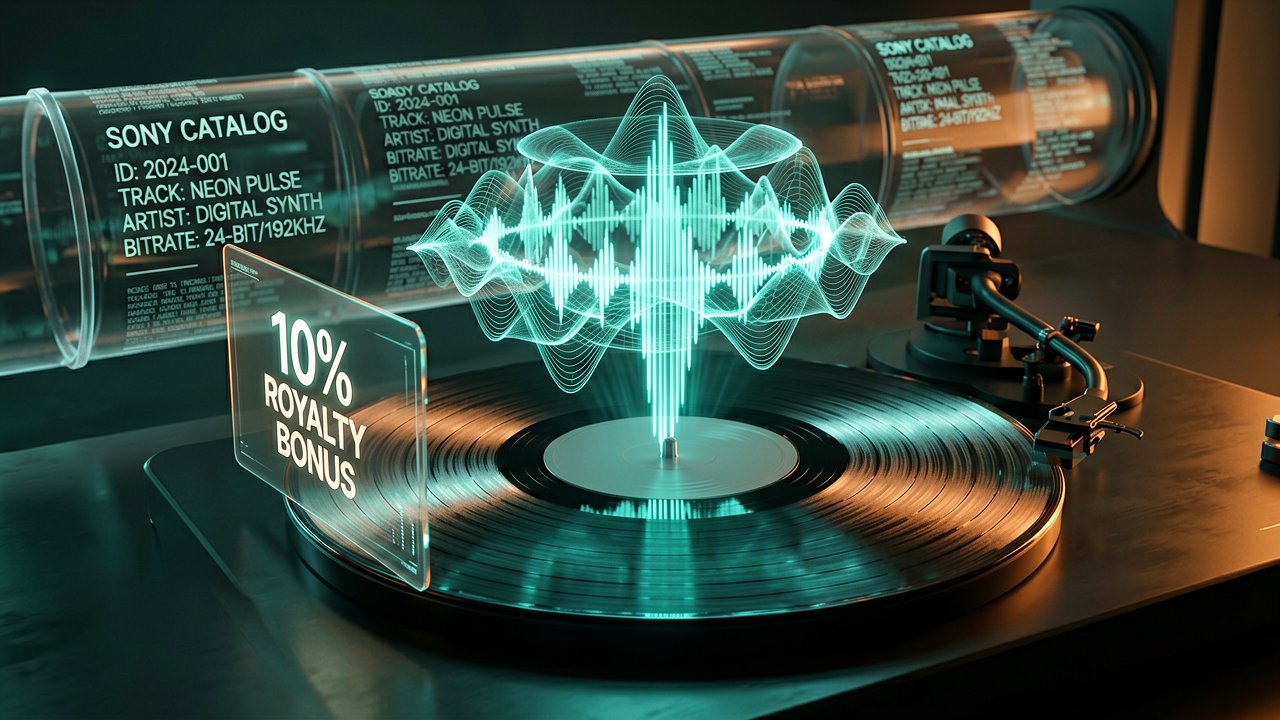
The music industry isn't just shifting; it's being dismantled and rebuilt in real-time by the three titans who own the ears of the world. As we hit the midpoint of 2026, Apple, Sony, and Spotify have moved past the "streaming wars" of old and into a more complex era of ecosystem lockdown and AI-driven curation. We’re seeing a fascinating split in strategy: while Spotify leans into social data and platform-agnostic video, Apple is doubling down on "premium" experiences like high-fidelity spatial audio and deep hardware integration. Sony, meanwhile, is playing the long game, leveraging its massive catalog to dictate the terms of engagement in the age of generative AI.
It’s no longer enough to just host a library of songs. These companies are now focused on "connected creativity," a term gaining traction as they try to bridge the gap between lean-back listening and active fan participation. According to industry analysis from Collabhouse , the future belongs to platforms that remove the friction between creation and consumption. This has led to a flurry of updates that feel less like software patches and more like fundamental redefinitions of what a "music app" should be.
Spotify’s Video Gambit and the Data Nostalgia Trip
Spotify is clearly tired of being "just" a music player. In a major technical pivot, the streaming giant recently announced it will adopt Apple’s HTTP Live Streaming (HLS) technology for its video podcasts, as reported by MacRumors . This isn't just a white flag to Apple’s tech standards; it’s a calculated move to let creators blast their video shows across both ecosystems without breaking a sweat. By making distribution platform-agnostic, Spotify is betting that its superior discovery algorithms will keep eyes on their app, even if the pipes are built by Cupertino.
Simultaneously, Spotify is weaponizing our own nostalgia. Their new "Your Party of the Year(s)" feature lets users dive into their entire streaming history—not just a yearly wrap, but a decades-long digital autobiography. It turns out that seeing the first track you ever streamed is a powerful psychological tether. This move toward "user identity storytelling" is a clever way to keep users from jumping ship to rivals, effectively turning your listening history into a "cultural memory" you can't bear to leave behind.
Apple Intelligence and the DJ in Your Pocket
Apple isn't playing the same game. They’ve spent the last year refining "Apple Intelligence" to make the Music app feel like a bespoke concierge. The latest updates include an "AutoMix" feature that uses machine learning to transition tracks with the finesse of a professional DJ. They’ve also integrated real-time lyrics translation and pronunciation guides, essentially turning the iPhone into a global karaoke machine. As highlighted by Apple Newsroom, these features are about deepening the immersion for users who are already deep in the Apple ecosystem.
But the real power play is Apple’s financial leverage. They continue to offer a 10% royalty bonus for tracks mixed in Spatial Audio, even if the listener doesn't have the gear to hear it. It’s a transparent, yet effective, way to force the entire recording industry to adopt Apple’s preferred format. When you control the hardware and the payouts, you don't need to ask for permission to change the industry's standards; you just set the price.
Sony’s AI Fortress and the Physical Renaissance
While the tech giants fight over the interface, Sony Music Group is busy protecting the actual raw material: the songs themselves. Sony has been vocal about its "creator-first" approach to AI, insisting that intellectual property must be properly licensed before it’s used to train any model. During their recent strategy presentations, Sony leadership emphasized that AI should be a tool for human creators, not a replacement. This stance is critical as AI-generated tracks threaten to flood streaming platforms by the end of the year.
Interestingly, Sony is also seeing a massive surge in "old school" revenue. Despite the digital chaos, Digital Music News notes that Sony Music recently posted its highest quarterly revenue from vinyl and physical formats since 2017. It seems that as our digital lives become more ephemeral and AI-inflected, fans are increasingly willing to pay a premium for something they can actually hold. Sony’s ability to balance these high-tech AI protections with a thriving physical business shows a diversified strategy that the pure-play tech companies simply can't match.
The Hidden Architecture of Music’s New Reality
Beyond the Press Releases: What most reports miss is that the convergence of Apple, Sony, and Spotify isn't just about new features—it is a fundamental restructuring of "ownership" in the digital age. While we focus on the convenience of a DJ-quality crossfade or the novelty of a video podcast, the infrastructure beneath these services is being re-engineered to lock users into proprietary silos more tightly than ever before. We are witnessing the death of the "neutral platform." Every algorithmic choice made by Spotify and every hardware-software handshake by Apple is designed to ensure that if you leave, you don't just lose your playlists; you lose a curated version of your own identity.
From the perspective of the major labels like Sony, this shift is both a gold mine and a minefield. Sony’s aggressive stance on AI training rights is a direct response to the "Napster-ization" of vocal timbres. By demanding strict licensing for generative models, Sony is effectively trying to turn every artist’s voice into a unique digital asset that can be rented out but never truly owned by the public. This creates a high-stakes standoff with tech platforms that rely on "infinite content" to keep engagement metrics high. The industry veterans I’ve spoken with suggest that we are heading toward a tiered ecosystem where "authentic human music" becomes a premium luxury tier, while AI-generated background noise fills the free-to-play gaps.
The hardware-software feedback loop perfected by Apple adds another layer of complexity. By incentivizing Spatial Audio through royalty bonuses, Apple is effectively redesigning the recording studio. Engineers are now forced to mix for AirPods rather than high-end monitors, a shift that parallels the way the 1960s "Wall of Sound" was engineered for mono AM radio. This isn't just a technical preference; it’s an economic lever. When a tech giant can dictate the literal acoustics of a song by dangling a 10% bonus in front of cash-strapped independent labels, the line between "distribution platform" and "creative director" becomes dangerously thin.
Spotify’s pivot to HLS video standards is equally telling of the platform’s survival instincts. In the early 2010s, Spotify won by being the most convenient place to hear a song. In 2026, it is trying to win by becoming a social utility. By adopting Apple’s own video tech, Spotify is acknowledging that it can no longer afford to be an island. It must be compatible with the devices its users carry, yet distinct enough in its data-driven "identity storytelling" to prevent them from simply using YouTube Music or TikTok as their primary discovery engine. This is a defensive play disguised as a feature rollout, designed to keep the app at the center of the creator economy.
The historical context here is vital: we have seen this consolidation of power before in the radio and retail eras, but never with this level of granularity. In the past, a label could pull its records from a store; today, a platform can simply "deprioritize" an artist’s visibility in a personalized algorithm, effectively making them invisible to millions without a single public announcement. The transparency of the "hit list" has been replaced by the opacity of the "for you" feed. This shift moves the power away from the cultural tastemakers and hands it to the data scientists who manage the engagement loops.
Ultimately, the music industry is no longer selling songs; it is selling access to an experience that is increasingly mediated by artificial intelligence and ecosystem loyalty. As Sony focuses on the legal fortress of IP, and Apple and Spotify battle for the interface of our daily lives, the listener is caught in the middle. We are getting better tools and more immersive audio, but the price is a loss of the communal, shared musical experience that defined the pre-streaming era. The "pivot" we see today is the final step in turning music from a shared cultural artifact into a personalized, data-driven service.
The Algorithmic Mirage and the Cost of Convenience
Reading Between the Lines: There is a glaring contradiction in the industry’s current obsession with "personalization." While Apple and Spotify champion the idea of music tailored specifically to your soul, the underlying reality is a move toward mass homogenization. Algorithms are fundamentally conservative; they are designed to feed you more of what you already like, which effectively kills the serendipity of discovery that once fueled musical revolutions. By narrowing our sonic horizons under the guise of "curation," these platforms are creating a feedback loop where only the most "mathematically agreeable" music survives. The expert veneer of a "bespoke DJ" in your pocket is often just a sophisticated way to keep you from hitting the skip button, thereby protecting the platform’s bottom line at the expense of artistic risk.
Furthermore, the tension between Sony’s "IP Fortress" and the tech giants' data-hunger reveals a deepening rift in the value of human labor. Sony’s insistence on licensing sounds like a noble defense of the artist, but it is also a calculated move to ensure that the "AI tax" flows into corporate coffers rather than to the individual creators. We are entering an era where a songwriter might be protected from digital theft only to find their "style" has been legally licensed by their own label to an AI company for a lump sum they will never see. The irony is thick: the very tools marketed as "empowering" for creators are often the same ones being used to automate their relevance out of existence.
We must also view the "Spatial Audio" revolution with a healthy dose of skepticism. Apple’s push for Dolby Atmos and immersive formats is touted as a gift to the audiophile, but it functions primarily as a hardware tax. It creates a technical barrier to entry that favors major labels with the budget for expensive Atmos re-mixes, while pushing independent artists further into the margins. When the industry standard is dictated by the company selling the $500 headphones, the "innovation" starts to look less like a sonic breakthrough and more like a clever way to shorten the replacement cycle of consumer electronics. This is planned obsolescence rebranded as a high-fidelity dream.
Projecting forward, the implication of Spotify’s video pivot is a gradual erosion of the "audio-only" space. By turning music consumption into a visual, social-media-lite experience, Spotify is admitting that music, on its own, is no longer enough to hold the modern attention span. This shifts the burden onto musicians to become full-time content creators, videographers, and "personalities" just to get their songs heard. The result is a music industry that looks increasingly like an extension of the influencer economy, where the actual quality of the composition is secondary to the "shareability" of the clip. It’s a race to the bottom for the sake of the "infinite scroll."
Ultimately, the "major shifts" we are seeing are less about improving the art form and more about perfecting the extraction of value from the listener’s time. The tech is undeniably impressive, and the convenience is intoxicating, but the price is a world where music is treated as just another stream of data in a saturated market. We are trading the messy, unpredictable soul of the music industry for a polished, frictionless utility that knows us better than we know ourselves—and that might be the most chilling part of the symphony.
The modern music industry has finally achieved its ultimate goal: a world where you never have to hear a song you don't like, and artists never have to worry about being paid in anything more substantial than "engagement" and the vague promise that the algorithm still likes them in the morning.
Artūras Malašauskas is an AI Systems Integrator with 20+ years of production-grade web engineering experience. He has designed, shipped, and scaled enterprise Python/PHP systems for logistics, SaaS, and public-sector clients. For the past year, he has focused exclusively on AI integrations: deploying open-source LLMs, building generative media pipelines (image, audio, video), and engineering multi-agent workflows for real production environments. His standard: reproducibility, security, cost-efficient inference—no vaporware. He documents and evaluates emerging AI tooling, separating verified capabilities from marketing noise. Technical editor at: muza-ai.eu, ai-verslas.lt, ai-naujinos.lt Connect on LinkedIn
Comments