Sola Security Launches Lumina to Cut Enterprise Security Alert Noise with Contextual AI
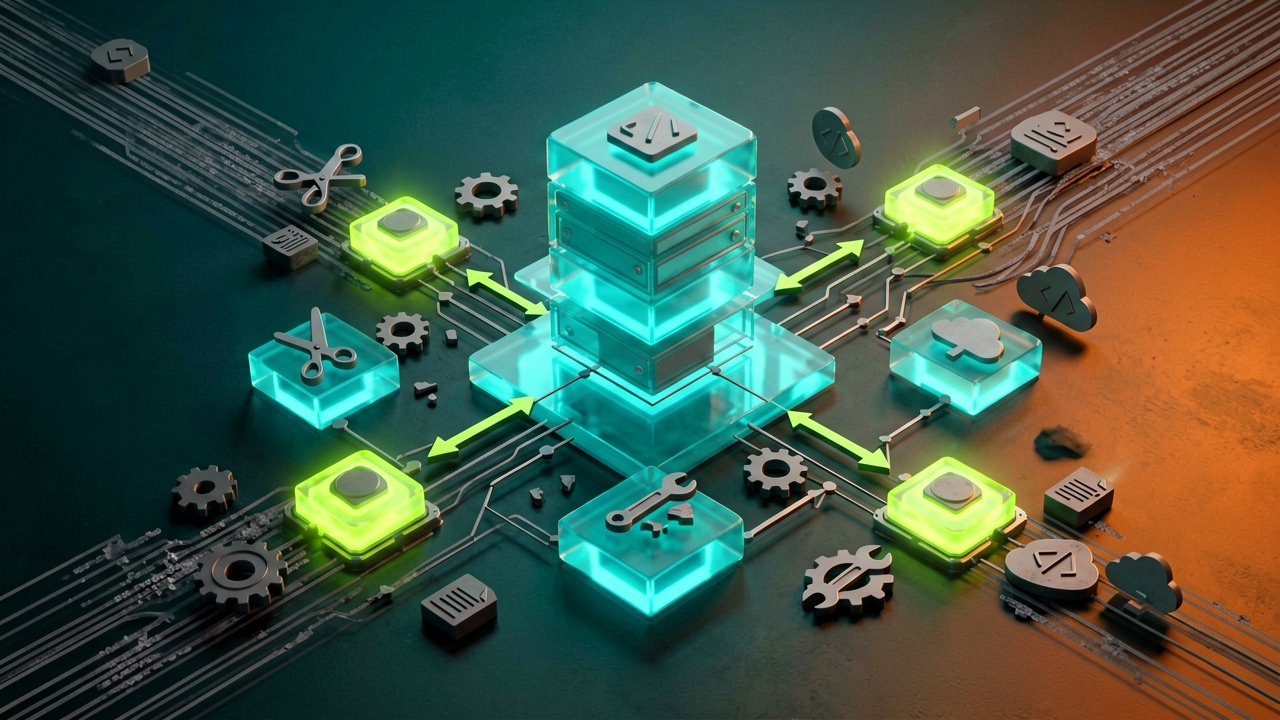
The cybersecurity landscape has long been plagued by a "more is better" philosophy that has backfired, leaving security operations centers (SOCs) drowning in a sea of low-priority alerts. Addressing this head-on, Sola Security has unveiled its new Lumina platform, an autonomous risk intelligence engine designed to filter out the static and prioritize the threats that actually matter. By layering contextual AI across cloud, identity, and endpoint environments, Lumina aims to transform the typical enterprise's 83-tool security stack from a cacophony of raw data into a curated, decision-ready feed. According to reporting from SiliconANGLE, early adopters are already seeing an 87% reduction in operational noise, a statistic that likely sounds like music to the ears of any overworked analyst.
Context is the New Perimeter
What makes Lumina stand out in a crowded market isn’t just the AI label; it’s how the system weights risk. Most legacy platforms treat a high-severity vulnerability the same regardless of where it sits. Sola’s CTO, Ron Peled, argues that a critical flaw on an isolated test machine shouldn't trigger the same fire drill as one on a core identity provider. Lumina uses bi-directional severity scoring to adjust rankings based on asset criticality and historical behavior. This approach moves beyond simple pattern matching to understand the "blast radius" of a potential breach, effectively automating the deep research that usually takes a human expert hours to piece together.
Streamlining the SOC Workflow
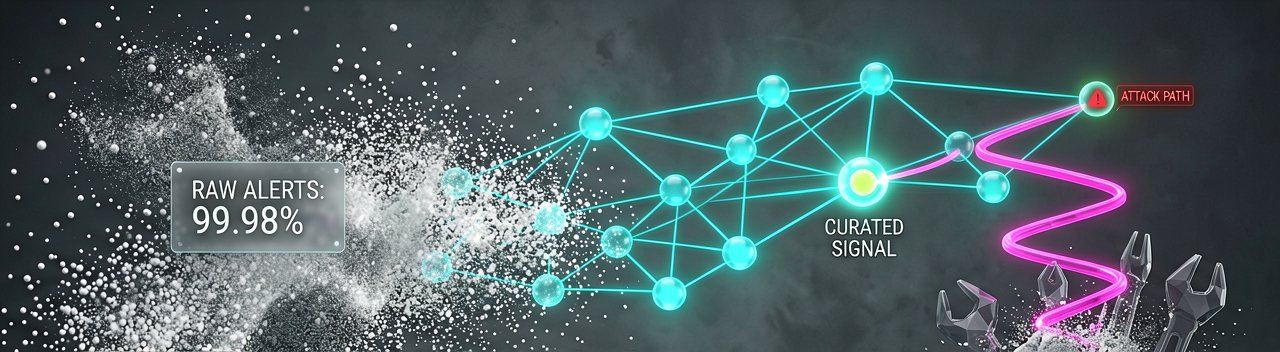
Beyond noise reduction, the platform is built to increase analyst capacity by up to 20%, as noted by TipRanks. By compressing 99.98% of raw data into meaningful signals, Lumina allows teams to focus on strategic mitigation rather than manual triage. The system integrates with existing SaaS and cloud tools, mapping out attack paths that single-domain products often miss. For an industry that has struggled with talent shortages and burnout for years, Sola’s focus on "actionable intelligence" over "more information" represents a necessary shift toward a more sustainable operating model.
Beyond the Press Release: Why "Contextual" is More Than a Buzzword
What Most Reports Miss: The launch of Lumina isn't just a product update; it’s a calculated strike against the "data lake" obsession that has dominated the last decade of security spending. For years, vendors told CISOs that if they just collected enough telemetry—every log, every packet, every login—the answers would magically appear. Instead, we ended up with massive, expensive haystacks and no better way to find the needles. Sola is betting that the industry is ready to admit that data without a business map is just overhead. By building a unified asset graph, they're essentially giving the AI a blueprint of the company's specific digital architecture so it can understand the difference between a routine admin task and a lateral movement attempt.
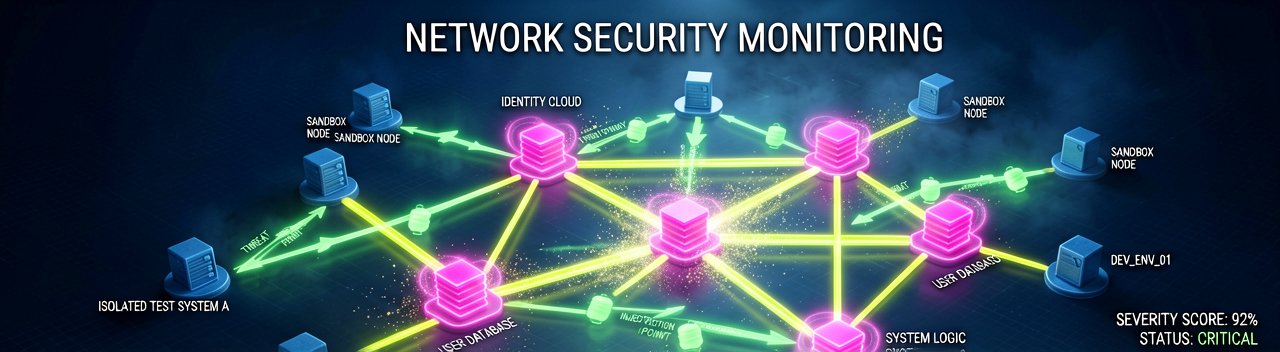
The leadership pedigree here also warrants a closer look. Sola was founded by Guy Flechter, the former CEO of Cider Security, which was snatched up by Palo Alto Networks for its unique take on supply chain security. Flechter and co-founder Ron Peled are applying that same "pragmatic disruption" to the alert fatigue problem. They aren't trying to replace the existing stack; they’re trying to act as the connective tissue that makes the 45 to 80 disparate tools already in place actually work together. It’s a strategy heavily influenced by the "low-code/no-code" revolution seen in other sectors, allowing security teams to customize their risk logic without needing a fleet of dedicated developers.
There’s a historical irony in how we got here. We built these complex, multi-cloud environments to be agile, but our security tools became the ultimate bottleneck. Lumina’s ability to perform what Sola calls "autonomous deep research" is an attempt to match the speed of modern DevOps. If an analyst has to spend forty minutes correlating an Okta login with an AWS S3 bucket access log, they’ve already lost. By the time they have the context, the data is gone. Lumina’s promise to deliver "time-to-context" 50% faster than traditional methods isn't just about efficiency; it's about closing the window of opportunity for attackers who thrive in the gaps between siloed tools.
Investors seem to agree that this pivot toward context-driven security is the right move. With $65 million in backing from heavyweights like Microsoft’s M12 and Sequoia’s Michael Moritz, Sola has the runway to challenge the established incumbents who have traditionally profited from the complexity they helped create. As reported by PR Newswire, the platform's ability to "move scores in both directions" is the technical differentiator. It validates that the future of enterprise defense isn't about finding more threats—it's about knowing which ones actually have the keys to the kingdom.
Ultimately, the success of platforms like Lumina will depend on how well they can handle the sheer unpredictability of human behavior and misconfiguration. AI is famously good at following logic but can sometimes struggle with the "weirdness" of legacy systems that shouldn't work but do. Sola's "read-only by default" approach and emphasis on transparency through its Trust Center suggests they know that for AI to be a partner in the SOC, it first has to be trusted. If they can truly deliver on that 87% noise reduction without missing a critical signal, they won't just have a successful product—they’ll have changed the fundamental math of cyber defense.
The cybersecurity landscape has long been plagued by a "more is better" philosophy that has backfired, leaving security operations centers (SOCs) drowning in a sea of low-priority alerts. Addressing this head-on, Sola Security has unveiled its new Lumina platform, an autonomous risk intelligence engine designed to filter out the static and prioritize the threats that actually matter. By layering contextual AI across cloud, identity, and endpoint environments, Lumina aims to transform the typical enterprise's 83-tool security stack from a cacophony of raw data into a curated, decision-ready feed. According to reporting from SiliconANGLE, early adopters are already seeing an 87% reduction in operational noise, a statistic that likely sounds like music to the ears of any overworked analyst.
Context is the New Perimeter
What makes Lumina stand out in a crowded market isn’t just the AI label; it’s how the system weights risk. Most legacy platforms treat a high-severity vulnerability the same regardless of where it sits. Sola’s CTO, Ron Peled, argues that a critical flaw on an isolated test machine shouldn't trigger the same fire drill as one on a core identity provider. Lumina uses bi-directional severity scoring to adjust rankings based on asset criticality and historical behavior. This approach moves beyond simple pattern matching to understand the "blast radius" of a potential breach, effectively automating the deep research that usually takes a human expert hours to piece together.
Streamlining the SOC Workflow
Beyond noise reduction, the platform is built to increase analyst capacity by up to 20%, as noted by TipRanks. By compressing 99.98% of raw data into meaningful signals, Lumina allows teams to focus on strategic mitigation rather than manual triage. The system integrates with existing SaaS and cloud tools, mapping out attack paths that single-domain products often miss. For an industry that has struggled with talent shortages and burnout for years, Sola’s focus on "actionable intelligence" over "more information" represents a necessary shift toward a more sustainable operating model.
Beyond the Press Release: Why "Contextual" is More Than a Buzzword
What Most Reports Miss: The launch of Lumina isn't just a product update; it’s a calculated strike against the "data lake" obsession that has dominated the last decade of security spending. For years, vendors told CISOs that if they just collected enough telemetry—every log, every packet, every login—the answers would magically appear. Instead, we ended up with massive, expensive haystacks and no better way to find the needles. Sola is betting that the industry is ready to admit that data without a business map is just overhead. By building a unified asset graph, they're essentially giving the AI a blueprint of the company's specific digital architecture so it can understand the difference between a routine admin task and a lateral movement attempt.
The leadership pedigree here also warrants a closer look. Sola was founded by Guy Flechter, the former CEO of Cider Security, which was snatched up by Palo Alto Networks for its unique take on supply chain security. Flechter and co-founder Ron Peled are applying that same "pragmatic disruption" to the alert fatigue problem. They aren't trying to replace the existing stack; they’re trying to act as the connective tissue that makes the 45 to 80 disparate tools already in place actually work together. It’s a strategy heavily influenced by the "low-code/no-code" revolution seen in other sectors, allowing security teams to customize their risk logic without needing a fleet of dedicated developers.
There’s a historical irony in how we got here. We built these complex, multi-cloud environments to be agile, but our security tools became the ultimate bottleneck. Lumina’s ability to perform what Sola calls "autonomous deep research" is an attempt to match the speed of modern DevOps. If an analyst has to spend forty minutes correlating an Okta login with an AWS S3 bucket access log, they’ve already lost. By the time they have the context, the data is gone. Lumina’s promise to deliver "time-to-context" 50% faster than traditional methods isn't just about efficiency; it's about closing the window of opportunity for attackers who thrive in the gaps between siloed tools.
The Skeptic’s Lens: The Hidden Cost of Automation
Reading Between the Lines: While an 87% reduction in noise is a headline-grabbing figure, it introduces a dangerous new dependency on the "black box" of AI logic. The cybersecurity industry has a habit of swinging the pendulum from manual exhaustion to over-automated complacency. By delegating the initial triage to Lumina, enterprises are essentially betting their entire defense strategy on the accuracy of Sola’s contextual weights. If the AI incorrectly de-prioritizes a quiet but lethal advanced persistent threat because it doesn't fit the "critical asset" profile perfectly, the resulting breach could be catastrophic. We are moving from a world where we miss threats because we are too busy, to one where we might miss them because the machine told us they weren't important.
There is also the inherent contradiction in "cutting noise" by adding yet another layer of software to a stack that is already buckling under its own weight. Sola promises to be the connective tissue, but every new integration is a potential point of failure and a new surface for attackers to exploit. History shows that "single pane of glass" solutions often end up becoming just another window for analysts to clean. For Lumina to avoid this fate, it must prove that its bi-directional scoring isn't just a fancy way of saying "we guessed what you care about," but a rigorous, verifiable system that analysts can audit in real-time.
Furthermore, the projection of a 20% increase in analyst capacity assumes that the saved time will be redirected toward proactive threat hunting. In reality, corporate inertia often dictates that when a tool makes a job 20% easier, the budget simply gets cut or the remaining 80% of the work expands to fill the void. Sola is providing the technology for a more efficient SOC, but they cannot provide the organizational culture required to utilize it. The true test of Lumina won't be in the lab results or the funding rounds from PR Newswire, but in whether it can survive the messy, unmapped reality of a legacy enterprise network that hasn't seen a proper audit since the late 2010s.
"We’ve spent twenty years buying every 'smoke detector' on the market only to realize we’ve built a house that screams whenever someone burns toast; Sola is finally promising us a system that only rings the bell when the curtains are actually on fire, provided we trust a robot to know the difference."
Artūras Malašauskas is an AI Systems Integrator with 20+ years of production-grade web engineering experience. He has designed, shipped, and scaled enterprise Python/PHP systems for logistics, SaaS, and public-sector clients. For the past year, he has focused exclusively on AI integrations: deploying open-source LLMs, building generative media pipelines (image, audio, video), and engineering multi-agent workflows for real production environments. His standard: reproducibility, security, cost-efficient inference—no vaporware. He documents and evaluates emerging AI tooling, separating verified capabilities from marketing noise. Technical editor at: muza-ai.eu, ai-verslas.lt, ai-naujinos.lt Connect on LinkedIn
Comments