The AI Arms Race: Why Your Old Cyber Defense Just Became Obsolete
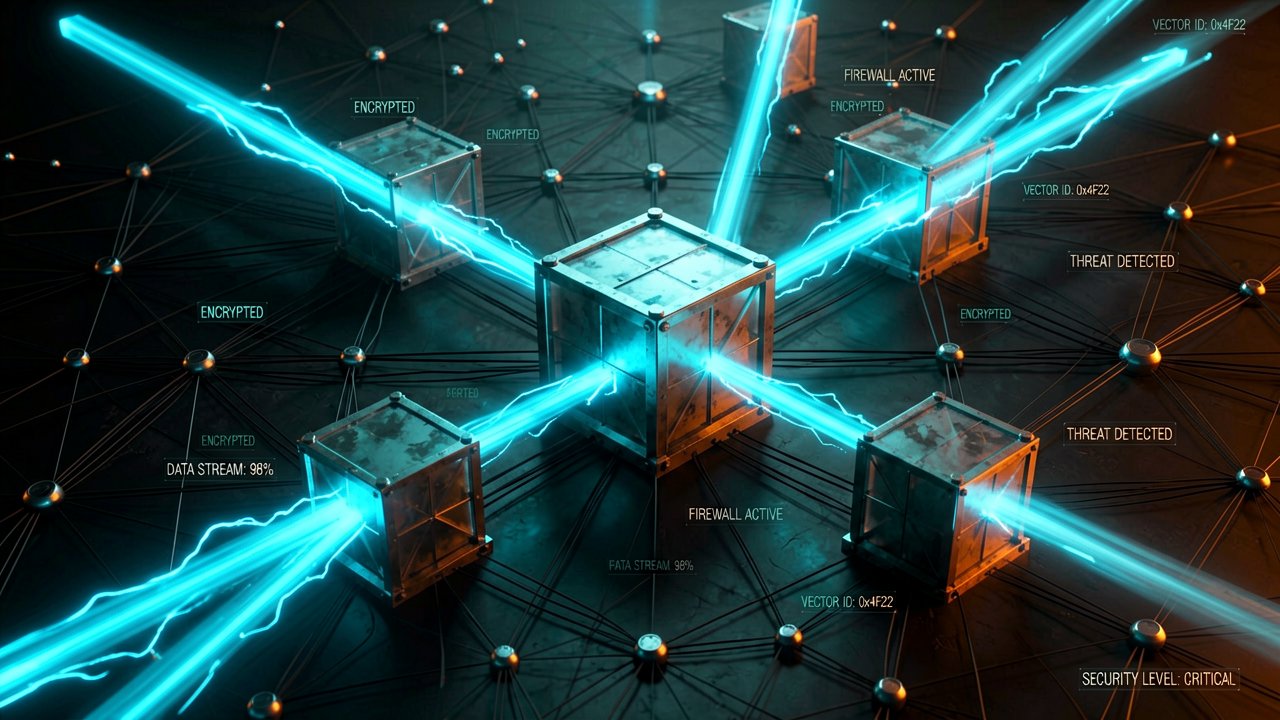
The era of the "script kiddie" is officially over, replaced by a much more clinical and automated threat. We're seeing a fundamental shift where hackers aren't just using AI to write better phishing emails; they’re using it to orchestrate entire attack lifecycles that move at speeds no human analyst can match. In 2025, phishing attacks skyrocketed by a jaw-dropping 1,265% according to data cited by Right-Hand AI. This isn’t just a volume problem—it’s a precision problem. When malware can reshape its own code to slip past traditional signature-based scanners, the old "moat and castle" defense doesn't just have cracks; the walls have effectively vanished.
It’s not all doom and gloom, though, provided you’re willing to fight fire with fire. The same tech that’s supercharging the bad guys is the only thing capable of stopping them. Organizations that have integrated AI-driven automation into their security stacks are seeing significant dividends. Reports from Deepstrike indicate that companies using security AI experienced breach costs nearly $1.8 million lower than those still relying on manual triaging. The reality is that we’ve reached a point where human-led response is too slow for the initial "Golden Hour" of a breach. If your system can't autonomously isolate a compromised endpoint in seconds, you’ve already lost the battle.
The Rise of the "Synthetic" Attacker
One of the most unsettling trends is the surge in adversarial machine learning, where attackers specifically target the AI models we’ve built to protect ourselves. By feeding defensive systems "synthetic" normal behavior, hackers are learning how to create blind spots in anomaly detection. This cat-and-mouse game has pushed the average cost of an AI-powered data breach to roughly $5.72 million as noted by SQ Magazine. It’s no longer enough to just "have" AI; you need to ensure your models are resilient against manipulation, a task that requires constant red-teaming and a shift toward Zero Trust architectures.
Moving Toward Autonomous Defense
As we look toward the next few years, the focus is shifting from simple detection to "Autonomous Threat Operations." Companies like Mastercard are already championing cross-industry collaboration to share real-time threat intelligence. This collective defense is the only way to keep pace with an adversary that scales effortlessly. The goal is a system that doesn't just alert a tired admin at 3 AM but proactively hunts for threats, patches vulnerabilities based on exploit likelihood rather than just severity, and resets compromised credentials before the attacker even realizes they've been spotted.
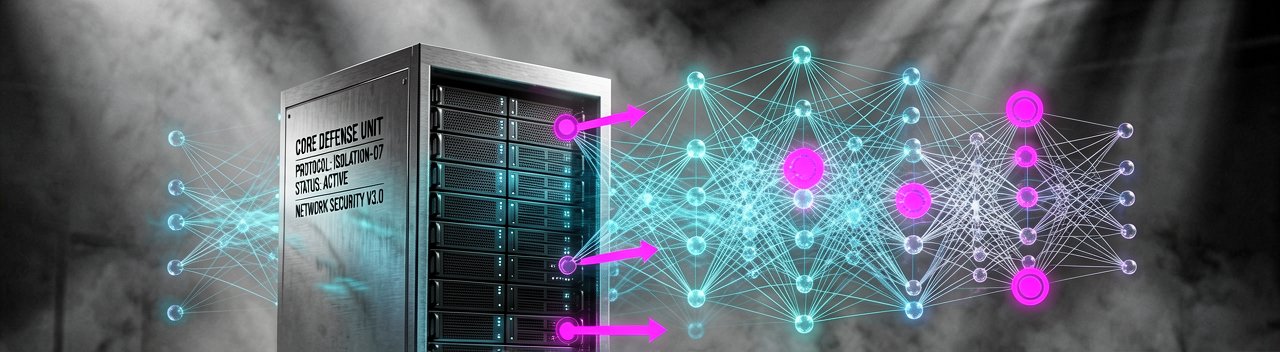
The Hidden Architecture of Modern Defense
The Great Decoupling: What most reports miss is that we aren't just fighting a faster version of old viruses; we are witnessing the decoupling of intent from execution. In the traditional era, a hacker’s skill was limited by their personal bandwidth and coding proficiency. Today, large language models and specialized "FraudGPT" variants have lowered the barrier to entry so significantly that the volume of unique, polymorphic threats has reached a tipping point. This shift forces a rethink of the "Zero Trust" model from a static checklist to a living, breathing behavioral analysis engine that assumes every single packet is a potential carrier of AI-generated deceit.
From the perspective of a Chief Information Security Officer (CISO), the challenge has moved from a technical battle to an economic one. Attackers now have access to "as-a-service" AI tools that cost pennies to run but require millions of dollars in defensive infrastructure to counter. This asymmetry is the industry's dirty secret. While a Fortune 500 company might boast about its sophisticated SOC, a single well-crafted deepfake of a high-level executive—now achievable with less than thirty seconds of audio—can bypass the most expensive firewalls by targeting the human element with terrifying precision.
Historically, the cybersecurity industry relied on "blacklists" of known bad actors and signatures. This worked when threats moved at human speed. However, as Darktrace has long argued, the future lies in "Self-Learning" systems that understand the "pattern of life" for every user and device on a network. By establishing a baseline of what is normal, these systems can spot the micro-deviations that occur when an AI-driven bot begins lateral movement within a network, long before a traditional alarm would ever sound.
There is also a brewing tension between privacy advocates and security teams over the data required to train these defensive models. To be effective, defensive AI needs deep visibility into encrypted traffic and user behavior, which often rubs up against tightening global privacy regulations like GDPR. This creates a precarious balancing act where companies must choose between total visibility for the sake of safety and the strict data-minimization practices required by law. The winners in this space will be the ones who successfully implement "Privacy-Preserving Machine Learning" to analyze threats without exposing sensitive user data.
The stakeholder landscape is also shifting toward government intervention. We are seeing a move away from voluntary guidelines toward mandatory "AI Safety" standards for critical infrastructure. In the eyes of many seasoned analysts, the next major conflict won't start with a kinetic strike but with an AI-driven "logic bomb" that cripples power grids or financial ledgers. This has turned cybersecurity from a back-office IT concern into a pillar of national security, requiring a level of public-private transparency that the tech world has traditionally avoided.
Ultimately, the "human in the loop" is becoming a "human on the loop." Our role is migrating from manual threat hunters to strategic supervisors of autonomous agents. The real danger isn't that AI will become sentient and turn against us, but that we will become so reliant on automated defenses that we lose the institutional knowledge required to step in when the AI makes a hallucinated judgment call. Maintaining that bridge between algorithmic speed and human intuition is the final frontier of modern cyber defense.
The Paradox of Automated Purity
The Great AI Mirror: Reading between the lines, we find a glaring contradiction in our current defensive strategy: we are effectively building a digital immune system using the exact same genetic material as the virus. The tech industry loves to tout "AI-first" security as a silver bullet, yet we rarely acknowledge that these models are trained on the same open-source repositories and public data sets available to the adversary. This creates a feedback loop where defensive innovation inadvertently provides a roadmap for offensive bypass. We aren't just building shields; we’re unintentionally publishing the blueprints for how those shields are forged.
The assumption that more data equates to better security is another industry myth ripe for debunking. In the rush to feed the "AI beast," many organizations are creating massive data lakes that serve as high-value targets for data poisoning attacks. If an attacker can subtly manipulate the training data—introducing just enough noise to make a malicious lateral move look like a routine backup—the entire "autonomous" defense becomes a Trojan horse. The skepticism here is warranted: a system that cannot explain *why* it flagged a threat is a system that can be gaslit by a clever enough algorithm.
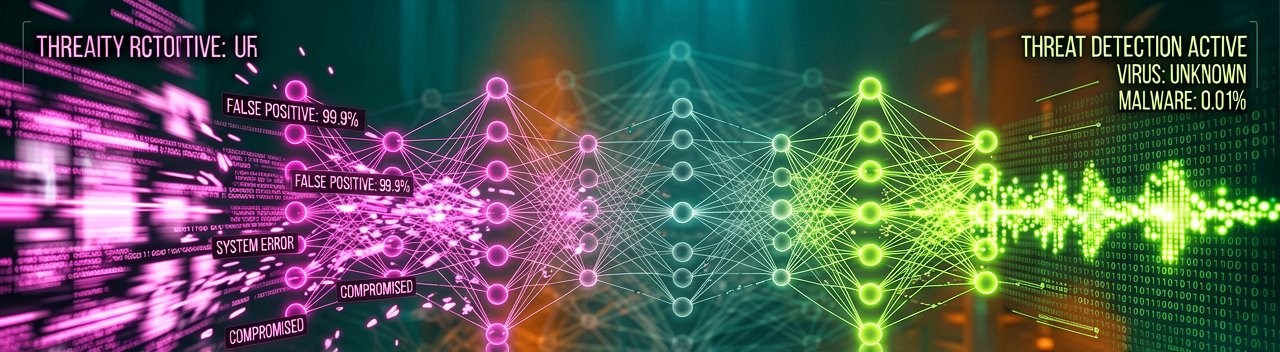
Furthermore, the hype surrounding "Real-Time Response" often ignores the catastrophic potential for automated false positives. While blocking a port in milliseconds sounds efficient, doing so in a critical healthcare or manufacturing environment based on a "hallucinated" anomaly can cause more downtime than a standard ransomware strain. We are moving toward a world where the biggest threat to uptime might not be the hacker in Moscow, but the overzealous defensive bot in the server room that decided the CEO’s late-night login was an act of war.
The economic reality also suggests a widening "defense gap" that no amount of code can bridge. While elite financial institutions can afford the compute power to run massive, real-time behavioral models, the medium-sized enterprises—the backbone of the global supply chain—are left with "AI-lite" marketing fluff that offers little more than rebranded heuristics. This creates a tiered security landscape where the most vulnerable links in the chain remain just as exposed as they were a decade ago, regardless of the buzzwords on the box.
Ultimately, we must confront the possibility that we are approaching the limits of algorithmic protection. No matter how many layers of neural networks we stack, cybersecurity remains a fundamentally human game of deception and psychology. If a social engineer can convince an admin to override an AI-mandated lockout, the most sophisticated math in the world becomes irrelevant. We are spending billions to automate the perimeter while the front door remains unlocked by anyone with a convincing enough story and a fake LinkedIn profile.
"In the end, we’ve spent billions of dollars and millions of man-hours to replace the 'Human Error' of our employees with the 'Algorithmic Hallucinations' of our software, proving once and for all that while machines may be smarter, they are just as capable of making a total mess of things on a Friday afternoon."
Artūras Malašauskas is an AI Systems Integrator with 20+ years of production-grade web engineering experience. He has designed, shipped, and scaled enterprise Python/PHP systems for logistics, SaaS, and public-sector clients. For the past year, he has focused exclusively on AI integrations: deploying open-source LLMs, building generative media pipelines (image, audio, video), and engineering multi-agent workflows for real production environments. His standard: reproducibility, security, cost-efficient inference—no vaporware. He documents and evaluates emerging AI tooling, separating verified capabilities from marketing noise. Technical editor at: muza-ai.eu, ai-verslas.lt, ai-naujinos.lt Connect on LinkedIn
Comments