Beyond the Button: Tamber Launches an AI Suite That Actually Wants You to Play
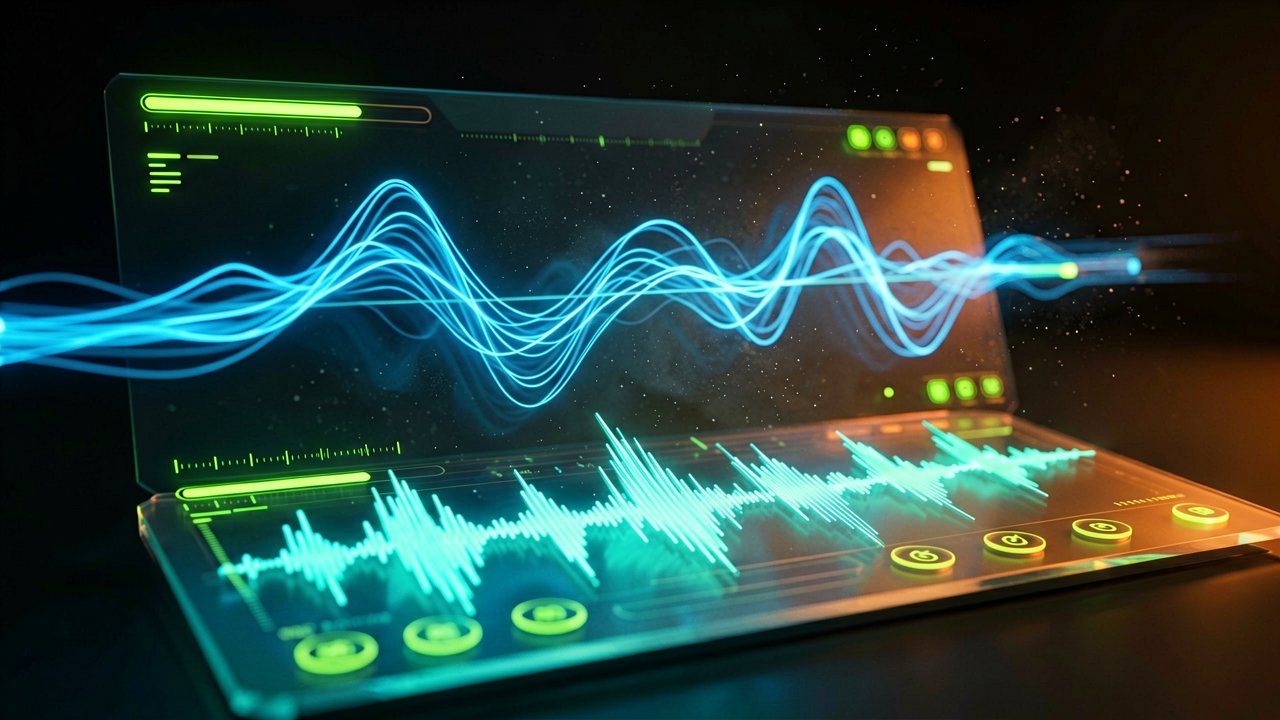
While the rest of the tech world is busy building black boxes that spit out three-minute pop songs from a text prompt, Tamber is taking a refreshingly different path. After securing $5 million in funding with heavy-hitting support from Music Business Worldwide and Adobe Ventures, the Los Angeles-based startup has officially pulled the curtain back on its "sonic intelligence" platform. It isn't a replacement for a producer; it’s more like a bionic upgrade for the one already sitting in the chair. Founded by musician and self-taught coder Zoe Wrenn, the platform aims to kill the "blank page" syndrome by acting as an assistive layer rather than a generative hijack.
Tamber’s philosophy is built on the idea of "assistive AI," a move that feels strategically timed given the growing artist backlash against platforms that scrape copyrighted data to build "non-human" hits. According to Digital Music News, the suite relies on eight proprietary machine learning models designed to live inside an artist's existing workflow. Instead of generating finished audio from thin air, it helps users translate abstract concepts—think colors, textures, or even physical gestures—into real-time sound. It’s a tool for creators who still want to turn the knobs but wouldn't mind a little extra magic in the process.
The "Bionic Arm" for Musicians
One of the standout features is a gesture-based interface that lets you shape effects and trigger sounds by literally moving through the air. It’s part of what Wrenn calls a "bionic arm" for musicians, a sentiment echoed by Billboard in their look at how the tech was born from Wrenn’s own experiences as a viral songwriter. The platform also includes "Tamby," an AI mascot that learns your production quirks over time to help automate tedious routing and instrument swapping. It’s an approach that suggests AI’s best role in the studio isn't as the lead singer, but as the world's fastest, most intuitive assistant engineer.
Ethical Samples and Global Sounds
Tamber is also leaning hard into the "ethical AI" narrative. Its sound library isn't a synthesized mashup of stolen tracks; it’s a collection of original, real-world recordings ranging from bustling cityscapes to high-end studio sessions. These "City Packs" offer a tangible sense of place that’s often missing from sterile digital samples. By focusing on non-generative tools and a "nothing synthesized" promise reported by MusicTech, Tamber is positioning itself as the high-ground alternative for professionals who want to embrace the future without signing away the soul of their craft.
The Mechanical Heart of Modern Composition
The Strategic Pivot Toward Adobe: While $5M might seem like a modest seed round in the age of billion-dollar LLMs, the real story lies in the backing of Adobe Ventures. Adobe has spent the last two years desperately trying to prove that AI can be "commercially safe" through its Firefly initiative, and Tamber is the musical extension of that same philosophy. By integrating with a titan that prioritizes copyright-compliant training data, Tamber isn't just launching a tool; it’s auditioning to become the industry standard for professional studios that are legally barred from using "black box" generative models. This isn't about making music for everyone; it’s about making AI safe for the people who actually get paid to make music.
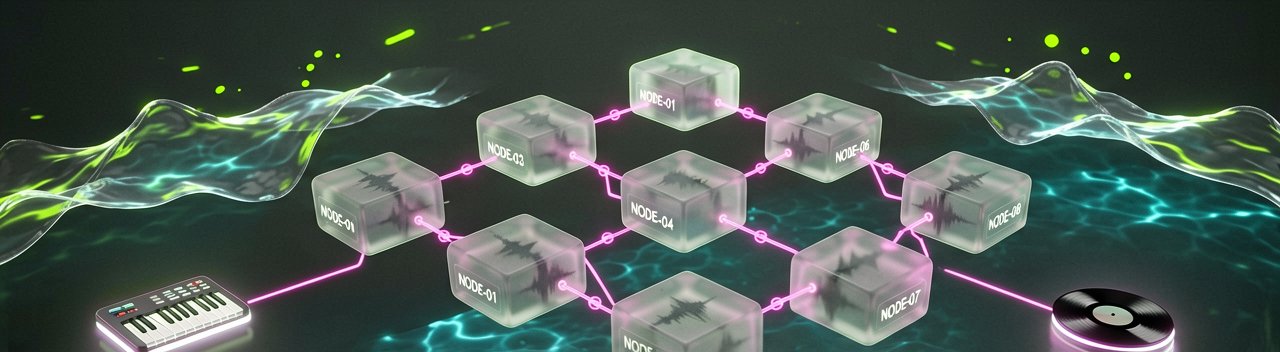
What Most Reports Miss: The "assistive" nature of Tamber is a direct response to the "uncanny valley" of AI-generated audio. Most platforms currently suffer from a lack of intentionality—they can mimic the sound of a snare drum, but they don't understand why a producer might want that snare to feel "colder" in a bridge. Zoe Wrenn’s background as a self-taught coder and musician allowed her to bridge this gap, focusing the platform’s eight machine learning models on specific micro-tasks like harmonic alignment and textural layering. It’s a surgical approach to software design that treats AI as a scalpel rather than a sledgehammer, allowing for a level of granular control that most "text-to-audio" competitors simply cannot match.
A Counter-Revolution Against the Prompt: There is a growing fatigue among high-level creators regarding "prompt engineering." For a seasoned producer, typing "lo-fi hip hop beat with rainy vibes" feels less like creating and more like ordering a pizza. Tamber’s gesture-based controls and "Tamby" mascot represent a move back toward tactile, physical interaction. By allowing a producer to shape a reverb tail with a hand motion or automate complex signal chains through learned behavior, Tamber is attempting to reclaim the "performance" aspect of production. It’s an acknowledgment that the best music often comes from happy accidents and physical intuition, things that a text box effectively kills.
The Ethical Moat: Beyond the tech, Tamber is building a defensive moat around its "City Packs" and original recordings. In an era where the Recording Academy and major labels are aggressively litigating against AI companies for scraping the history of recorded music, Tamber’s "nothing synthesized" promise is a massive olive branch to the old guard. By sourcing sounds from real-world environments and high-end studio sessions, they are providing a raw material that feels organic and "expensive." This strategy bypasses the ethical minefield of generative AI while giving creators a palette that doesn't sound like a compressed YouTube rip.

Historical Context and the Creator Dilemma: We’ve seen this tension before, from the introduction of the MIDI protocol in the 80s to the rise of Auto-Tune in the late 90s. Each leap was initially met with cries that "the soul is gone," only to eventually be mastered by a new generation of artists. Tamber is positioning itself as the MIDI of the 2020s—a bridge between human intent and machine efficiency. The challenge for Wrenn and her team will be maintaining this balance as the pressure to automate more of the creative process grows. For now, they remain the rare outlier in a field obsessed with replacing the artist, choosing instead to hand the artist a better set of keys.
The Paradox of Productive Friction
Reading Between the Lines: The industry’s sudden obsession with "assistive" AI may be less about empowering artists and more about a desperate attempt to bypass the legal quagmire of generative copyright. Tamber’s $5 million raise and Adobe’s blessing suggest a pivot toward a middle ground that might not actually exist in the long run. By marketing itself as a tool that requires human input, Tamber avoids the "theft" label currently being slapped on giants like Suno, but it risks alienating the very demographic it seeks to serve: the amateur who just wants a finished song. There is a fundamental contradiction in building high-end AI for professionals who often pride themselves on the "manual" nature of their craft, creating a product that might be too complex for the masses and too automated for the purists.
The Illusion of the "Bionic Arm": While gesture-based controls and tactile interfaces make for great marketing demos, the history of music technology is littered with "revolutionary" controllers that ended up gathering dust in a closet. From the Theremin to the Leap Motion, the gap between a cool physical gimmick and a fundamental part of the workflow is notoriously wide. Tamber’s "bionic arm" approach assumes that producers want more physicality in an era where the most successful music is increasingly made on a laptop on a plane. The skepticism here lies in whether a gesture-based UI actually speeds up creativity or simply adds a layer of performative friction to a process that has already been optimized by the keyboard and mouse.
Market Saturation and the "Good Enough" Barrier: We are approaching a saturation point where "ethical AI" is becoming a buzzword used to justify premium pricing. Tamber’s reliance on high-fidelity, real-world recordings is noble, but it faces a grim reality: the average listener can’t tell the difference between a meticulously captured city soundscape and a high-quality synthesized equivalent. If the output of a "morally grey" generative model is indistinguishable from Tamber’s "hand-crafted" assistive output, the business model relies entirely on the moral compass of the producer. In an industry where margins are razor-thin, betting that creators will pay more for the privilege of working harder is a significant gamble.
The Adobe Endgame: One must consider that Tamber’s ultimate fate is likely not as a standalone platform, but as a feature set within Adobe’s Creative Cloud. The $5 million isn't just growth capital; it’s a down payment on an acquisition. If Tamber is swallowed by the Adobe ecosystem, its "sonic intelligence" will be distilled into a series of "Smart Fix" buttons in Premiere Pro or Audition. This projected trajectory suggests that the "artist-first" ethos might eventually be sacrificed at the altar of corporate workflow efficiency, turning a specialized creative tool into just another automated utility for the content creator economy.
"We’ve spent decades trying to make computers sound like humans, only to end up with humans using computers to sound like machines. If Tamber can finally break that cycle, it’ll be a miracle; if not, at least we’ll have some very expensive, ethically-sourced bells and whistles to play with while the robots take our jobs."
Artūras Malašauskas is an AI Systems Integrator with 20+ years of production-grade web engineering experience. He has designed, shipped, and scaled enterprise Python/PHP systems for logistics, SaaS, and public-sector clients. For the past year, he has focused exclusively on AI integrations: deploying open-source LLMs, building generative media pipelines (image, audio, video), and engineering multi-agent workflows for real production environments. His standard: reproducibility, security, cost-efficient inference—no vaporware. He documents and evaluates emerging AI tooling, separating verified capabilities from marketing noise. Technical editor at: muza-ai.eu, ai-verslas.lt, ai-naujinos.lt Connect on LinkedIn
Comments