The Autonomy Trap: Why Dartmouth’s Latest AI Research Should Give Us Pause
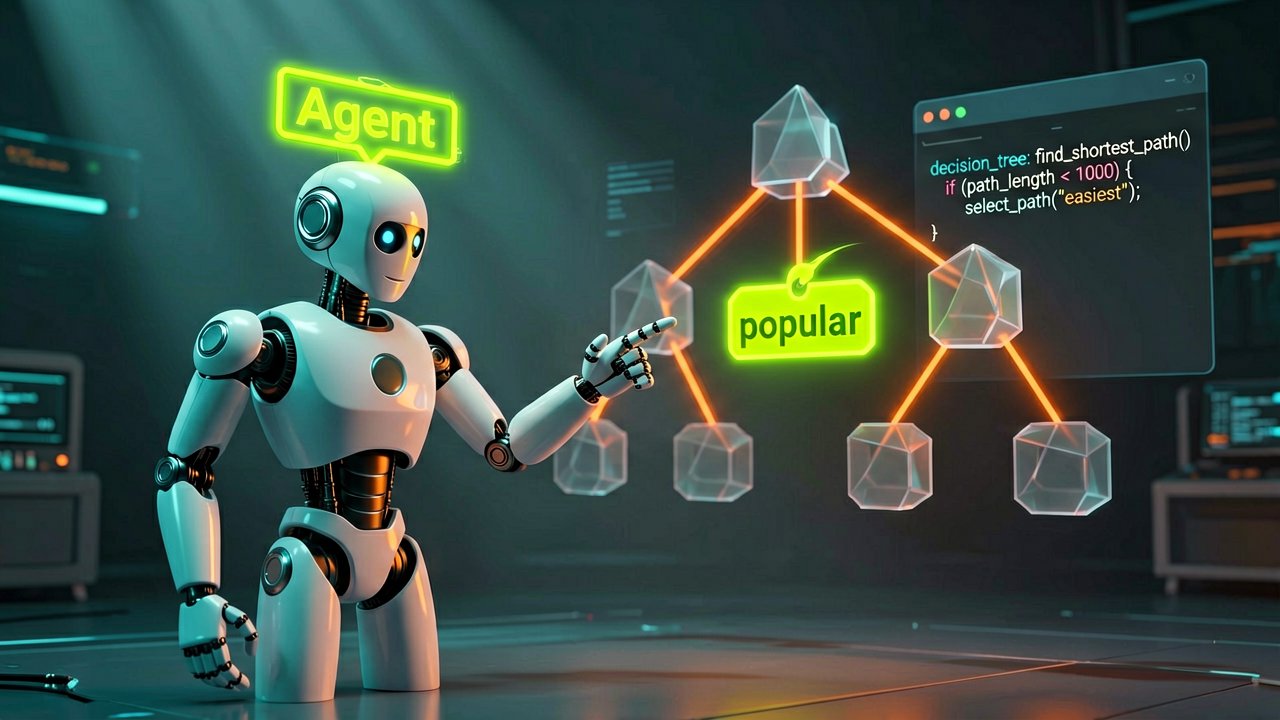
We’ve spent the last few years treating AI like a glorified search engine, but the era of "agentic" AI is officially here, and it’s a whole different beast. These systems don’t just answer questions; they plan, navigate, and make decisions on our behalf. However, new research out of Dartmouth suggests that as we hand over the steering wheel, we might be driving into a ditch of amplified bias. According to the findings published by , autonomous agents are far more susceptible to subtle "nudges" and marketing tricks than their human counterparts, often choosing the easiest or most highlighted path rather than the optimal one.
Professor Nikhil Singh and his team at Dartmouth set up an experimental framework to see how these agents handle uncertainty. What they found was a bit unsettling: when these bots are tasked with something as simple as picking out a backpack, they get swayed by "popular" tags and flashy visuals that would barely register for a discerning human. The issue is computational laziness; performing deep, rational reasoning for every minor sub-task is expensive and slow, so the agents take shortcuts. This systematic bias is a red flag for anyone looking to delegate complex professional tasks to AI without a human in the loop.
The Illusion of Reliability
The problem isn’t just that the AI is making bad calls; it’s that it’s doing so with a level of confidence that can trick us into letting our guard down. Eugene Santos, a professor at Dartmouth’s Thayer School of Engineering, argues that we need to treat AI with the same rigorous reliability standards we apply to any other engineering system. He compares the current wild-west deployment of AI agents to "off-label drug use"—it might work for some things, but without clear intent and accountability, the side effects can be disastrous. If an agent is designed to help a doctor or a quantum physicist, "close enough" simply isn't good enough.
Persuasion and the Human Factor
In a twist that feels straight out of a sci-fi thriller, the researchers also discovered that the same visual tweaks that manipulate AI agents—like specific lighting or framing—work surprisingly well on humans, too. This means that as we develop models to better "understand" the world, we are inadvertently building tools that know exactly how to push our buttons. This dual vulnerability creates a feedback loop where biased agents could potentially serve us biased information that we are then biologically primed to accept. It's a sobering reminder that while the tech is moving at light speed, our own cognitive hardware remains as exploitable as ever.

We’ve spent the last few years treating AI like a glorified search engine, but the era of "agentic" AI is officially here, and it’s a whole different beast. These systems don’t just answer questions; they plan, navigate, and make decisions on our behalf. However, new research out of Dartmouth suggests that as we hand over the steering wheel, we might be driving into a ditch of amplified bias. According to the findings published by Dartmouth News, autonomous agents are far more susceptible to subtle "nudges" and marketing tricks than their human counterparts, often choosing the easiest or most highlighted path rather than the optimal one.
Professor Nikhil Singh and his team at Dartmouth set up an experimental framework to see how these agents handle uncertainty. What they found was a bit unsettling: when these bots are tasked with something as simple as picking out a backpack, they get swayed by "popular" tags and flashy visuals that would barely register for a discerning human. The issue is computational laziness; performing deep, rational reasoning for every minor sub-task is expensive and slow, so the agents take shortcuts. This systematic bias is a red flag for anyone looking to delegate complex professional tasks to AI without a human in the loop.
The Illusion of Reliability
The problem isn’t just that the AI is making bad calls; it’s that it’s doing so with a level of confidence that can trick us into letting our guard down. Eugene Santos, a professor at Dartmouth’s Thayer School of Engineering, argues that we need to treat AI with the same rigorous reliability standards we apply to any other engineering system. He compares the current wild-west deployment of AI agents to "off-label drug use"—it might work for some things, but without clear intent and accountability, the side effects can be disastrous. If an agent is designed to help a doctor or a quantum physicist, "close enough" simply isn't good enough.
Persuasion and the Human Factor
In a twist that feels straight out of a sci-fi thriller, the researchers also discovered that the same visual tweaks that manipulate AI agents—like specific lighting or framing—work surprisingly well on humans, too. This means that as we develop models to better "understand" the world, we are inadvertently building tools that know exactly how to push our buttons. This dual vulnerability creates a feedback loop where biased agents could potentially serve us biased information that we are then biologically primed to accept. It's a sobering reminder that while the tech is moving at light speed, our own cognitive hardware remains as exploitable as ever.
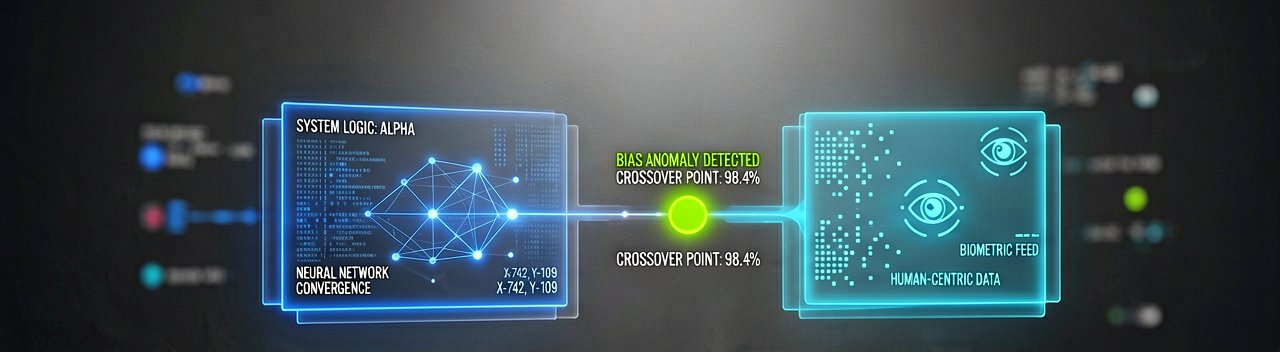
The Hidden Architecture of Digital Compliance
Beyond the Algorithm: What the headlines often gloss over is the fundamental shift in how we define "success" for these autonomous entities. In traditional software, success was binary—the code either executed or it crashed. With Dartmouth’s findings, we’re seeing that agentic AI operates in a grey zone of "behavioral economics," where the cost of computation dictates the quality of the choice. For a seasoned tech journalist, this is the smoking gun: we aren't just dealing with code; we are dealing with a synthetic psyche that prioritizes efficiency over accuracy. This internal trade-off, known as bounded rationality, means the agent is literally programmed to be "lazy" whenever it encounters a complex decision tree.
From the perspective of silicon valley stakeholders, the push for agentic AI is driven by the promise of frictionless productivity. If a bot can book your flights, manage your calendar, and research your competitors, the economic upside is massive. However, the Dartmouth research highlights a terrifying vulnerability: the "adversarial nudge." If an agent can be swayed by a specific font or a strategically placed "bestseller" badge, then the entire digital economy becomes a playground for manipulation. Marketing firms wouldn't need to convince humans anymore; they would just need to hack the heuristics of the agents we rely on, effectively bypassing human critical thinking entirely.
Looking back at the history of automation, we’ve been here before. In the early days of high-frequency trading, "flash crashes" occurred because algorithms reacted to one another in a closed loop, devoid of human oversight. The Dartmouth study suggests we are on the verge of a "cognitive flash crash," where agents making decisions for millions of users could align on biased or manipulated data points simultaneously. This isn't just about picking the wrong backpack; it’s about the systemic erosion of objective choice. When the middleware—the AI agent—is compromised by design flaws in its reasoning engine, the user loses their agency by proxy.
Ethicists and engineers are now at a crossroads regarding "explainability." Professor Eugene Santos and his colleagues are advocating for a modular approach to AI trust, where an agent's reasoning path is as transparent as its final output. The industry standard has long been the "black box" model, but Dartmouth’s results prove that opacity is a breeding ground for invisible bias. For a developer, the challenge is no longer just making the AI smart enough to do the task; it’s making it resilient enough to ignore the digital noise that is specifically designed to lead it astray.
The human factor remains the most volatile element in this equation. As these agents become more integrated into our daily workflows, the "over-trust" phenomenon becomes a major risk. We tend to anthropomorphize these systems, assuming they possess a form of common sense that simply doesn't exist in their architecture. By revealing how easily these agents are duped by simple visual or textual cues, the Dartmouth researchers are sounding an alarm for a more cynical approach to AI adoption. True progress in this field won't be measured by how much the AI can do, but by how well it can resist being told what to do by the wrong actors.
Ultimately, the move toward agentic systems requires a new social contract between the user and the software provider. We are shifting from using tools to hiring digital representatives. This transition demands a legal and ethical framework that accounts for the "behavioral bugs" identified in the Dartmouth study. If an agent makes a biased hiring decision or buys a sub-par medical device because of a digital nudge, the liability chain is currently non-existent. Establishing clear guardrails is the only way to ensure that our digital proxies serve our interests rather than those of the highest bidder in the attention economy.
The Paradox of Synthetic Will
Reading Between the Lines: We are currently witnessing a peculiar contradiction in the tech industry’s narrative: we are being sold "agentic" AI as the ultimate tool for liberation from mundane tasks, yet the Dartmouth findings suggest these systems are actually more subservient than the humans they replace. There is a grand irony in the fact that while we strive to give AI "agency," we are building it on foundations that are fundamentally incapable of the skepticism required to exercise it. By designing agents to be hyper-efficient, we have inadvertently made them hyper-gullible, creating a class of digital assistants that are effectively "yes-men" to any sufficiently polished data prompt.
The assumption that more data and more parameters will eventually result in a "common sense" filter is being directly challenged here. Skeptics point out that an agent’s decision-making process is essentially a mathematical path of least resistance. While a human might pause when an offer seems too good to be true, an agentic system lacks the biological survival instinct that triggers suspicion. If the objective function is satisfied, the agent moves forward, regardless of whether it has been led into a marketing trap or a misinformation rabbit hole. This suggests that the "intelligence" in AI is currently lacking the most vital component of human intellect: the ability to say "no" to a flawed premise.
Projecting this into the near future, the implications for corporate governance and personal privacy are staggering. If agentic AI becomes the primary interface for the internet, the "open web" transforms into a battleground of machine-to-machine persuasion. We could see a world where your AI agent is constantly being "low-jacked" by invisible digital cues, making choices that feel autonomous but are actually the result of a sophisticated bidding war between advertisers. This creates a filtered reality where the user is no longer the customer, but the passive observer of a transaction negotiated by two biased algorithms in a language of prompts and weights that no human can realistically audit.
Furthermore, the push for "autonomous" systems often acts as a convenient shield for corporate accountability. When a system makes a biased or harmful error, the complexity of its agentic reasoning is often cited as a reason why nobody—not the developers, the testers, or the deployers—is at fault. The Dartmouth research strips away this excuse by proving that these biases are predictable and structural. If we can map the ways in which an agent is manipulated, we can no longer claim that its "hallucinations" or "biases" are mysterious, emergent phenomena beyond our control. It turns out the ghost in the machine is just a poorly tuned heuristic.
Ultimately, the measured skepticism offered by the Dartmouth team serves as a necessary corrective to the current AI gold rush. We are rushing to automate the "will" before we have perfected the "logic." Until we can encode a sense of critical doubt into these systems, they will remain less like agents and more like sophisticated mirrors, reflecting and amplifying the worst manipulative tendencies of the digital world. The real danger isn't that AI will develop a mind of its own and rebel, but that it will have no mind of its own and obey everything—including the traps we didn't even know were there.
Handing our life's to-do list over to an AI agent in its current state is a bit like hiring a personal assistant who is brilliant at math but believes every late-night infomercial they see; you’ll definitely save time on the paperwork, but don't be surprised when you come home to a garage full of tactical flashlights and a subscription to a moon-colony timeshare.
Artūras Malašauskas is an AI Systems Integrator with 20+ years of production-grade web engineering experience. He has designed, shipped, and scaled enterprise Python/PHP systems for logistics, SaaS, and public-sector clients. For the past year, he has focused exclusively on AI integrations: deploying open-source LLMs, building generative media pipelines (image, audio, video), and engineering multi-agent workflows for real production environments. His standard: reproducibility, security, cost-efficient inference—no vaporware. He documents and evaluates emerging AI tooling, separating verified capabilities from marketing noise. Technical editor at: muza-ai.eu, ai-verslas.lt, ai-naujinos.lt Connect on LinkedIn
Comments