35. Luma AI: The Startup Bringing Cinematic Logic to the Machine Mind

There was a time, not so long ago, when 3D modeling was a dark art reserved for those with the patience for vertex manipulation and the budget for server-grade GPUs. Then came Luma AI, a Palo Alto outfit that decided the "spatial web" shouldn't just be for the pros. Since its founding in 2021 by veterans of Apple’s Vision Pro team and UC Berkeley’s AI labs, the company has pivoted from a niche 3D capture tool into a full-blown generative powerhouse. It’s a classic Silicon Valley story of a research-first team hitting a massive commercial vein, and the momentum isn't slowing down.
The real turning point came when Luma stepped beyond static 3D into the world of moving pictures. Their flagship "Dream Machine" isn't just another video generator; it’s built on the idea that AI needs to understand the physical world—how light hits a surface or how gravity pulls a fabric—rather than just predicting the next pixel. It’s a distinction that has clearly caught the eye of big money. By late 2025, the company had locked in a staggering $900 million Series C, valuing it north of $4 billion, according to CNBC. This war chest is currently being funneled into "Project Halo," a massive supercluster project designed to train the next generation of multimodal models.
The "Reasoning" Revolution in Video
Luma’s latest leap forward, Ray3, is being billed as the world’s first "reasoning" video model. While that sounds like typical tech marketing fluff, the results are hard to argue with. The model handles cinematic concepts like outpainting and reframing with a level of spatial consistency that feels less like a dream and more like a camera move. By partnering with industry titans like Adobe and major advertising agencies, Luma is moving from a hobbyist playground into the professional creative pipeline. They’ve even set up shop in London to spearhead international growth, hiring heavy hitters from the legacy ad world to bridge the gap between AI and traditional filmmaking.
From Discord Doodles to Enterprise Engines
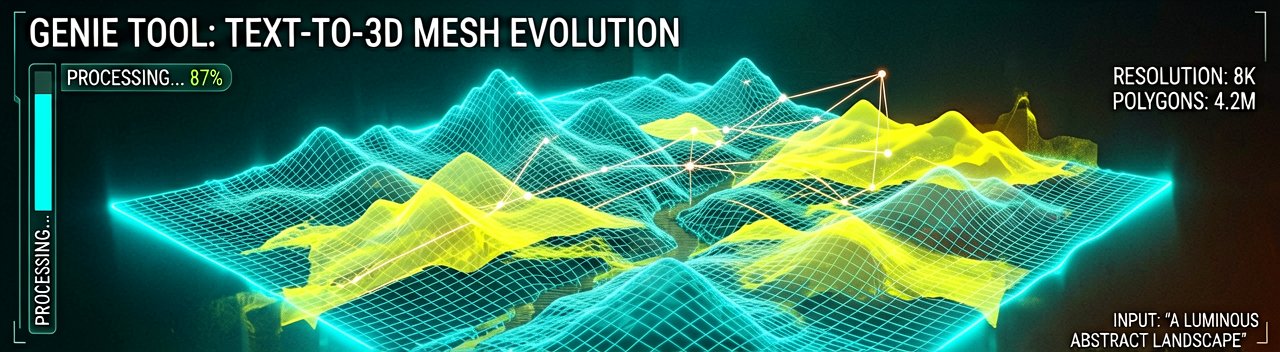
Despite the high-end focus, Luma hasn't totally abandoned its roots. Their "Genie" tool still lets anyone whip up 3D meshes from text prompts, though the quality has graduated from experimental blobs to production-ready quads. For developers, the launch of their Uni-1.1 API for image generation and the Modify Video API has signaled a shift toward becoming a foundational layer for other apps. They're basically building the plumbing for a future where every creative tool has a "spatial reasoning" engine under the hood.
The competition in AI video is fierce, with giants like Sora looming and rivals like Kling pushing the envelope on model range. However, Luma’s obsession with physical plausibility gives them a unique edge. They aren't just trying to make things look "cool"; they’re trying to make them look real enough to inhabit. With a billion dollars in the bank and a seat at the table with the world’s biggest creative suites, Luma AI is no longer the underdog—it's the one setting the pace.
The Architectural Ambition of Spatial Intelligence
Beyond the Pixels: What most surface-level reports miss is that Luma AI isn’t actually trying to build a video generator in the traditional sense. While competitors are preoccupied with "next-token prediction" for images—essentially guessing what the next frame should look like based on a library of billions of clips—Luma is obsessed with a concept they call "World Models." The goal is to teach the AI the underlying physics of our reality, from the way light refracts through a glass of water to the specific skeletal constraints of a galloping horse. This approach stems from the founders' background at Apple, where spatial computing wasn't just a buzzword but a hardware requirement for the Vision Pro.
The industry is currently witnessing a quiet but fierce philosophical divide between those who believe scale is everything and those who believe in structured reasoning. Luma’s leadership has consistently bet on the latter. By prioritizing "multimodal reasoning," they’ve managed to minimize the uncanny "hallucinations" that plague other models, such as fingers merging into objects or backgrounds shifting mid-pan. For a professional cinematographer, a video that looks 90% real but fails 10% of the time is useless. Luma is aiming for that final 10% where the logic of the scene holds up under scrutiny, making it a viable tool for pre-visualization rather than just a source of viral clips.
Stakeholder tension in this space often revolves around the "black box" nature of training data, but Luma has taken a more strategic approach toward the creative industry. Instead of positioning themselves as a replacement for human craft, they are leaning into the role of an "intelligent lens." Early adopters in Hollywood and high-end advertising aren't using Dream Machine to replace their film crews; they’re using it to test complex lighting setups and camera moves that would otherwise cost hundreds of thousands of dollars to prototype. This pivot toward the "Enterprise Engine" model is precisely why investors were willing to back the Series C at such a high valuation despite the saturated market.
Historically, the leap from 2D to 3D has been the graveyard of many promising startups because the compute requirements are exponentially higher. Luma’s secret sauce lies in their efficiency. By utilizing "Gaussian Splatting" early on, they figured out how to render complex 3D environments with a fraction of the power required by traditional Neural Radiance Fields (NeRFs). This technical agility allowed them to scale from a mobile app that scanned shoes to a global platform that generates cinematic sequences. It’s a transition that mirrors the evolution of digital photography: moving from a novelty to a fundamental infrastructure of the modern web.
The recent expansion into London isn't just about finding a new office; it’s a calculated move to tap into the European creative hub where visual effects (VFX) houses are historically concentrated. By hiring veterans from the traditional ad world, Luma is attempting to translate "AI-speak" into the language of art directors and creative leads. This cultural bridge is what will likely determine their longevity. While other startups might get caught in a cycle of chasing the next technical benchmark, Luma is focused on becoming an invisible part of the professional workflow, ensuring that spatial intelligence becomes as standard as a zoom lens in a director's kit.
The Paradox of Perfectly Rational Pixels
Reading Between the Lines: The tech industry is currently obsessed with the idea that "spatial reasoning" is the magic bullet that will fix AI’s credibility problem. Luma AI’s bet on physics-based logic is intellectually seductive, but it ignores a messy truth about human creativity: we don’t actually want perfect reality. Cinema is built on the "cheat"—the impossible lighting, the lens flare that shouldn't exist, and the physics-defying stunt. By training models to respect the laws of gravity and light with dogmatic precision, Luma risks creating a digital world that is technically flawless but artistically sterile. There is a fine line between a "world model" and a digital cage that limits the surrealism often required in high-end storytelling.
Furthermore, the astronomical $900 million Series C valuation creates a "pressure cooker" environment that often stifles the very research-first culture that made Luma successful in the first place. When you take nearly a billion dollars from investors like the Saudi-backed Humain, the clock doesn't just start ticking; it starts screaming. Luma is now forced to move from a nimble innovator to a massive infrastructure provider almost overnight. The contradiction here is clear: they are pitching a tool for "creatives," yet their survival depends on enterprise-scale automation and boring, high-volume API calls. It’s a classic pivot where the art often becomes the marketing lure for what is essentially a data-processing factory.
Measured skepticism is also warranted regarding the "democratization" narrative. While Luma’s Genie and Dream Machine make 3D and video creation accessible to anyone with a Discord account, the high-tier "Project Halo" supercluster suggests a future where the highest quality "reasoning" is still gated behind massive paywalls. We aren't necessarily entering an era where everyone is a filmmaker; we are entering an era where the divide between "AI-generated noise" and "AI-assisted prestige" is defined by who can afford the most compute-heavy tokens. If the logic of the model is its selling point, then the most "logical" videos will naturally belong to the highest bidders, potentially centralizing creative power more than ever before.
There is also the looming specter of the "Model Collapse" theory. As Luma and its rivals flood the internet with hyper-realistic, spatially consistent video, the future versions of these models will inevitably begin training on their own output. If Luma’s AI is "reasoning" based on a world that is already synthetic, the feedback loop could lead to a subtle, creeping homogenization of visual style. Every "cinematic" shot might start looking like a Luma shot—adhering to the same optimized lighting and the same mathematically "correct" camera paths. The risk isn't that the AI will fail to understand our world, but that it will eventually replace it with a version that is slightly too polished to be believable.
Ultimately, Luma’s expansion into the London VFX scene is a double-edged sword. While it gains them institutional credibility, it also places them in the crosshairs of labor unions and artists who see "spatial intelligence" as a euphemism for "headcount reduction." The company’s success will depend on whether they can convince the industry that their tools are an extension of the artist’s hand rather than an automated replacement for it. In a world where "real" is becoming a relative term, Luma is trying to sell us the most expensive version of the truth—and we are all waiting to see if it’s worth the price of admission.
In the end, we’re spending billions of dollars to teach computers the difference between a falling rock and a floating one, only for the average user to inevitably use that god-like power to generate a high-fidelity video of a cat wearing a tuxedo on Mars. Progress is a strange beast.
Artūras Malašauskas is an AI Systems Integrator with 20+ years of production-grade web engineering experience. He has designed, shipped, and scaled enterprise Python/PHP systems for logistics, SaaS, and public-sector clients. For the past year, he has focused exclusively on AI integrations: deploying open-source LLMs, building generative media pipelines (image, audio, video), and engineering multi-agent workflows for real production environments. His standard: reproducibility, security, cost-efficient inference—no vaporware. He documents and evaluates emerging AI tooling, separating verified capabilities from marketing noise. Technical editor at: muza-ai.eu, ai-verslas.lt, ai-naujinos.lt Connect on LinkedIn
Comments