Creatify Unleashes AdMax: The AI Creative Agent That Actually Thinks Like a Marketer
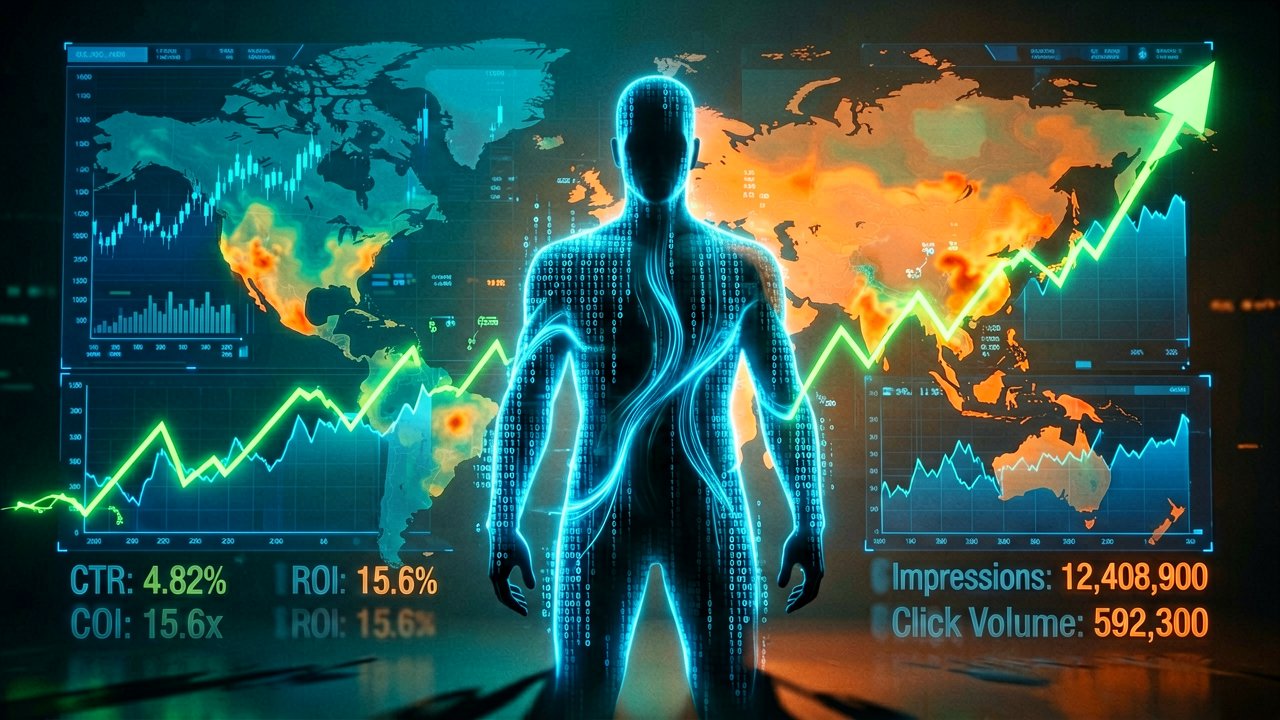
The ad-tech world is officially moving past "magic" video generation and toward something far more dangerous for traditional agencies: strategic autonomy. Creatify recently took the wraps off its new AI creative agent, designed to handle the heavy lifting of campaign strategy alongside the usual asset creation. It’s not just about cranking out pretty pixels anymore; the platform is positioning this as the first dedicated agent built to prioritize conversion metrics above all else. According to a report by , the system draws from a staggering database of 15 million high-performing ads to inform every decision it makes, from the initial hook to the final call-to-action.
What makes this shift notable isn't just the speed—though being able to turn a product URL into a dozen ad variants in under four minutes is certainly a flex. It’s the "agentic" nature of the tool. Instead of waiting for a human to dictate every font choice or scene transition, the agent—dubbed AdMax in some early reviews—analyzes competitor trends and market gaps to suggest which specific "hooks" will actually stop the scroll on TikTok or Instagram. It’s a transition from a passive tool to a digital creative director that can manage format optimization across various platforms like Meta and YouTube without breaking a sweat.
The early returns on this data-first approach are making a strong case for the "death of the creative gut feeling." Case studies featured on Creatify's own platform show agencies slashing their cost-per-acquisition (CPA) by 45% while seeing a 73% jump in return on ad spend (ROAS). For e-commerce brands that used to spend thousands on a single studio shoot, the ability to churn out 50 variations of a video for the price of a mid-tier subscription changes the math entirely. By integrating performance analytics directly into the creation loop, the agent learns which avatars and scripts are actually moving the needle, theoretically ensuring the next batch of ads is smarter than the last.
From URL to Viral: How the Workflow Shifts
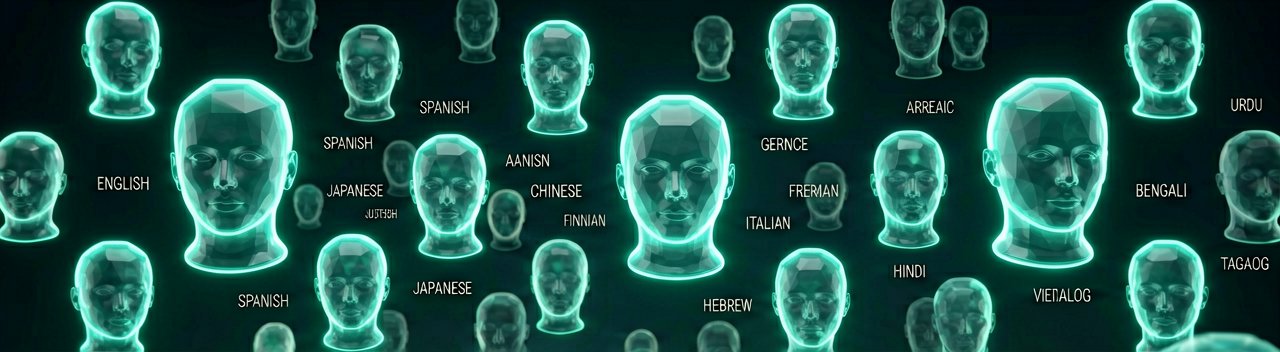
The process is refreshingly blunt: you feed the agent a product link from Shopify or Amazon, and it goes to work scraping images, descriptions, and pricing. It then builds a script based on what's currently working in your specific niche. We’re seeing a massive library of over 750 realistic AI avatars and support for 75+ languages, which means localizing a campaign for a global market is now an afternoon task rather than a multi-month logistical nightmare. While critics might argue about the "soul" of AI-generated content, the numbers suggest that for performance marketing, "soul" is often less important than a 40% hook rate and a localized voiceover that sounds human enough to pass the five-second test.
The Competitive Edge of Real-Time Intelligence
The real secret sauce here is the "Creative Insights" dashboard. It’s essentially a reconnaissance tool that scans thousands of competitor ads in real-time. By benchmarking your brand against industry standards and identifying successful patterns, the AI doesn't just guess what will work; it reverse-engineers success. This isn't just about saving time anymore—it's about removing the guesswork that usually eats up half of a marketing budget. As more brands move toward this "smart ad" model, the barrier to entry for high-quality video production is effectively hitting zero, forcing human creative teams to focus on high-level brand identity while the AI handles the relentless demand for daily content volume.
What the Press Release Skips: The Architecture of Performance
The Real Engine Room: While the headlines focus on the shiny "AI agent" moniker, the true disruption lies in the marriage of generative video and real-time competitive intelligence. Most legacy tools operate in a vacuum, requiring a human to tell the AI what to make based on a hunch. Creatify’s approach flips the script by plugging its generator directly into a live stream of market data. It’s essentially a feedback loop where the AI isn't just a designer; it’s an analyst that has memorized the "DNA" of the top 15 million ads currently running across social platforms. This allows the system to identify subtle shifts in consumer behavior—like a specific style of captions or a certain pacing of jump cuts—before they even register with a human creative director.
Industry insiders have long complained about "creative fatigue," the phenomenon where even the best ads stop working after a few days because the audience grows blind to them. Historically, solving this required a massive production budget to keep the pipeline full of fresh content. Creatify's agent effectively automates the "variation" phase of the marketing funnel. By leveraging its library of over 750 realistic avatars, a brand can test ten different "spokespeople" against twenty different script hooks in the time it takes a traditional editor to open their software. This level of rapid iteration was previously reserved for the world’s biggest agencies with eight-figure budgets.
The stakeholder perspective on this shift is deeply divided. On one hand, venture-backed D2C brands are hailing this as the democratization of high-end marketing, allowing lean teams of two or three people to compete with global conglomerates. On the other hand, traditional production houses are staring down a future where their artisanal approach to "content" is being commoditized into a "utility." The tension isn't just about jobs; it’s about the philosophy of persuasion. Is an ad successful because it’s art, or because it’s a perfectly optimized sequence of data points designed to trigger a specific dopamine response? Creatify has clearly bet its future on the latter.
Looking back at the trajectory of digital advertising, we've moved from static banners to manually edited video, and now to agentic creation. This isn't just another step in the evolution; it's a departure from the "human-in-the-loop" requirement for volume production. By providing a URL, the agent handles everything from the "creative reconnaissance" of scanning competitors to the final rendering of a high-definition video. The integration with platforms like Shopify and Amazon suggests a future where ads are generated on the fly as inventory levels change or as new competitor products launch, creating a truly living, breathing marketing ecosystem.
There is also the nuanced reality of localization that most reports gloss over. The ability to translate and re-voice an ad into over 75 languages isn't just a convenience; it’s an expansion strategy. For a mid-sized electronics brand in Europe, the cost of hiring local talent to record voiceovers in six different languages was often a barrier to entry for new markets. Now, that barrier is a dropdown menu. The AI doesn't just translate the text; it adapts the cultural "hook" based on what performs in those specific regions, moving closer to a world where "global campaigns" feel localized at a granular, neighborhood level.
Ultimately, the rollout of this AI creative agent signals a shift in the role of the modern marketer. The job description is moving away from "producer" and toward "curator" or "operator." Instead of spending weeks in the weeds of video editing, the next generation of ad experts will spend their time refining the inputs—the data, the brand voice, and the goals—while letting the agent manage the relentless demand for creative output. It’s a high-stakes transition that rewards those who can master the machine, while leaving those who rely on manual workflows struggling to keep pace with the sheer speed of AI-driven commerce.
Reading Between the Lines: The Optimization Paradox
The Efficiency Trap: There is an inherent contradiction in the promise of "automated virality" that most tech evangelists prefer to ignore. If every brand in a niche is utilizing the same 15 million high-performing ads as their North Star, we risk entering a state of creative entropy. When the "ideal" hook is mathematically determined for everyone, the very platform-native aesthetic that makes an ad effective today will likely become the white noise of tomorrow. We are approaching a reality where the competitive advantage of using an AI agent evaporates the moment it becomes an industry standard, forcing brands back into the very arms of the human-led "wild ideas" they were trying to automate away.
Furthermore, the reliance on "realistic" AI avatars introduces a bizarre new uncanny valley in digital trust. While Creatify’s 750+ avatars are technically impressive, there is a fundamental difference between a human creator building a community and a digital puppet simulating one. As consumers become more adept at spotting the subtle gloss of AI skin textures and the rhythmic perfection of synthetic voices, the "conversion" metrics may see a sharp decline due to a "sincerity tax." Performance marketing has always thrived on the illusion of a personal recommendation; once that illusion is shattered by the knowledge that the person on screen was generated from a product URL, the psychological contract between brand and buyer changes irrevocably.
The measurable skepticism also extends to the "data-driven" nature of these agents. By training on what has worked in the past, these systems are inherently conservative, leaning on established tropes rather than inventing new ones. They are exceptional at refining the status quo but structurally incapable of a "black swan" moment—the kind of weird, inexplicable creative breakthrough that defines a brand for a generation. For companies purely chasing a lower CPA, this is a fair trade. But for those attempting to build lasting cultural equity, outsourcing the "soul" of the brand to a conversion-obsessed algorithm might be a short-term win that leads to long-term invisibility.
There is also the logistical nightmare of "platform saturation" to consider. Meta and TikTok are already grappling with an influx of low-effort content; as AI agents lower the friction of production to near zero, we should expect these platforms to adjust their algorithms to penalize "synthetic-heavy" accounts. The agentic promise of "50 variants in four minutes" sounds great until you realize the platforms might view that volume as a sophisticated form of spam. The real winners in this next era won't be the ones who generate the most content, but the ones who use the agent to handle the mundane while reserving their human capital for the strategic pivots that an AI, bound by its training data, simply cannot see coming.
Ultimately, the "autonomous" label is a bit of a misnomer. These agents are highly sophisticated mirrors—they reflect the current state of the market with terrifying accuracy. But mirrors don't lead; they follow. As we hand over the keys to the creative process, the industry must decide if it is comfortable with a future where advertising is a closed-loop system of machines talking to machines, with the human consumer merely serving as the data point that confirms the transaction. The democratization of tools is a net positive, but the homogenization of the message is a price we haven't quite tallied yet.
In the near future, we’ll all be watching perfectly optimized, AI-generated videos of photogenic robots selling us artisanal coffee we didn’t know we wanted, while the actual creative directors are off somewhere, presumably trying to remember how to use a camera without a prompt bar.
Artūras Malašauskas is an AI Systems Integrator with 20+ years of production-grade web engineering experience. He has designed, shipped, and scaled enterprise Python/PHP systems for logistics, SaaS, and public-sector clients. For the past year, he has focused exclusively on AI integrations: deploying open-source LLMs, building generative media pipelines (image, audio, video), and engineering multi-agent workflows for real production environments. His standard: reproducibility, security, cost-efficient inference—no vaporware. He documents and evaluates emerging AI tooling, separating verified capabilities from marketing noise. Technical editor at: muza-ai.eu, ai-verslas.lt, ai-naujinos.lt Connect on LinkedIn
Comments