Arizona’s Schools Are Watching Back: The High-Tech Gamble on Campus Security
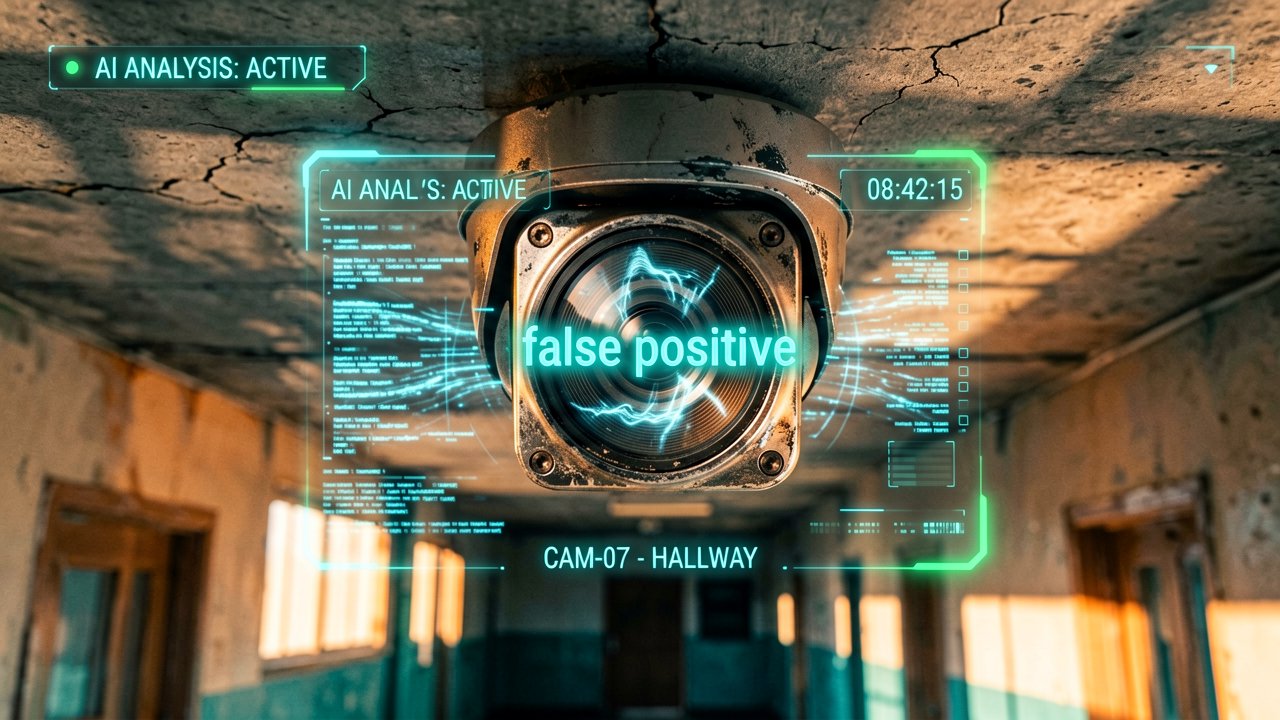
Arizona’s public schools are undergoing a quiet but rapid transformation into high-tech observation hubs, and not everyone is ready to trade privacy for a perceived sense of security. Districts like Buckeye Union and Tolleson have recently funneled hundreds of thousands of dollars into AI-powered surveillance systems, promising to detect everything from weapons to unauthorized visitors before a single door is breached. But as the "smart" cameras go live, they’re hitting a wall of community pushback. Critics argue that we’re essentially turning our hallways into digital dragnets, conditioning a generation of students to accept constant, algorithmic scrutiny as the price of admission to a classroom.
The tension isn't just theoretical; it’s playing out in real-time through lawsuits and local protests. In the Buckeye Union High School District, officials recently faced heat after students and parents noticed "creepy" posters at Estrella Foothills High School warning that they were being watched by AI. While FOX 10 Phoenix reports that the district has kept advanced features like facial recognition turned off for now, the mere presence of the hardware—purchased with a $500,000 federal grant—has left many feeling more like "robots" than students. It’s a classic case of tech deployment outpacing public consent, leaving administrators to play defense while trying to explain why "smart" cameras are a necessity rather than an overreach.
Safety Wins or Algorithmic Overreach?
Proponents of the technology point to tangible results to justify the costs and the loss of anonymity. The Tolleson High School District, for instance, claimed its AI security program successfully flagged eight weapons before they ever entered a campus during a single school year. That’s a powerful statistic for any superintendent to wield in a board meeting, yet the win comes with a side of skepticism. Civil liberties advocates warn that these systems are notoriously prone to false positives—like mistaking a student’s clarinet case for a firearm—which can lead to traumatic, unnecessary police interventions and further alienate marginalized students who already face disproportionate scrutiny.
The Privacy Paradox in the Desert
Beyond the physical cameras, Arizona is also a testing ground for broader digital surveillance. More than 50 school agencies across the state have paid for software that monitors student activity on school-issued devices, according to data from GovSpend. This "digital eyes" approach has already landed some districts in hot water; a high-profile lawsuit in Marana involves a student who was suspended for a "joke" typed into a draft email that was never even sent. It raises a glaring question about where the school’s authority ends when the classroom is now effectively everywhere. For now, Arizona remains the front line of a national debate over whether we can build a safer school without destroying the very sense of trust and freedom that makes learning possible.
The Algorithmic Watchtower: A Deeper Look at the Arizona Surveillance Experiment
Behind the Digital Curtain: The rush to install AI-driven security in Arizona’s desert school districts isn’t just a response to safety concerns; it’s a massive, unvetted experiment in social engineering. While the glossy brochures from tech vendors promise a "frictionless" safety net, the reality on the ground is far more cluttered. Industry veterans know that these systems rely on massive datasets to "learn" what a threat looks like, yet these datasets are rarely shared with the public or independent auditors. In districts like Buckeye Union, the pivot to AI represents a shift from reactive security—like a guard at the door—to a proactive, predictive model that attempts to read intent through pixelated movement. This shift fundamentally alters the power dynamic between the institution and the individual, turning the schoolyard into a controlled laboratory.
Stakeholder tension is reaching a boiling point because the implementation often bypasses meaningful community debate. When administrators secure federal grants, the funds frequently come with "use it or lose it" deadlines that discourage lengthy public comment periods. This bureaucratic momentum leads to situations where parents find out about high-level facial recognition or behavioral analytics only after the hardware is bolted to the ceiling. From a journalistic perspective, the lack of transparency is the real story here. We are seeing a pattern where school boards treat software licenses like janitorial supplies rather than major policy shifts that impact student civil liberties and psychological well-being.
The historical context of Arizona’s educational landscape adds another layer of complexity. For years, the state has been a battleground for school choice and parental rights, yet the surveillance trend seems to run counter to the ethos of personal autonomy. Civil rights groups have pointed out that the "false positive" rate of these AI systems is not uniform across all demographics. Historical data suggests that students of color are more likely to be flagged by behavioral algorithms as "aggressive" due to inherent biases in the software’s training data. When an AI misinterprets a cultural gesture or a heated but harmless argument as a precursor to violence, the consequences aren't just technical glitches; they are life-altering disciplinary records.
Moreover, the "mission creep" of these systems is almost inevitable. What starts as a tool to detect a concealed weapon often evolves into a mechanism for tracking truancy, monitoring dress code violations, or even analyzing student "sentiment" during lunch hours. Documents obtained from Electronic Frontier Foundation suggest that once the infrastructure is in place, the temptation to use it for administrative convenience is nearly impossible to resist. This incremental expansion of surveillance is rarely discussed in the initial pitch to parents, yet it is the most common outcome of long-term tech integration in public spaces.
Finally, there is the question of the "security theater" vs. actual efficacy. While a handful of success stories make for great headlines, the long-term data on whether AI cameras actually deter high-level threats is still remarkably thin. Many security experts argue that the hundreds of thousands of dollars spent on these subscriptions might be better utilized for mental health counselors or physical infrastructure improvements like reinforced entryways. By betting the farm on algorithms, Arizona districts are essentially wagering that a computer program can solve complex social and psychological issues. It is a high-stakes gamble that treats the symptoms of school violence while potentially eroding the very culture of trust required to prevent it in the first place.
The Inconvenient Math of Algorithmic Safety
Reading Between the Lines: The pivot toward AI surveillance in Arizona schools rests on a shaky assumption: that more data inherently equals more safety. This is a classic technocratic fallacy. We are witnessing a massive reallocation of public funds toward "black box" solutions that prioritize the perception of control over the messy reality of human behavior. While a camera might catch a student with a vape or flag a stray dog on the football field, there is a distinct lack of empirical evidence suggesting that these systems can actually predict or prevent a premeditated act of violence. The contradiction is glaring; districts are tightening the digital noose on student life while simultaneously claiming to foster an environment of social and emotional learning.
The financial implications are equally paradoxical. By locking themselves into multi-year "Software as a Service" (SaaS) contracts, school boards are effectively creating a permanent tax for surveillance. These systems require constant updates, cloud storage fees, and hardware maintenance, often siphoning money away from the very human resources—like social workers and experienced teachers—who are best equipped to identify students in crisis. It is a strange priority to invest in an algorithm that alerts you to a crisis after it has begun, rather than investing in the people who could have prevented the crisis from reaching the school gates. The hardware becomes a literal and figurative sunk cost, forcing administrators to justify its continued existence even when the results are negligible.
Looking ahead, the long-term psychological fallout of "growing up watched" is the silent variable in this experiment. We are raising a cohort of students who view privacy as an ancient myth and algorithmic judgment as an inescapable fact of life. This creates a chilling effect on campus culture, where students may avoid seeking help or expressing themselves freely for fear of being flagged by a "sentiment analysis" tool. If the goal of education is to prepare citizens for a free society, we are failing the mission by turning schools into high-security waiting rooms. The ultimate irony is that in our desperate attempt to secure the perimeter, we may be hollowly sacrificing the internal trust that actually keeps a community safe.
It turns out that the most expensive way to realize your high school isn't a high-security prison is to spend a million dollars trying to make it look exactly like one.
Artūras Malašauskas is an AI Systems Integrator with 20+ years of production-grade web engineering experience. He has designed, shipped, and scaled enterprise Python/PHP systems for logistics, SaaS, and public-sector clients. For the past year, he has focused exclusively on AI integrations: deploying open-source LLMs, building generative media pipelines (image, audio, video), and engineering multi-agent workflows for real production environments. His standard: reproducibility, security, cost-efficient inference—no vaporware. He documents and evaluates emerging AI tooling, separating verified capabilities from marketing noise. Technical editor at: muza-ai.eu, ai-verslas.lt, ai-naujinos.lt Connect on LinkedIn
Comments