The City of Light: Seoul’s AI Film Fest Turns Zaha Hadid’s Curves into a 222-Meter Canvas
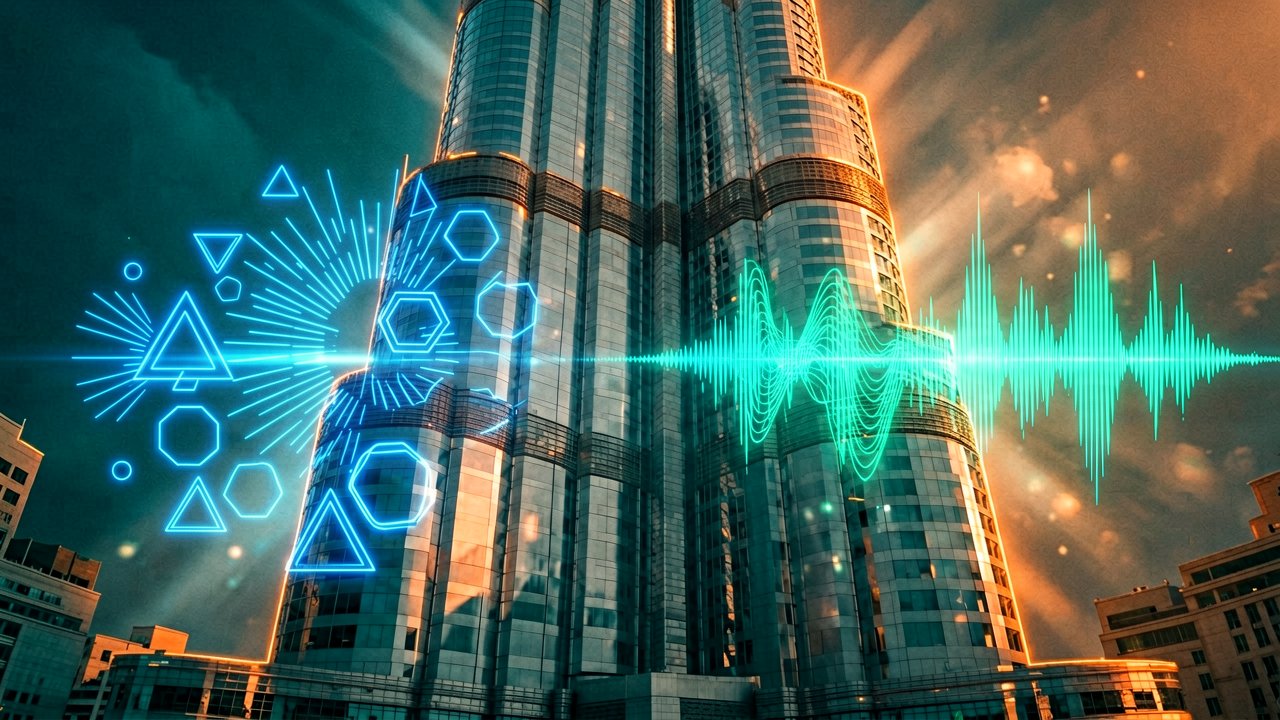
Seoul is once again proving why it’s the spiritual home of "the future," this time by marrying generative neural networks with the architectural brilliance of the late Zaha Hadid. The newly announced Seoul Design AI Film Festival (SDAFF) isn't your typical sit-in-the-dark-and-shush cinema event. Instead, it’s a global call to arms for creators to splash their AI-generated visions across the silver-skinned facade of the Dongdaemun Design Plaza (DDP). According to the PA Media Press Release Hub, the festival seeks to pioneer what it calls "Live Media Design," effectively turning the city's skyline into a sprawling, interactive laboratory for digital storytelling.
The "screen" in question is a beast of a different nature—a 222-meter-long curving exterior wall that currently holds the Guinness World Record for the "World's Largest 3D Mapping on an Atypical Building." For years, this surface has been the playground of elite media artists and high-budget production houses. But as reported by the Seoul Metropolitan Government, the SDAFF marks the first time the city is opening this massive architectural canvas to the public and international visionaries, provided they’re using generative AI to do the heavy lifting. It’s a bold move toward the "democratization of design," where a solo creator with a clever prompt and a Midjourney subscription can theoretically upstage a traditional film crew.
A High-Stakes Playground for Prompt Engineers
The competition isn't just about showing off; there’s some serious skin in the game. Organizers are hunting for 10 winning entries across two main categories: artistic reinterpretations of "K-culture" and more "popular" works themed around festivals or DJ culture. The rewards are more than just clout—the total prize pool sits at KRW 24 million (roughly $18,000), with the grand prize winner securing a KRW 10 million payday and a primary screening slot during the iconic Seoul Light DDP 2026. As noted by the Seoul Design Foundation, the judging won't just focus on technical wizardry, but on the unique perspective and creative expression each participant brings to the table.
Transcending the Traditional Frame
What makes this festival particularly fascinating is the way it treats the DDP’s atypical architecture. This isn't a flat 16:9 projection; the films have to contend with the sweeping, neo-futuristic curves that Zaha Hadid is famous for. It’s an exercise in "spatial cinema," where the software has to understand the contours of the building as much as the narrative of the film. By encouraging creators to use tools like Midjourney and Suno to craft their core content, Seoul is effectively placing a bet on AI as a permanent fixture in the urban aesthetic. It’s an ambitious experiment that could redefine how we experience public art, transforming the DDP from a static landmark into a breathing, flickering monument to the collective digital imagination.
Inside the Machine: The High-Stakes Logic of Urban AI
Beyond the Neon Glow: What most surface-level reports miss is the sheer logistical nightmare of mapping high-resolution generative AI content onto a non-linear, 222-meter aluminum skin. This isn't just about clicking 'render' on a prompt; it’s about a concept the Seoul Design Foundation calls "Media Facade Optimization." Because the DDP’s surface is composed of over 45,000 unique panels, any AI-generated video must be mathematically corrected to prevent distortion. A standard cinematic shot would look like a funhouse mirror on Hadid’s curves, so artists are forced to engage in a "spatial dialogue" where the software must account for the building’s physical geometry before the first pixel is even projected.
The historical weight of this initiative shouldn't be underestimated. Since its opening in 2014, the DDP has transitioned from a controversial "silver spaceship" to the crown jewel of Seoul's "Design City" identity. By hosting the SDAFF, city officials are effectively pivoting from static architecture to what urban theorists call "programmable space." Stakeholders within the Metropolitan Government aren't just looking for pretty lights; they are testing the waters for a future where city landmarks can be reskinned in real-time to reflect cultural shifts or public sentiment. It’s an aggressive play to stay ahead of regional rivals like Tokyo or Singapore in the race for digital-first tourism.
From the perspective of the creators, this festival represents a massive shift in the hierarchy of digital art. In the past, projecting on a scale this large required a massive studio and a six-figure budget. Now, the entry of generative AI lowers the barrier to entry, but it simultaneously raises the bar for "prompt literacy." Industry insiders note that the judging panel is specifically looking for "human-AI hybridity"—works that don't just look like a standard diffusion loop, but those that incorporate intentional cinematography and sound design tailored to the DDP’s specific acoustics. The inclusion of tools like Suno for AI-generated soundtracks suggests the city wants a full-sensory takeover, not just a silent movie.
There is also a subtle undercurrent of "soft power" at play here. By centering one of the competition categories on K-culture, Seoul is using AI to repackage its traditional heritage for a generation that speaks in hashtags and neural tokens. It’s a clever way to ensure that while the technology is cutting-edge and global, the soul of the content remains distinctly Korean. This ensures the festival functions as both a tech showcase and a cultural export, solidifying Seoul’s reputation as a place where ancient tradition and the bleeding edge of the singularity don't just coexist, but actively collaborate.
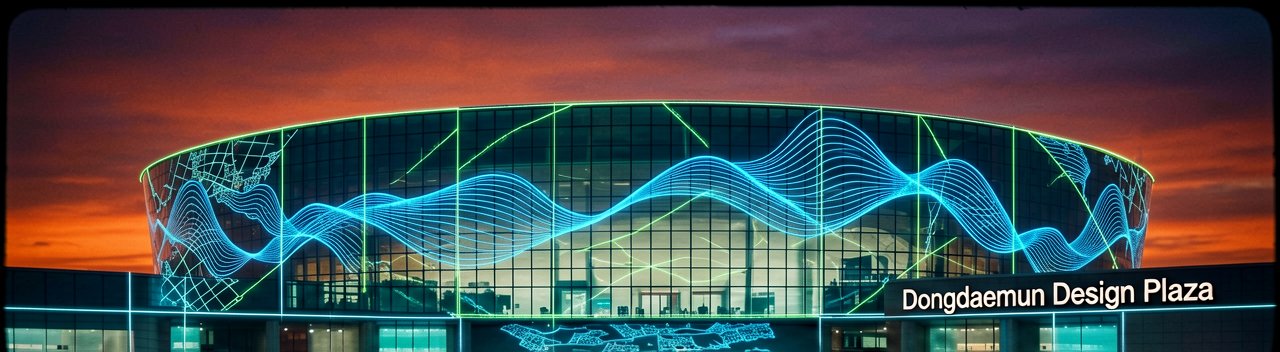
Ultimately, the Seoul Design AI Film Festival is a litmus test for the viability of AI in public infrastructure. If successful, the 2026 screening won't just be a film festival; it will be a blueprint for the "smart city" of the next decade. We are moving toward an era where the distinction between a building’s physical material and its digital projection becomes entirely blurred. The DDP is no longer just a structure made of concrete and steel, but a living, breathing data set that responds to the creativity of the global community, effectively turning the city into a giant, interactive hard drive.
The Friction of the Future: Silicon Meets Steel
Reading Between the Lines: While the Seoul Design Foundation paints a picture of seamless digital democracy, there is a fundamental tension between the chaotic nature of generative AI and the rigid permanence of Zaha Hadid’s architecture. The city’s push for "democratization" assumes that lowering the technical bar will naturally lead to higher-quality art, but history suggests that when the barrier to entry vanishes, the signal-to-noise ratio often plummets. There is a risk that the world’s largest atypical canvas—a masterpiece of structural engineering—could become little more than a 222-meter screen for the digital equivalent of wallpaper, replacing intentional design with the hallucinations of a black-box algorithm.
Furthermore, the reliance on generative AI for a city-sponsored event brings up the inevitable and awkward conversation regarding intellectual property and "K-culture." By encouraging artists to use neural networks to reinterpret Korean heritage, the city is essentially asking algorithms trained on scraped global data to define what "Korean-ness" looks like in the 21st century. It’s a bit of a cultural paradox: using a globalized, homogenized technology to protect and project a specific local identity. If the winning entries are too polished, they risk looking like generic stock footage; if they are too experimental, they may fail to resonate with the very public they are meant to inspire.
There is also the pragmatic reality of the "AI hype cycle" versus the slow pace of urban development. Planning for a 2026 screening in a field that moves as fast as generative AI is akin to scheduling a smartphone launch three years in advance—by the time the projectors turn on, the tools used to create the films might already be considered "vintage." This creates a logistical hurdle for the organizers: how to keep a massive public installation relevant when the underlying technology evolves every six months. Seoul is betting heavily that the novelty of the scale will outweigh the potential obsolescence of the aesthetic.
Projecting into the future, this festival might be the start of a "visual arms race" among global capitals. If Seoul can successfully turn its landmarks into dynamic AI displays, expect London, New York, and Dubai to follow suit with even larger, brighter, and more algorithmically complex facades. This could lead to a future where cities are in a constant state of "sensory overstimulation," where every surface is an ad, a film, or a data visualization. While the technological feat is undeniably impressive, the psychological impact of living inside a giant, flickering monitor remains one of the festival’s most significant, yet least discussed, variables.
It turns out that even in the age of the singularity, if you want to be a world-class filmmaker, you still need to know how to talk to a building—and hope that 45,000 aluminum panels don't decide to have a creative disagreement with your GPU.
Artūras Malašauskas is an AI Systems Integrator with 20+ years of production-grade web engineering experience. He has designed, shipped, and scaled enterprise Python/PHP systems for logistics, SaaS, and public-sector clients. For the past year, he has focused exclusively on AI integrations: deploying open-source LLMs, building generative media pipelines (image, audio, video), and engineering multi-agent workflows for real production environments. His standard: reproducibility, security, cost-efficient inference—no vaporware. He documents and evaluates emerging AI tooling, separating verified capabilities from marketing noise. Technical editor at: muza-ai.eu, ai-verslas.lt, ai-naujinos.lt Connect on LinkedIn
Comments