Musicful v3.0 Is Here: AI Music Finally Gets a Reusable Human Touch
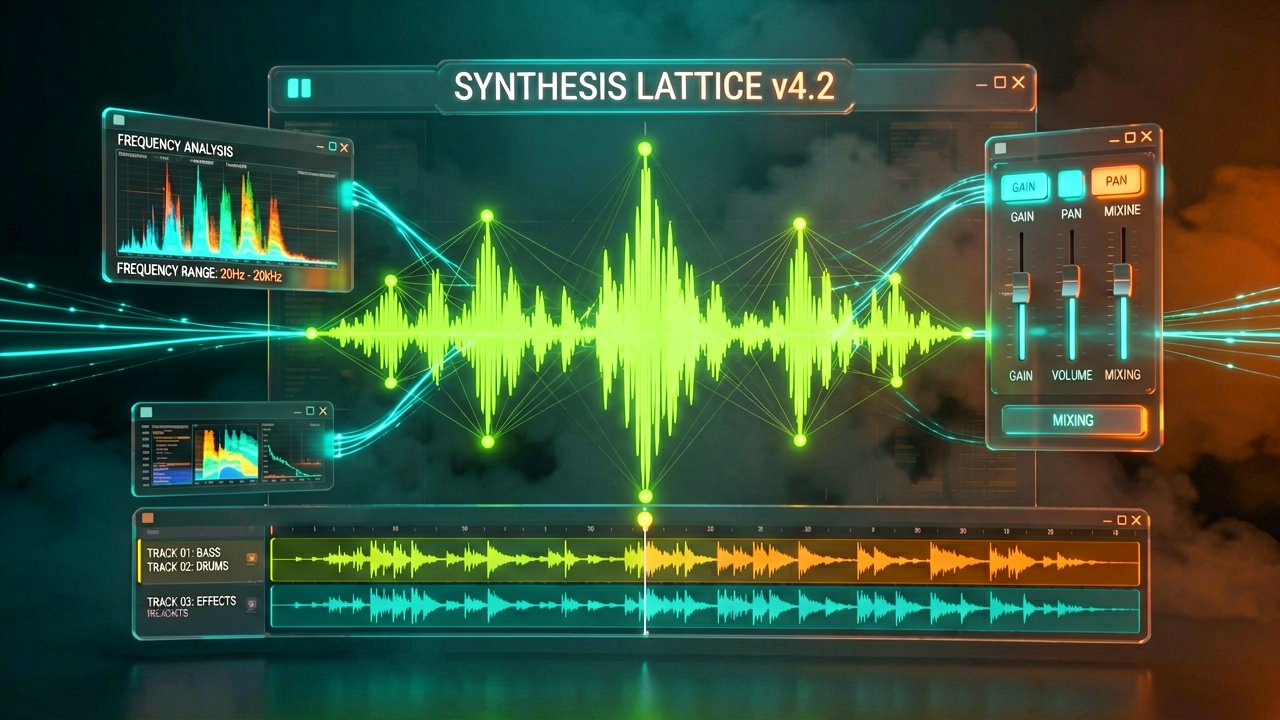
The world of generative AI music often feels like a series of one-off magic tricks—you pull a rabbit out of a hat, but you can’t exactly take that same rabbit to your next gig. Musicful is looking to change that transient nature with the release of its v3.0 model. This isn’t just another incremental bump in bitrates or "hallucination" reduction; it’s a fundamental shift toward creating a persistent digital identity. By introducing voice customization for reusable voice profiles, creators can now build a signature vocal sound that sticks around for more than one track, bringing a much-needed sense of continuity to the AI production workflow.
According to reports from Send2Press, the core of this update lies in a four-step process that allows users to record, upload, or even use Musicful-generated vocals to "anchor" an AI voice. Once the system processes the tone, texture, and style, it saves the result to a personal library. This means a producer can maintain a consistent "lead singer" across an entire album without having to pray to the RNG gods every time they hit the generate button. It's a pragmatic bridge between the wild, unpredictable nature of AI and the brand-building necessity of traditional artistry.
Under the Hood: Stability and Structural Integrity
Beyond the headline-grabbing voice features, Musicful v3.0 brings some heavy-duty mechanical improvements to the table. The platform claims significant leaps in structural consistency and vocal realism, specifically targeting the common "mushiness" often found in AI-generated bridges and choruses. By better recognizing genre-specific characteristics, the model aims to deliver tracks that actually sound like they were written by a person who understands the difference between a lo-fi hip-hop beat and a high-energy pop anthem. It’s about reducing those awkward sonic glitches that pull a listener out of the experience.
A Unified Creative Engine
What’s particularly interesting here is how Musicful is trying to kill the "siloed" production style. Usually, you’d generate a beat in one place and hunt for vocals in another. This version of the software pulls both into a unified workflow, allowing for full-track generation—instrumentals and vocals combined—within a single interface. For the independent creator or the social media manager who needs high-quality, royalty-free audio yesterday, this consolidation is a massive time-saver. Developers aren't being left out either, as the company plans to roll out these v3.0 capabilities through its AI Music API services by the end of May.
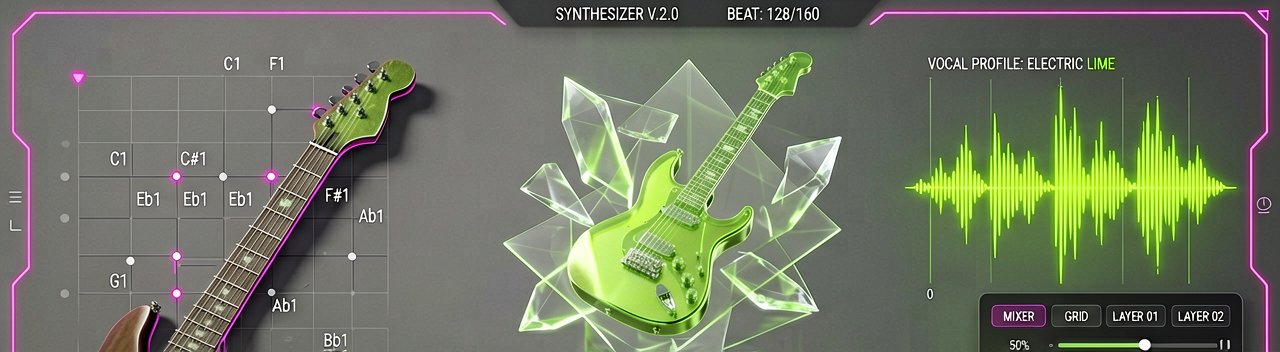
The world of generative AI music often feels like a series of one-off magic tricks—you pull a rabbit out of a hat, but you can’t exactly take that same rabbit to your next gig. Musicful is looking to change that transient nature with the release of its v3.0 model. This isn’t just another incremental bump in bitrates or "hallucination" reduction; it’s a fundamental shift toward creating a persistent digital identity. By introducing voice customization for reusable voice profiles, creators can now build a signature vocal sound that sticks around for more than one track, bringing a much-needed sense of continuity to the AI production workflow.
According to reports from Send2Press, the core of this update lies in a four-step process that allows users to record, upload, or even use Musicful-generated vocals to "anchor" an AI voice. Once the system processes the tone, texture, and style, it saves the result to a personal library. This means a producer can maintain a consistent "lead singer" across an entire album without having to pray to the RNG gods every time they hit the generate button. It's a pragmatic bridge between the wild, unpredictable nature of AI and the brand-building necessity of traditional artistry.
Under the Hood: Stability and Structural Integrity
Beyond the headline-grabbing voice features, Musicful v3.0 brings some heavy-duty mechanical improvements to the table. The platform claims significant leaps in structural consistency and vocal realism, specifically targeting the common "mushiness" often found in AI-generated bridges and choruses. By better recognizing genre-specific characteristics, the model aims to deliver tracks that actually sound like they were written by a person who understands the difference between a lo-fi hip-hop beat and a high-energy pop anthem. It’s about reducing those awkward sonic glitches that pull a listener out of the experience.
A Unified Creative Engine
What’s particularly interesting here is how Musicful is trying to kill the "siloed" production style. Usually, you’d generate a beat in one place and hunt for vocals in another. This version of the software pulls both into a unified workflow, allowing for full-track generation—instrumentals and vocals combined—within a single interface. For the independent creator or the social media manager who needs high-quality, royalty-free audio yesterday, this consolidation is a massive time-saver. Developers aren't being left out either, as the company plans to roll out these v3.0 capabilities through its AI Music API services by the end of May.
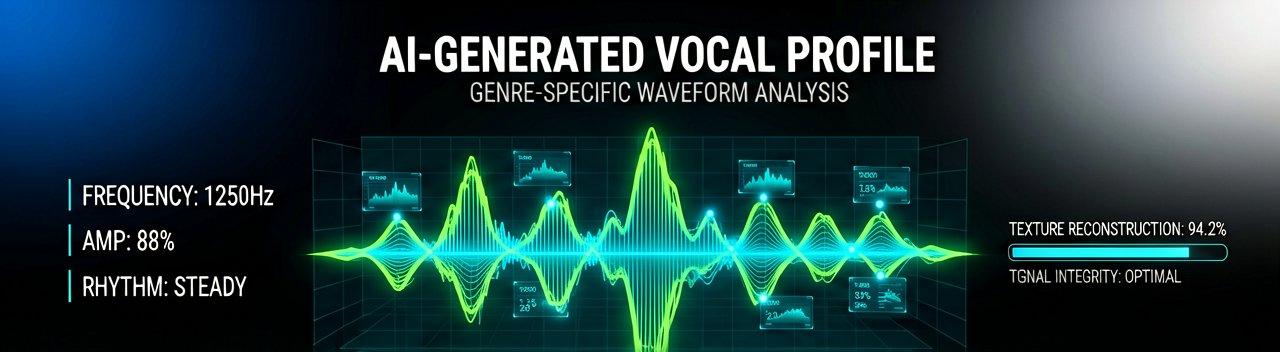
Behind the Scenes: The Quest for the AI Frontman
The industry's shift toward "Identity as a Service" represents a massive pivot from the novelty of one-click song generation to the practical needs of brand-conscious creators. For years, the Achilles' heel of AI music has been its lack of permanence. You could catch lightning in a bottle once, but if you wanted that same "vocalist" to sing a bridge or a sequel track, you were essentially out of luck. Musicful v3.0 is positioning itself as a solution to this fragmentation by treating the AI voice not as a random output, but as a digital asset that can be refined, saved, and deployed across a library of content.
Seasoned engineers know that vocal texture is about more than just pitch; it’s about the unique "grain" of the voice and the way it sits in a mix. By allowing users to upload their own recordings to seed these profiles, Musicful is tapping into a hybrid model of creativity. This isn't just a machine singing to a human; it’s a human providing the DNA for a machine to replicate consistently. This level of control is what separates a toy from a tool, giving bedroom producers the ability to maintain a "sonic brand" without the overhead of a physical recording studio or the scheduling headaches of session vocalists.
Looking at the historical context of the industry, we’ve seen similar evolutions in visual AI—moving from random image prompts to "LoRA" models that keep characters consistent. Musicful is essentially bringing that same logic to the auditory realm. By the time their API services hit the market later this month, we’re likely to see a surge in specialized apps that leverage these persistent voices. The goal is to move past the "uncanny valley" where every AI track sounds like a generic, soul-less imitation of a pop star and toward a future where an AI singer can have a "career" with a recognizable discography.
Stakeholders in the copyright and licensing space are also watching these developments with a mix of curiosity and caution. Because Musicful allows for "User-Generated Voices," the platform has had to lean heavily into its proprietary "Vocal ID" technology to ensure that these reusable profiles remain the intellectual property of the creator. It creates a closed-loop ecosystem where the creator owns the specific vocal fingerprint they’ve cultivated. This structural integrity is vital for professional adoption, as no serious studio will touch a technology that doesn't offer clear lines of ownership and reproducibility.
From a technical standpoint, the v3.0 model's ability to handle genre-specific nuances is a direct response to the "genre-blending" messiness of earlier versions. Older models often struggled when asked to apply a soulful R&B vocal to a technical death metal track, resulting in digital artifacts and rhythmic drifting. Musicful’s updated architecture treats the vocal profile as a distinct layer that understands the rhythmic constraints of its backing track. It’s a sophisticated dance between the consistency of the saved profile and the adaptive requirements of the new composition.
Ultimately, the launch of v3.0 signals that the "Wild West" era of generative music is maturing. We are entering a phase where the value lies in the user’s ability to direct and curate a specific sound over time. By providing the tools for reusable voice profiles, Musicful is betting that the future of AI music isn't about replacing the artist, but about giving the artist a tireless, perfectly consistent digital twin to work with across every project they dream up.
Reading Between the Lines: The Persistence of the Human Ego
The industry's infatuation with "consistency" masks a deeper tension between the convenience of automation and the inherent chaos that makes music interesting. While Musicful v3.0 promises a world where your digital frontman never loses its voice, there is a fundamental contradiction in trying to "save" a vocal identity. Traditional artistry thrives on the subtle shifts in a singer’s performance—the rasp of a cold, the strain of a high note, or the intentional dragging of a lyric. By perfecting a reusable profile, we risk sanitizing the very imperfections that signal "humanity" to a listener’s ear, potentially trading authentic emotional resonance for a high-fidelity, predictable brand asset.
There is also the matter of the "creator-ownership" narrative versus the reality of platform lock-in. Musicful touts its Vocal ID technology as a shield for intellectual property, yet these reusable profiles essentially become digital hostages to the platform’s ecosystem. If a producer builds a three-album career around a specific v3.0 voice profile, they are tethered to Musicful’s subscription tiers and server uptime indefinitely. Unlike a human vocalist who can move between studios, these AI personas are lines of code that cannot easily be exported to a competitor’s DAW without losing the specific "soul" or "texture" that made them viable in the first place.
Furthermore, the rapid deployment of these features via API suggests a coming flood of "low-effort" content that could further dilute the digital marketplace. When anyone can generate a consistent vocal identity in four steps, the barrier to entry for building a "persona" collapses entirely. We are likely to see an explosion of synthetic influencers and AI-driven "artists" who possess a perfect, unchanging voice but have absolutely nothing new to say. This projection suggests that the real value in the future won't be the ability to create a consistent voice, but the increasingly rare ability to write a song that justifies that voice’s existence.
From a technical skepticism standpoint, one must wonder how "reusable" these profiles truly are across wildly different acoustic environments. A voice that sounds stellar in a dry, pop-centered mix may fail spectacularly when the AI attempts to place it in a reverb-heavy, atmospheric shoegaze track. The promise of a "unified creative engine" assumes the AI can master the art of the mixdown as well as it mimics a vocal cord. If the model cannot intelligently adapt the saved profile's timbre to the frequency spectrum of the new instrumental, we are simply looking at a more sophisticated version of "copy-paste" rather than true musical synthesis.
Finally, we have to consider the long-term psychological impact on the "bedroom producer." The democratization of high-end vocal talent is undoubtedly a win for accessibility, but it removes the collaborative friction that often leads to creative breakthroughs. When you don't have to argue with a singer about a melody or compromise on a vocal take, you lose the happy accidents that define music history. Musicful is selling a frictionless future, but in the world of art, friction is often where the heat—and the heart—actually comes from.
"We’ve finally reached the pinnacle of musical technology: a singer who never demands a royalty split, never shows up late to the session, and—most importantly—never asks to ‘see the lyrics’ before agreeing to the gig. It’s the perfect collaborator, provided you don't mind that its soul is hosted on a server in Northern Virginia."
Artūras Malašauskas is an AI Systems Integrator with 20+ years of production-grade web engineering experience. He has designed, shipped, and scaled enterprise Python/PHP systems for logistics, SaaS, and public-sector clients. For the past year, he has focused exclusively on AI integrations: deploying open-source LLMs, building generative media pipelines (image, audio, video), and engineering multi-agent workflows for real production environments. His standard: reproducibility, security, cost-efficient inference—no vaporware. He documents and evaluates emerging AI tooling, separating verified capabilities from marketing noise. Technical editor at: muza-ai.eu, ai-verslas.lt, ai-naujinos.lt Connect on LinkedIn
Comments