MIA’s New High-Tech Nerve Center: AI Takes the Wheel in Miami
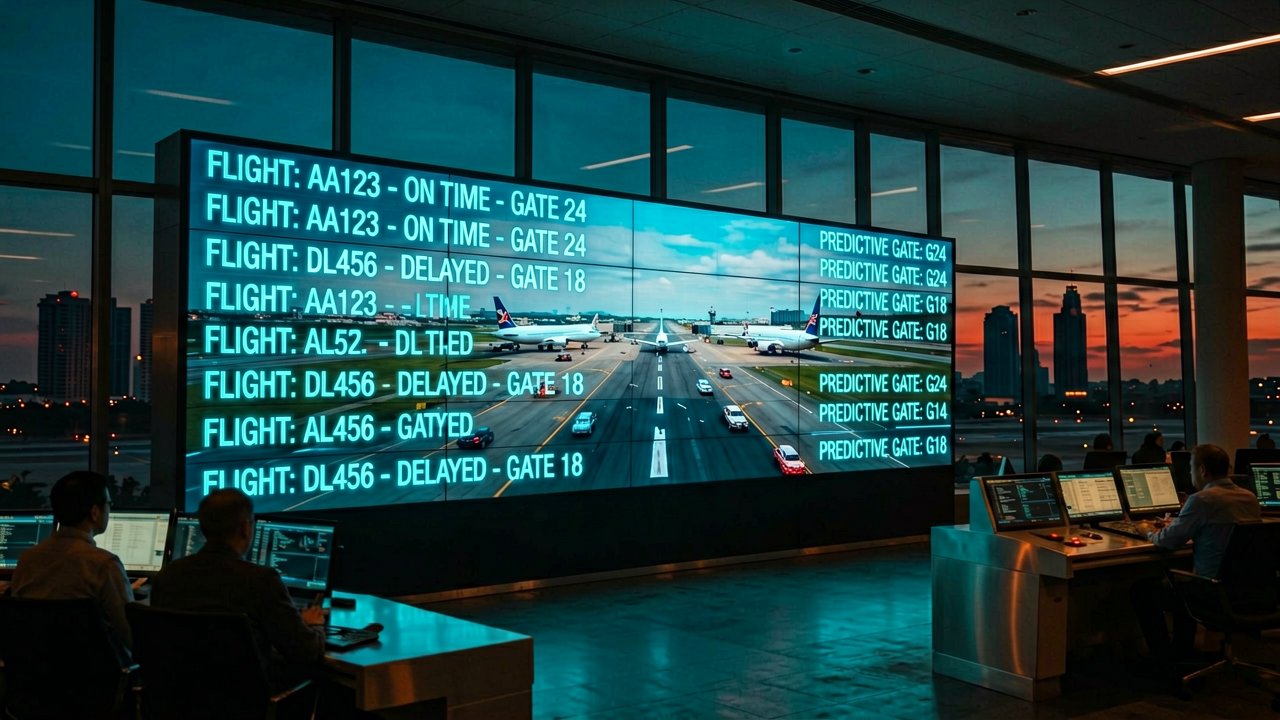
Miami International Airport is trading its old-school playbooks for a silicon-powered brain. This week, Miami-Dade County leaders pulled back the curtain on a massive $33 million Airport Operations Center (AOC) designed to act as a unified, high-tech headquarters for the travel hub’s sprawling infrastructure. It’s a significant piece of the airport’s broader $14 billion "Modernization in Action" plan, aiming to transform one of the busiest international gateways in the U.S. into a smarter, safer facility that doesn’t just react to problems but anticipates them before they happen.
The new 13,254-square-foot facility, scheduled to open its doors in 2027, isn't just about extra desk space; it’s about visibility. According to reports from CBS News Miami , the hub will feature a massive, high-definition panoramic video wall and a network of AI-powered, long-range cameras. This setup gives officials 360-degree oversight of everything from the runways to the terminal roadways, effectively ending the days when different agencies were "scattered" across the property and had to rely on phone calls to coordinate during a crisis. Instead, more than 30 agencies—including the TSA, Border Patrol, and Fire Rescue—will now sit shoulder-to-shoulder under one roof.
Artificial Intelligence in the Control Room
While the hardware is impressive, the real heavy lifting happens in the software. The airport is integrating AI to streamline mundane but critical tasks like gate assignments. As MIA Director Ralph Cutié noted, the goal isn't to replace the human element but to augment it, making aircraft movement and gating significantly more efficient. This tech-first approach is already becoming a theme at the airport; just last month, MIA launched Local 10 News reports on AI hologram assistants designed to guide travelers in 40 different languages. It’s clear that Miami isn't just trying to keep up with modern aviation trends—they’re trying to set the pace for what a 21st-century airport should look like.
Built to Weather the Storm
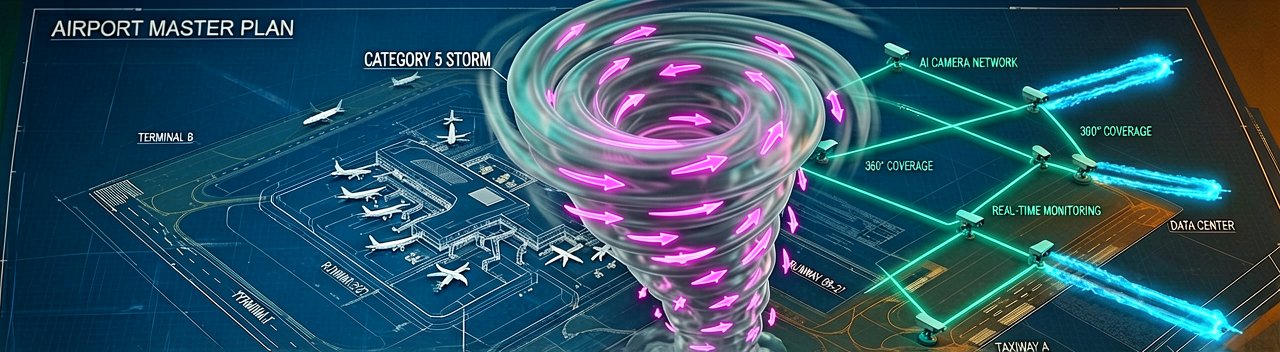
Of course, being in Miami means you can't talk about infrastructure without talking about the weather. This "nerve center" is being built with "Category 5 hurricane" resilience in mind, ensuring that even when the skies turn gray, the airport’s digital eyes stay open. By centralizing emergency response and operational oversight, officials hope to reduce delays and enhance overall security as passenger traffic continues to climb. It’s an ambitious leap toward a "future-ready" airport that prioritizes data-driven safety over the logistical headaches of the past.
The Digital Transformation of the Magic City’s Gateway
The Strategic Evolution: This move toward a centralized AI nerve center isn't just about flashy new screens; it’s a necessary pivot for an airport that has historically struggled with fragmented communication. For decades, MIA operated with various departments tucked away in isolated silos, a logistical bottleneck that can be disastrous when a summer thunderstorm grounds a hundred flights simultaneously. By physically and digitally merging these units, Miami-Dade is essentially building a "war room" for civilian travel, acknowledging that human intuition is best utilized when backed by real-time data synthesis rather than frantic radio chatter.
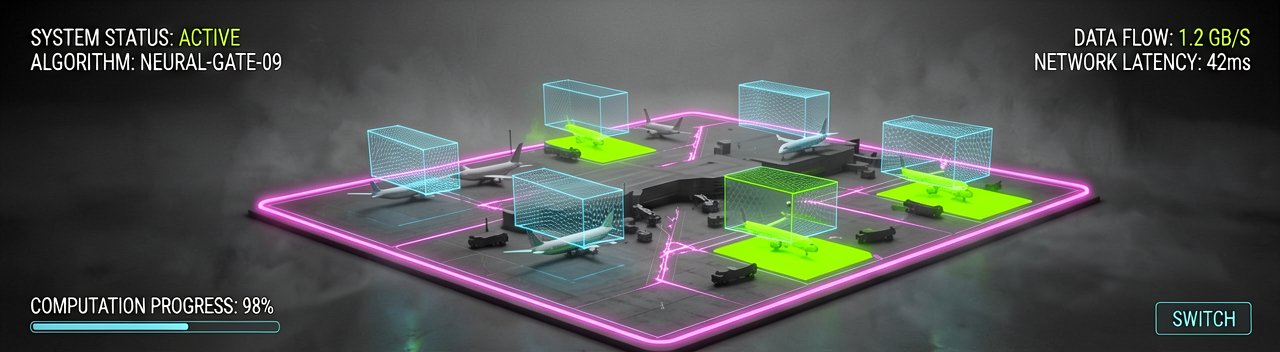
The integration of AI into gate management addresses one of the most frustrating aspects of modern travel: the tarmac wait. When an aircraft lands, its gate assignment is a complex puzzle influenced by aircraft size, fuel needs, and departing passenger flow. Veteran airport managers know that a single delay at Gate D20 ripples through the entire afternoon schedule. Using machine learning to predict arrival patterns and automate those assignments allows the staff to shift their focus from shuffling planes to handling the inevitable human variables that software cannot resolve.
Security is the other silent benefactor of this upgrade. The deployment of AI-enhanced, long-range cameras serves a dual purpose that seasoned security experts have long advocated for. On one hand, it provides a deterrent for perimeter breaches, which have plagued major U.S. airports in recent years. On the other, the software can flag anomalous behavior—like a vehicle lingering in a restricted area or an unattended bag in a high-traffic zone—long before a human operator scanning dozens of monitors might notice it. This shift from passive recording to active monitoring represents a fundamental change in how the Miami Herald and other outlets have described the airport's security posture over the last decade.
Stakeholders, including airline executives and county commissioners, see this $33 million investment as a defensive play against obsolescence. As MIA faces stiff competition from other expanding hubs like Atlanta and Orlando, the "Modernization in Action" plan serves as a signal to international carriers that Miami can handle the massive passenger volumes of the next generation. The inclusion of multi-lingual AI holograms and the 2027 opening of the AOC are threads in the same tapestry: a push to make the airport feel less like a concrete maze and more like a high-functioning digital ecosystem.
From a historical perspective, this transition marks the end of the "analog era" for Miami’s aviation. We are seeing the death of the clipboard-and-radio methodology in favor of a unified operating picture. This evolution mirrors what we’ve seen in top-tier global hubs like Singapore’s Changi or London Heathrow, where data is treated as a utility as vital as jet fuel. For the millions of travelers passing through each year, the hope is that this invisible digital infrastructure will translate into something very visible: shorter lines, fewer delays, and a smoother transition from the cabin to the terminal.
Ultimately, the success of the new operations center will depend on the harmony between its high-tech sensors and the 30-plus agencies that must now share a common space. Moving TSA, Fire Rescue, and the police into a single room is as much a cultural shift as it is a technological one. By breaking down the literal walls between these entities, the airport is banking on the idea that proximity breeds efficiency, ensuring that the next time a hurricane or a security breach threatens operations, the response is a single, coordinated strike rather than a series of disconnected reactions.
The Friction Between Innovation and Implementation
Reading Between the Lines: While the glossy renderings of a panoramic "nerve center" suggest a seamless digital future, the reality of integrating thirty disparate agencies—each with their own legacy systems and bureaucratic territorialism—is rarely as clean as a press release. The $33 million price tag for the Airport Operations Center is a drop in the bucket compared to the total $14 billion modernization budget, yet it carries the heaviest burden: proving that "smart" technology can actually fix "dumb" logistical hurdles. History suggests that throwing AI at a problem often reveals that the bottleneck wasn't a lack of data, but rather a lack of unified authority to act on that data.
There is also a palpable tension between the promise of "enhanced security" and the practicalities of passenger privacy. The deployment of long-range, AI-powered cameras capable of 360-degree oversight sounds like a security officer’s dream, but it moves MIA closer to a state of total surveillance that some travelers find unnerving. While Miami-Dade County officials emphasize safety, they must balance this with the reality that an overly clinical, monitored environment can alienate the very tourists the airport aims to attract. The challenge is ensuring these digital eyes don't become a digital drag on the passenger experience.
Furthermore, the reliance on AI for gate assignments assumes a level of algorithmic perfection that rarely accounts for the "chaos factor" of Miami’s unique climate. Software can predict flight paths, but it struggles to account for the sudden, localized tropical downpours that can trap a ground crew or stall a refueling operation. If the humans in the control room become too dependent on the AI’s suggestions, they risk losing the adaptive, gut-level decision-making that has kept the airport running during decades of analog operation. The 2027 deadline for the AOC gives the airport time to refine these models, but the transition period will likely be a masterclass in trial by fire.
We must also consider the rapid pace of technological obsolescence. By the time the center opens in 2027, the "cutting-edge" AI being installed today may already be a generation behind. This creates a cycle of perpetual upgrades where the airport is constantly chasing a moving target. Critics might argue that instead of a massive centralized hub, a more decentralized, cloud-based approach would offer better resilience against the very Category 5 storms the building is designed to withstand. Betting big on a single physical location for all digital intelligence is a centralized risk in an increasingly decentralized tech world.
Despite these skepticism-filled caveats, the sheer scale of the "Modernization in Action" plan indicates that MIA has no choice but to evolve. With passenger numbers hitting record highs, the airport is essentially performing open-heart surgery on itself while running a marathon. The success of the AI integration won't be measured by the size of the video wall or the clarity of the cameras, but by whether a family of four can actually get from the curb to the gate without feeling like they’ve just navigated a high-stakes obstacle course. The tech is merely the tool; the outcome remains a human endeavor.
"In the end, we’re spending millions to ensure that the AI knows exactly which gate is occupied, which is a massive relief for everyone—except, of course, for the pilot who’s still stuck waiting twenty minutes on the taxiway because a human baggage handler took a slightly longer lunch break."
Artūras Malašauskas is an AI Systems Integrator with 20+ years of production-grade web engineering experience. He has designed, shipped, and scaled enterprise Python/PHP systems for logistics, SaaS, and public-sector clients. For the past year, he has focused exclusively on AI integrations: deploying open-source LLMs, building generative media pipelines (image, audio, video), and engineering multi-agent workflows for real production environments. His standard: reproducibility, security, cost-efficient inference—no vaporware. He documents and evaluates emerging AI tooling, separating verified capabilities from marketing noise. Technical editor at: muza-ai.eu, ai-verslas.lt, ai-naujinos.lt Connect on LinkedIn
Comments