USDA AI Systems Lack Key Cybersecurity Controls, OIG Finds

The U.S. Department of Agriculture (USDA) is facing a digital reckoning after federal auditors discovered that the agency’s rush to embrace artificial intelligence has left significant security gaps in its wake. According to a scathing report from the USDA Office of Inspector General (OIG), the department prioritized the rapid rollout of AI use cases over the implementation of critical cybersecurity and governance controls. This imbalance has left dozens of systems—including some labeled as high-impact—without the proper authorizations or risk assessments required by federal law.
The findings highlight a widespread failure to meet the minimum risk management practices mandated by the Office of Management and Budget (OMB). Specifically, the OIG noted that of the 82 operational AI use cases identified for fiscal year 2024, a staggering 73 lacked an Authorization to Operate (ATO) and were missing from the department’s primary cybersecurity tracking system. As noted in reporting by MeriTalk, this oversight effectively creates a "Shadow AI" environment where the agency lacks full visibility into the tools running on its own network, significantly increasing the risk of data breaches and reputational harm.
What Most Reports Miss: The Tug-of-War Between Innovation and Security
Behind the Scenes: The friction at the USDA isn't just a matter of clerical negligence; it’s the result of a profound cultural collision between the "fail fast" mentality of modern AI development and the rigid, safety-first compliance structures of the federal government. While the USDA reached a notable maturity score of 4 out of 5 in its 2025 FISMA audit, that success appears to have been siloed within traditional IT domains, leaving the "wild west" of generative AI and machine learning to grow in a vacuum. For a seasoned observer, this suggests that the agency’s leadership may have viewed AI as a supplementary tool rather than a core infrastructure component that demands its own specialized security protocols.
The OIG’s deep dive reveals that the USDA's inventory was essentially built on a "honor system," relying on annual self-reporting rather than active automated discovery. This allowed dozens of experimental or niche applications to slip through the cracks without being vetted for bias, data leakage, or adversarial vulnerabilities. In the world of federal oversight, "self-reporting" is often a polite euphemism for "unverified," and the lack of a generative AI policy by the December 2025 deadline further illustrates a department struggling to keep its regulatory house in order while the technology outpaces its pen-and-paper processes.
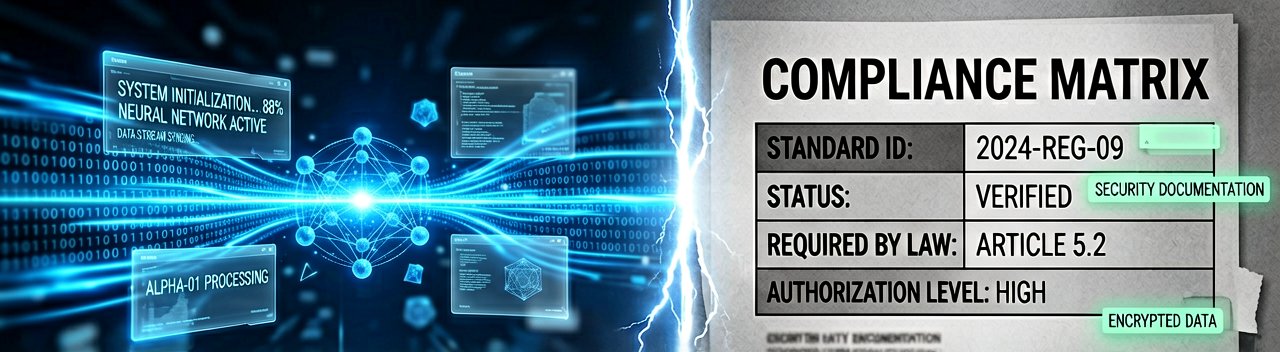
Stakeholders should be particularly concerned by the revelation that even the few AI systems that *did* have authorizations were often missing the foundational security documentation needed to prove they were actually safe. It’s one thing to have a system that isn't on the list; it's quite another to have one that is officially "authorized" based on incomplete data. This creates a false sense of security that could be more dangerous than having no oversight at all, as it lulls administrators into believing that high-impact algorithms—those affecting everything from crop insurance to food safety—are secured when they are effectively unmonitored.
Historically, the USDA has been a pioneer in using data for agricultural forecasting, but the shift from static models to dynamic, black-box AI represents a paradigm shift the agency wasn't prepared to manage. The OIG report explicitly warns that without proper controls, these systems can amplify undesirable outcomes, potentially disrupting supply chains or compromising the sensitive personal data of millions of American farmers. The department’s Office of the Chief Information Officer has since agreed to an overhaul, aiming to finalize reforms between June and December 2026, which will include mandatory impact assessments and a "continually maintained" inventory.
Ultimately, the USDA’s predicament serves as a cautionary tale for the rest of the federal government. As agencies scramble to comply with OMB Memorandum M-24-10, the pressure to show "pro-innovation" results can easily lead to cutting corners on the very governance meant to keep those innovations from becoming liabilities. The road ahead for the USDA involves not just updating software, but fundamentally rewriting its IT directives to ensure that every algorithm, no matter how helpful, is as secure as it is smart.
Reading Between the Lines: The Illusion of High-Maturity Security
Reading Between the Lines: There is a glaring contradiction in the USDA’s recent performance metrics that demands a skeptical eye. Just months before this OIG report surfaced, the agency was touting a high maturity score in its FISMA audit—a gold star in the world of federal information security. However, the OIG’s findings reveal that this "maturity" is largely a facade maintained by excluding the most complex technology from the ledger. By failing to track 89 percent of its AI use cases within its primary cybersecurity system, the USDA essentially achieved a high grade by simply leaving the hardest questions blank on the exam.

This "out of sight, out of mind" approach to AI governance suggests a systemic loophole in how federal agencies define their digital perimeter. If a system isn't officially logged in the CyberSecurity Assessment and Management (CSAM) tool, it technically doesn't exist for the purpose of high-level audits. This creates a dangerous incentive for departmental sub-agencies to deploy "shadow AI" solutions under the guise of agility, bypassing the rigorous (and often slow) Authorization to Operate process. The implication is clear: the USDA’s cybersecurity posture is only as strong as its inventory is honest, and currently, that inventory is a work of fiction.
The projected consequences of this governance gap extend far beyond missed paperwork. We are looking at a scenario where high-impact algorithms—tools that might determine loan eligibility for marginalized farmers or predict regional food shortages—are running in a "black box" environment without bias testing or adversarial hardening. In the rush to be "AI-first," the agency has inadvertently created a massive surface area for data poisoning and model theft. If an adversary can subtly manipulate the training data of an unmonitored agricultural model, they could theoretically disrupt commodity markets without ever triggering a traditional network intrusion alarm.
Furthermore, the USDA’s promise to remediate these issues by late 2026 feels optimistically lethargic given the exponential pace of AI evolution. By the time the agency implements its "continually maintained" inventory, the current crop of generative models will be obsolete, replaced by even more autonomous agents that may be even harder to cage. This lag time reflects a fundamental misunderstanding of the technology; you cannot apply 20th-century bureaucratic timelines to 21st-century recursive code. The agency isn't just behind the curve; it is effectively standing still while the curve accelerates toward the horizon.
It turns out that "plausible deniability" isn't a valid cybersecurity control, though the USDA deserves some credit for testing the theory so thoroughly on the taxpayer’s dime.
Artūras Malašauskas is an AI Systems Integrator with 20+ years of production-grade web engineering experience. He has designed, shipped, and scaled enterprise Python/PHP systems for logistics, SaaS, and public-sector clients. For the past year, he has focused exclusively on AI integrations: deploying open-source LLMs, building generative media pipelines (image, audio, video), and engineering multi-agent workflows for real production environments. His standard: reproducibility, security, cost-efficient inference—no vaporware. He documents and evaluates emerging AI tooling, separating verified capabilities from marketing noise. Technical editor at: muza-ai.eu, ai-verslas.lt, ai-naujinos.lt Connect on LinkedIn
Comments