Babel Street’s Agentic Shift: Fighting Fire with Machine-Speed Intelligence

In an era where threat actors are trading manual hacking for automated, AI-driven disruption, the defense side just got a significant upgrade. Babel Street has officially pulled the curtain back on its new Agentic Risk Intelligence capabilities, launching Insights Investigator to bridge the widening gap between human processing speeds and machine-driven threats. This isn't just another chatbot or a fancy search filter; it’s a fundamental pivot toward "AI-as-a-worker," where autonomous agents handle the heavy lifting of multi-step investigations while keeping human analysts firmly in the driver’s seat.
The core of this launch lies in its Analyst-Directed AI Agents, which are designed to mimic the complex tradecraft used by veteran intelligence professionals. According to reports from Business Wire , these agents don't just spit out answers—they devise research plans, navigate over 200 languages, and cross-reference massive datasets to uncover hidden networks that manual searching would likely miss. By exposing their internal reasoning and query logic, these agents avoid the "black box" syndrome that has traditionally made high-stakes environments—like national defense and global finance—wary of full-scale AI adoption.
The Architecture of Trust and Speed
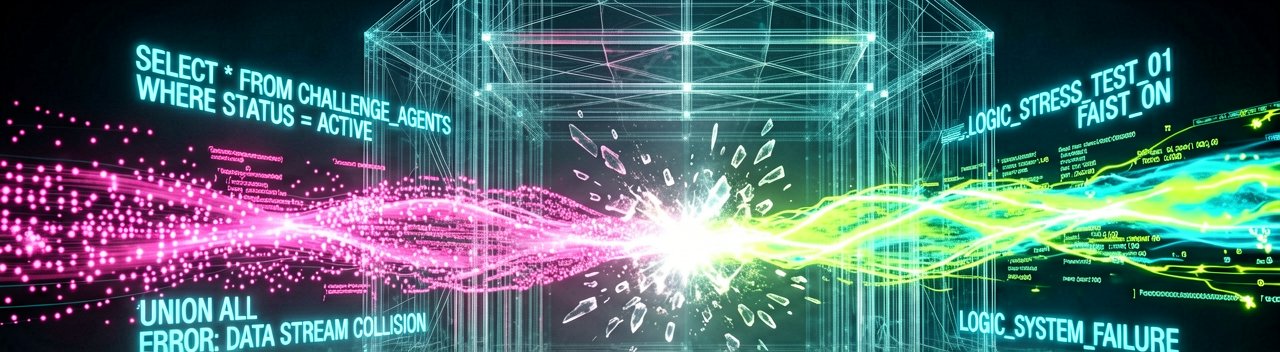
To ensure these agents don't go rogue or hallucinate critical facts, Babel Street has baked in a "Trust, Governance, and Auditability" framework. This includes Challenge Agents—essentially digital "devil’s advocates" that stress-test findings before they ever reach a decision-maker’s desk. As noted by Yahoo Finance, the platform maintains a rigorous audit trail and human-controlled gates, ensuring that while the AI might move at machine speed, the final call always rests with a person who can verify the evidence-backed conclusions.
What Most Reports Miss: The Looming Multimodal Frontier
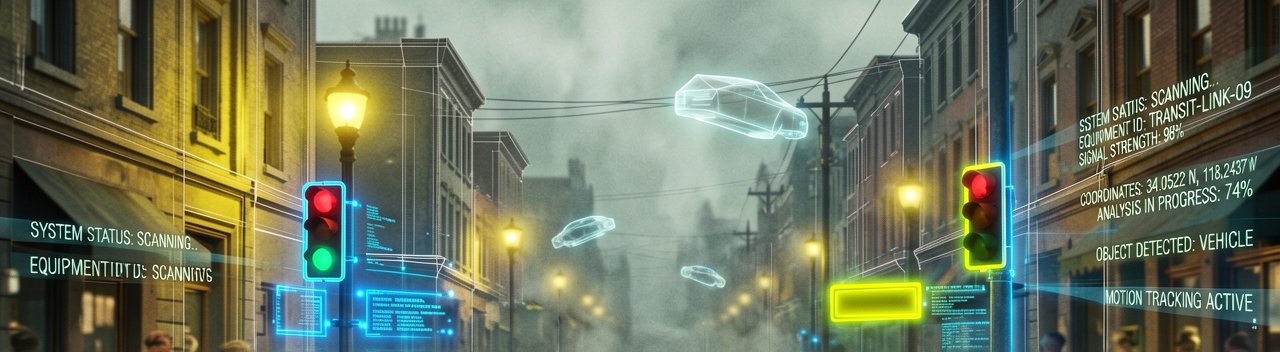
Behind the Scenes: While the headline news focuses on text-based intelligence and entity extraction, the real story for the second half of 2026 is the expansion into visual and cross-platform "multimodal" intelligence. Most traditional risk platforms treat images and text as separate silos, but Babel Street’s roadmap indicates a push toward a unified intelligence picture. Starting in June, the introduction of advanced Image Analysis will allow these agentic workflows to "see" relationships in visual data—such as recognizing a specific piece of equipment or a face across disparate social platforms—and link it back to the textual digital trail.
This shift is a direct response to the "AI-on-AI" era of cybercrime. As adversaries use generative AI to flood the internet with synthetic media and deepfakes, defenders can no longer rely on static databases. The historical context here is crucial: for years, "Data Dominance" was about who had the biggest library; now, it’s about who has the fastest librarian. Babel Street is banking on the idea that the winner of the next intelligence war won't be the one with the most data, but the one who can synthesize that data into an actionable decision the fastest.
The strategic inclusion of Agent-to-Agent interoperability also hints at a broader ecosystem play. By allowing external AI systems to securely "talk" to Babel Street's platform, the company is positioning itself as the foundational layer for global risk intelligence. This interoperability means that an organization's existing internal security tools could theoretically hire a Babel Street agent to run a deep-dive background check on a new vendor in real-time, closing the "intelligence gap" before a risk even manifests as a threat.
From a leadership perspective, the recent onboarding of heavy hitters like John W. Larson (formerly of Booz Allen) as Chief AI Officer signals that this isn't a speculative tech experiment. It's a calculated move to institutionalize "machine-orchestrated tradecraft" within government and enterprise workflows. The goal is to move beyond the dashboard-heavy era of the early 2020s and enter a period where risk signals trigger immediate, automated investigative actions that are fully cited and ready for the "last mile" of decision-making.
The Reality Check: Agentic Intelligence vs. Human Inertia
Reading Between the Lines: While the promise of "agentic" intelligence is undeniably seductive, there is a yawning chasm between a platform’s technical capability and an organization’s cultural readiness to trust it. We are entering a phase where the AI isn't just suggesting a course of action—it’s conducting the preliminary legwork of an entire investigation. The skepticism here shouldn’t be directed at whether the code works, but at how human analysts will handle the "automation bias" that inevitably follows. There is a real danger that as these agents become more polished, the human at the wheel might stop checking the map and start napping in the backseat.
Furthermore, the concept of "Challenge Agents" acting as internal auditors is a fascinating recursive loop, but it invites a classic engineering paradox. If we require an AI to watch the AI, we are essentially building a digital bureaucracy. The efficiency gains promised by Babel Street’s speed could easily be swallowed up by a new kind of "verification fatigue," where analysts spend more time adjudicating disagreements between competing algorithms than actually mitigating real-world risks. The industry has a habit of solving complexity with more complexity, and we have yet to see if this "multi-agent" approach simplifies the workflow or just populates it with more voices.
There is also the matter of the "AI Arms Race" in the open-source intelligence (OSINT) space. Babel Street is empowering the good guys, but the underlying logic of agentic workflows is not proprietary to the law-abiding. As defenders adopt autonomous research plans, adversaries are likely developing "anti-agent" countermeasures—data poisoning or digital decoys designed specifically to lead an autonomous investigator down a rabbit hole of false positives. This suggests that the future of risk intelligence won't be a steady state of security, but a frantic, high-frequency game of cat-and-mouse played at a latency humans can’t even perceive.
Ultimately, the success of Insights Investigator will be measured by its "off-ramp" capabilities: how easily a human can take over when the AI hits a nuanced ethical or political wall. Intelligence is rarely about binary truths; it’s about the gray areas of intent and subtext. While an agent can cross-reference 200 languages in seconds, it still lacks the gut instinct of a field agent who knows when a data point "smells" wrong. The real test for Babel Street won't be the volume of threats detected, but whether their tech actually frees up humans to think, or merely buries them under a mountain of machine-validated noise.
At the end of the day, we’re teaching machines to think like spies so that humans can finally go back to having lunch breaks—just don’t be surprised if the AI eventually decides it deserves a seat at the table and a 401(k).
Artūras Malašauskas is an AI Systems Integrator with 20+ years of production-grade web engineering experience. He has designed, shipped, and scaled enterprise Python/PHP systems for logistics, SaaS, and public-sector clients. For the past year, he has focused exclusively on AI integrations: deploying open-source LLMs, building generative media pipelines (image, audio, video), and engineering multi-agent workflows for real production environments. His standard: reproducibility, security, cost-efficient inference—no vaporware. He documents and evaluates emerging AI tooling, separating verified capabilities from marketing noise. Technical editor at: muza-ai.eu, ai-verslas.lt, ai-naujinos.lt Connect on LinkedIn
Comments