Musicful v3.0: Your Vocal Identity, Now Permanently Cached
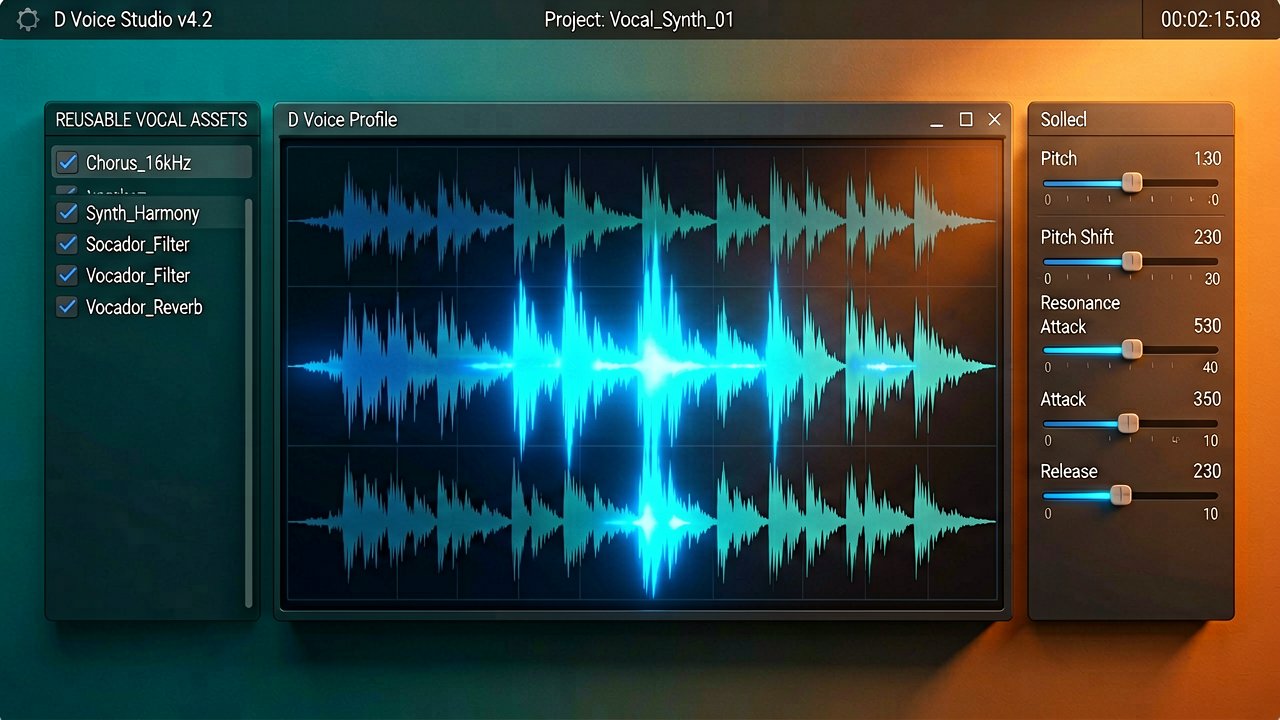
We've seen the "AI as a toy" phase of music generation come and go, and frankly, the novelty of one-off tracks was starting to wear thin. But today, the landscape shifted. With the launch of their v3.0 model, Musicful has introduced a voice customization system that effectively ends the "one-hit wonder" limitation of AI vocals. Instead of rolling the dice on a new voice for every song, users can now create, save, and reuse distinct voice profiles. It's a move toward building a "vocal identity" rather than just a vocal track, allowing creators to keep a consistent lead singer across an entire album or brand campaign without the usual technical friction.
The upgrade isn't just about bells and whistles in the UI; the underlying v3.0 engine reportedly brings a massive jump in "vocal realism" and structural consistency. According to reports from The Star Democrat, the model has been tuned to better recognize genre-specific characteristics, meaning your synth-pop lead won't accidentally drift into a country twang mid-chorus. It’s an essential polish that makes the platform feel less like a jukebox and more like a proper production environment.
Cloning Your Signature Sound
The workflow for these "Reusable Voice Profiles" is refreshingly straightforward. You can feed the system recorded audio, existing files, or even vocals you've previously generated within the app to mint a new profile. Once it's in your library, it stays there, ready to be dropped into any future project. For developers, there's even better news: Musicful plans to roll these features into their AI Music API by the end of May, opening the door for third-party apps to integrate this level of vocal persistence.
A Unified Creative Engine
By merging composition and vocal generation into a single, cohesive workflow, Musicful is clearly gunning for the title of the "all-in-one" AI studio. They've moved past the era where you’d generate a beat in one app and struggle to find a matching vocal in another. With the v3.0 update, the goal is to streamline production so much that you don't actually need a rack of traditional tools to get a studio-quality result. It’s a bold bet on the future of "music for all," and if the stability improvements are as significant as claimed, the barrier to entry for professional-sounding independent music just hit an all-time low.
The Shift Toward Sonic Continuity
The Real Disruption: While the headline centers on "customization," the actual tectonic shift here is the move away from the ephemeral nature of generative AI. Until now, AI music tools functioned like a slot machine—you pulled the lever and hoped for a lucky hit, but you could never replicate that exact "lightning in a bottle" twice. By introducing Reusable Voice Profiles, Musicful is essentially handing creators a digital contract with a specific vocalist. This brings a sense of permanence to AI production that has been sorely lacking, allowing a bedroom producer to build a cohesive discography that sounds like it came from the same studio session rather than a series of disconnected prompts.
From a stakeholder perspective, this is a strategic play to capture the burgeoning "AI influencer" and virtual artist market. We are seeing a rise in creators who want to manage a virtual persona—think Gorillaz but without the human singers behind the curtain. For these users, a consistent vocal timbre is more valuable than any single melody. If the voice changes slightly between the verse of one song and the bridge of another, the illusion of the persona shatters. Musicful v3.0 seems specifically engineered to maintain that illusion, treating the voice as a persistent asset rather than a temporary output.
Historical context in the industry shows that technical barriers usually fall right before a creative explosion. We saw it with MIDI in the 80s and with Auto-Tune in the late 90s. Each time, the "purists" decried the loss of human soul while a new generation of artists found a new way to express it. Musicful's v3.0 follows this trajectory by democratizing the most difficult part of a song to get right: the vocal performance. By allowing users to clone and refine their own voices or create entirely new ones, they are bypassing the traditional gatekeepers of vocal talent and high-end microphone preamps.
There is also a significant legal and ethical layer that seasoned observers are watching closely. By moving into the "Voice Profile" space, Musicful is positioning itself in the middle of the "Right of Publicity" debate. Their emphasis on user-generated profiles and the ability to upload one’s own audio suggests a focus on consent-based creation. This is a savvy move to distance themselves from the "deepfake" controversies that have plagued other platforms. They are building a sandbox where the user owns the identity they craft, which is a much more sustainable business model in an era of tightening copyright regulations.
The upcoming API integration in late May is perhaps the most underrated part of this launch. This isn't just a standalone app update; it’s an infrastructure play. Once other developers can tap into Musicful’s v3.0 engine, we could see these reusable voices appearing in video games, interactive social media filters, and even personalized wellness apps. The voice becomes a portable identity that can travel across different digital experiences. This level of interoperability is what separates a simple music generator from a fundamental piece of the future creative tech stack.
Ultimately, the success of v3.0 will be measured by the quality of the "vocal realism" under stress. It's one thing to sound good in a controlled demo; it’s another to maintain clarity and emotional resonance across a high-energy EDM track and a stripped-back acoustic ballad. Musicful is betting that their new model can handle that range. If they’re right, the distinction between a "synthesized" artist and a "real" one will continue to blur until the listener simply stops caring about the difference and focuses entirely on the song.
The Reality Check for Virtual Identities
Reading Between the Lines: While the promise of a "reusable vocal identity" sounds like a dream for the independent creator, it conveniently glosses over the "uncanny valley" of musical phrasing. Having a consistent vocal timbre is one thing, but the nuance of human performance—the micro-adjustments in breath, the slight cracking of a voice under emotional weight, and the rhythmic imperfections—remains notoriously difficult to automate. Musicful v3.0 claims a leap in realism, yet the industry has heard this song before. There is a fine line between a professional-grade profile and a sophisticated karaoke machine that happens to sound like the same person every time.
There is also a fascinating contradiction in the "music for all" ethos. As the technical barrier to entry drops to zero, the market value of a "good voice" risks plummeting alongside it. If everyone has access to a studio-quality lead singer that never catches a cold or misses a note, the aesthetic of the "perfect" vocal might ironically become the new generic. We may see a counter-movement where listeners gravitate back toward raw, low-fidelity, and demonstrably human recordings specifically because they lack the polished, algorithmic sheen of a v3.0 profile. The scarcity of talent has always driven the music economy, and Musicful is essentially trying to turn that scarcity into a commodity.
The technical debt of AI consistency is another hurdle rarely discussed in press releases. Reusable profiles suggest a static quality, but as models evolve from v3.0 to v4.0 and beyond, maintaining "legacy" voices could become a nightmare for long-term projects. If a creator builds a brand around a specific Musicful profile today, they are effectively tethered to that platform's proprietary ecosystem. This creates a "vocal lock-in" where moving to a competitor's tool means losing the very identity that defined the artist's brand. It is a brilliant strategy for user retention, but a precarious position for an artist who values true creative independence.
We must also weigh the implications of the "voice cloning" feature against the backdrop of an industry still reeling from unauthorized AI covers. While Musicful emphasizes user-owned profiles, the ease with which one can upload "existing files" to mint a profile suggests a moderation challenge of epic proportions. The platform is essentially trusting its users to be ethical actors in a space where the incentives for clout often outweigh the respect for intellectual property. The legal framework for a "voice" as a copyrightable asset is still being written in real-time, and tools like v3.0 are moving significantly faster than the courts.
Furthermore, the move toward API integration suggests that Musicful isn't just content with being a creative tool; they want to be the "voice layer" of the internet. This ambition brings its own set of skeptics. If digital voices become as ubiquitous and disposable as stock photography, we risk a future where the emotional connection to a singer is replaced by a transactional appreciation for a well-tuned algorithm. The technology is undoubtedly impressive, but the soul of a song is often found in the struggle of the performance—a struggle that AI, by its very definition, is designed to eliminate.
In the final analysis, v3.0 is a masterclass in utility, providing a solution to a problem that has plagued AI music since its inception. Whether this leads to a new era of legendary virtual icons or simply a flood of hyper-realistic but emotionally hollow content is yet to be seen. The tool is now in the hands of the public, and as is often the case with disruptive tech, the most interesting uses will likely be the ones the developers never actually intended.
Artūras Malašauskas is an AI Systems Integrator with 20+ years of production-grade web engineering experience. He has designed, shipped, and scaled enterprise Python/PHP systems for logistics, SaaS, and public-sector clients. For the past year, he has focused exclusively on AI integrations: deploying open-source LLMs, building generative media pipelines (image, audio, video), and engineering multi-agent workflows for real production environments. His standard: reproducibility, security, cost-efficient inference—no vaporware. He documents and evaluates emerging AI tooling, separating verified capabilities from marketing noise. Technical editor at: muza-ai.eu, ai-verslas.lt, ai-naujinos.lt Connect on LinkedIn
Comments