AITX’s RAD Launches SCANNA: Breathing AI Life into Your Old Security Cameras
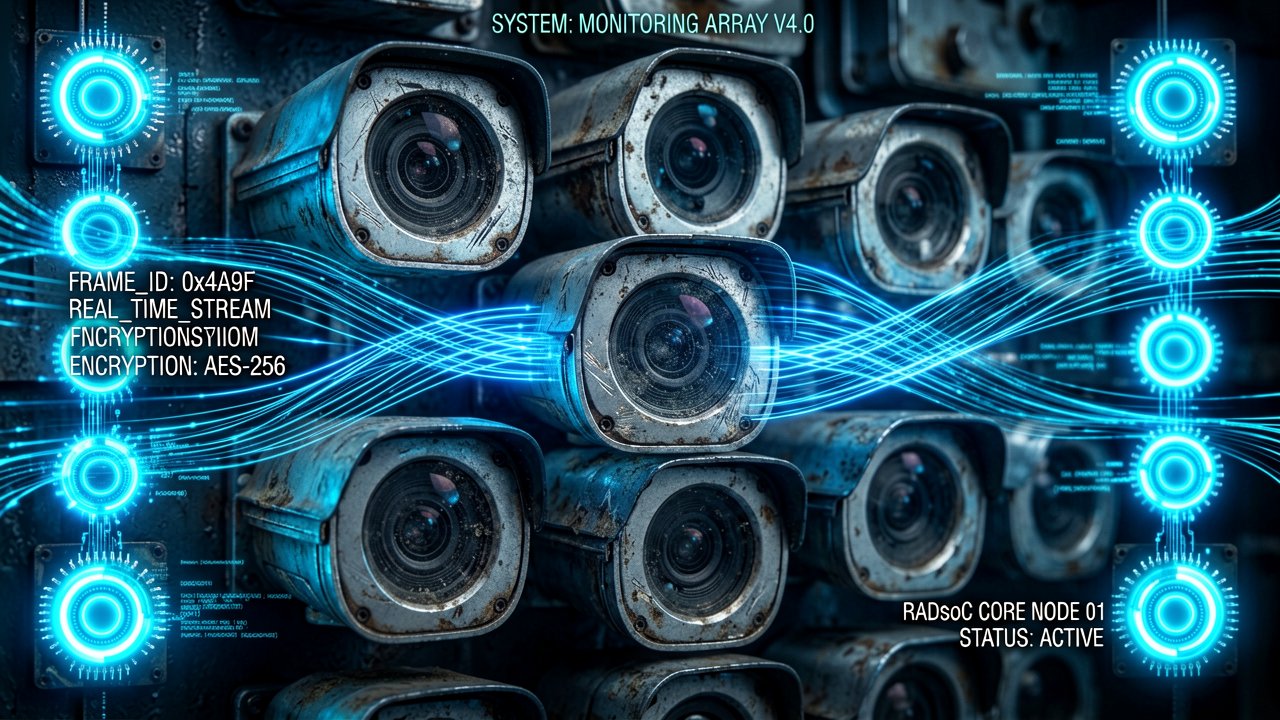
For years, the security industry has been plagued by a "forensic" problem: millions of cameras are recording history rather than making it. On May 18, 2026, Artificial Intelligence Technology Solutions, Inc. (AITX) and its subsidiary Robotic Assistance Devices (RAD) moved to flip that script with the launch of SCANNA. Standing for Security Camera Automated Network & Node Assistant, this software solution isn't just another gadget; it’s a bridge designed to pull existing IP cameras and Network Video Recorders (NVRs) into the modern era of agentic AI.
The beauty here lies in the "as-is" appeal. Instead of ripping out miles of wiring and thousands of dollars in hardware, small and mid-sized organizations can now plug their legacy infrastructure directly into the RADSoC management platform. By doing so, those passive glass eyes gain access to the SARA (Speaking Autonomous Responsive Agent) ecosystem, transforming them from simple recording devices into active participants in a security workflow that can detect, analyze, and respond to threats in real time.
Closing the Gap for the Mid-Market
Historically, the kind of high-level AI monitoring that SCANNA provides was a luxury reserved for the Fortune 500 or those with massive command center budgets. As notes, SCANNA significantly lowers the barrier to entry by removing the need for a hardware overhaul. For a school district or a regional warehouse, this means the difference between watching a break-in on a grainy DVR the next morning and having an AI-driven system trigger an immediate "talk-down" or alert a remote monitor the moment a perimeter is breached.
The Strategic Pivot: This launch marks a significant shift in RAD’s market strategy. While the company built its name on high-profile mobile robots like ROAMEO and stationary units like AVA, SCANNA focuses on the software layer. By embracing third-party hardware, AITX is effectively expanding its "Security-as-a-Service" footprint without the friction of physical deployment. It’s a move that recognizes the hundreds of millions of IP cameras already sitting on walls worldwide—cameras that are currently underutilized assets waiting for a brain.
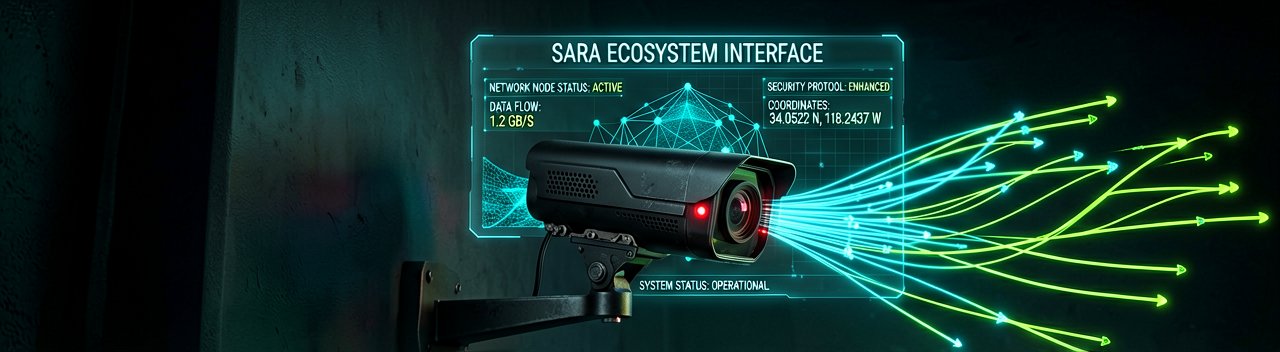
The integration also paves a clear path for future scaling. Organizations that start with SCANNA for basic AI analytics can eventually migrate toward more complex remote monitoring environments through RAD’s collaborations with industry heavyweights like Immix. This "land and expand" approach allows businesses to digitize their security at their own pace, starting with the cameras they already own and trust.
The Technical Underpinning: Beneath the hood, SCANNA automates the often-painstaking process of onboarding streams. It handles the discovery and validation of IP camera feeds, ensuring they are compatible with RADSoC’s AI-driven incident management. This reduces the IT overhead that usually kills mid-market tech adoption, making sophisticated "agentic" security as simple as a software update.
As AITX continues to refine its financial execution—recently reporting a 34% year-over-year revenue increase in its Q3 FY 2026 filings—tools like SCANNA represent a crucial engine for growth. By focusing on software-led integration, the company is positioning itself to capture recurring revenue from a much wider swathe of the market than its hardware units ever could alone.
Behind the Scenes: What most reports miss is the sheer logistical inertia SCANNA is meant to overcome. In the security world, the "refresh cycle" for hardware can be a decade or longer because of the labor costs involved in replacing physical nodes. By decoupling the AI intelligence from the physical lens, RAD is essentially treating security cameras like smartphone hardware—letting the software provide the "upgrade" while the old hardware stays in place. This move aligns with a broader industry trend toward "edge-plus-cloud" architectures, where existing streams are processed by an intelligent layer to provide context that a standard NVR simply cannot see.
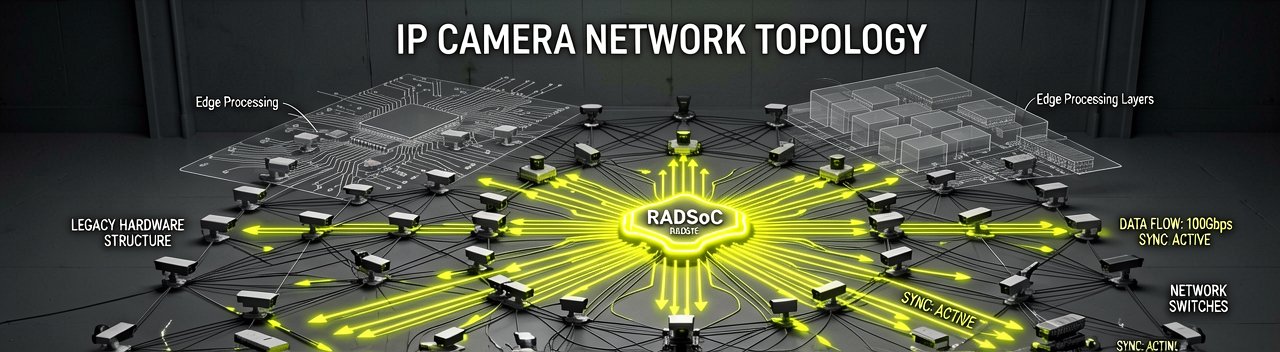
The timing of this release isn't accidental. With AITX targeting operational positive cash flow around mid-2026, launching a high-margin, low-friction software product is a classic playbook move to bolster the bottom line. Analysts at TipRanks have noted the company’s ongoing cash burn, but they also highlight that corporate events like this integration are clear positives for long-term scalability. SCANNA is the ultimate "foot in the door" for AITX, allowing them to monetize thousands of existing cameras that were previously invisible to their ecosystem.
From a stakeholder perspective, this is a win for property managers who are increasingly being pressured to adopt proactive security measures—like real-time firearm detection—without having the capital for a total system replacement. Steve Reinharz, CEO of AITX, has been vocal about the ethical imperative to move beyond passive recording. By making SCANNA compatible with standard IP systems, RAD is effectively removing the "it's too expensive" excuse from the conversation, forcing a market-wide reckoning on what modern surveillance should actually do for the end-user.
For years, the security industry has been plagued by a "forensic" problem: millions of cameras are recording history rather than making it. On May 18, 2026, Artificial Intelligence Technology Solutions, Inc. (AITX) and its subsidiary Robotic Assistance Devices (RAD) moved to flip that script with the launch of SCANNA. Standing for Security Camera Automated Network & Node Assistant, this software solution isn't just another gadget; it’s a bridge designed to pull existing IP cameras and Network Video Recorders (NVRs) into the modern era of agentic AI.
The beauty here lies in the "as-is" appeal. Instead of ripping out miles of wiring and thousands of dollars in hardware, small and mid-sized organizations can now plug their legacy infrastructure directly into the RADSoC management platform. By doing so, those passive glass eyes gain access to the SARA (Speaking Autonomous Responsive Agent) ecosystem, transforming them from simple recording devices into active participants in a security workflow that can detect, analyze, and respond to threats in real time.
Closing the Gap for the Mid-Market
Historically, the kind of high-level AI monitoring that SCANNA provides was a luxury reserved for the Fortune 500 or those with massive command center budgets. As TradingView News notes, SCANNA significantly lowers the barrier to entry by removing the need for a hardware overhaul. For a school district or a regional warehouse, this means the difference between watching a break-in on a grainy DVR the next morning and having an AI-driven system trigger an immediate "talk-down" or alert a remote monitor the moment a perimeter is breached.
The Strategic Pivot: This launch marks a significant shift in RAD’s market strategy. While the company built its name on high-profile mobile robots like ROAMEO and stationary units like AVA, SCANNA focuses on the software layer. By embracing third-party hardware, AITX is effectively expanding its "Security-as-a-Service" footprint without the friction of physical deployment. It’s a move that recognizes the hundreds of millions of IP cameras already sitting on walls worldwide—cameras that are currently underutilized assets waiting for a brain.
The integration also paves a clear path for future scaling. Organizations that start with SCANNA for basic AI analytics can eventually migrate toward more complex remote monitoring environments through RAD’s collaborations with industry heavyweights like Immix. This "land and expand" approach allows businesses to digitize their security at their own pace, starting with the cameras they already own and trust.
The Technical Underpinning: Beneath the hood, SCANNA automates the often-painstaking process of onboarding streams. It handles the discovery and validation of IP camera feeds, ensuring they are compatible with RADSoC’s AI-driven incident management. This reduces the IT overhead that usually kills mid-market tech adoption, making sophisticated "agentic" security as simple as a software update.
As AITX continues to refine its financial execution—recently reporting a 34% year-over-year revenue increase in its Q3 FY 2026 filings—tools like SCANNA represent a crucial engine for growth. By focusing on software-led integration, the company is positioning itself to capture recurring revenue from a much wider swathe of the market than its hardware units ever could alone.
Behind the Scenes: What most reports miss is the sheer logistical inertia SCANNA is meant to overcome. In the security world, the "refresh cycle" for hardware can be a decade or longer because of the labor costs involved in replacing physical nodes. By decoupling the AI intelligence from the physical lens, RAD is essentially treating security cameras like smartphone hardware—letting the software provide the "upgrade" while the old hardware stays in place. This move aligns with a broader industry trend toward "edge-plus-cloud" architectures, where existing streams are processed by an intelligent layer to provide context that a standard NVR simply cannot see.
The timing of this release isn't accidental. With AITX targeting operational positive cash flow around mid-2026, launching a high-margin, low-friction software product is a classic playbook move to bolster the bottom line. Analysts at TipRanks have noted the company’s ongoing cash burn, but they also highlight that corporate events like this integration are clear positives for long-term scalability. SCANNA is the ultimate "foot in the door" for AITX, allowing them to monetize thousands of existing cameras that were previously invisible to their ecosystem.
From a stakeholder perspective, this is a win for property managers who are increasingly being pressured to adopt proactive security measures—like real-time firearm detection—without having the capital for a total system replacement. Steve Reinharz, CEO of AITX, has been vocal about the ethical imperative to move beyond passive recording. By making SCANNA compatible with standard IP systems, RAD is effectively removing the "it's too expensive" excuse from the conversation, forcing a market-wide reckoning on what modern surveillance should actually do for the end-user.
Decoding the Market Reality
Reading Between the Lines: The industry’s rush to "AI-enable" everything often ignores the messy reality of network bandwidth and existing data silos. While AITX pitches SCANNA as a seamless upgrade, the historical friction of integrating disparate IP camera manufacturers suggests that "seamless" is usually a relative term in the world of security systems. There is a palpable tension between the promise of agentic AI and the literal graininess of a decade-old sensor; no amount of cloud-based intelligence can conjure high-definition intent out of a 480p stream that hasn't been cleaned since the last administration.
Furthermore, the pivot toward software-agnostic integration is a double-edged sword for RAD. By opening the RADSoC platform to third-party hardware, they are essentially acknowledging that their proprietary hardware—the shiny robots and towers—might not be the primary driver of scale. This invites a new kind of competition. They aren't just fighting other robotics startups anymore; they are now stepping into a ring with every major Video Management Software (VMS) provider that is also bolting AI modules onto their existing dashboards. The "moat" moves from physical engineering to the efficacy of the SARA agent, a shift that requires RAD to maintain a software edge against tech giants with significantly deeper R&D pockets.
There is also the matter of the "agentic" hype cycle. While the security world loves a good buzzword, the leap from simple motion detection to a truly autonomous responsive agent requires a level of reliability that legacy hardware doesn't always support. If the SCANNA integration hits a bottleneck in local network latency, the "real-time" response becomes a "near-future" response, which in security terms is often too late. For AITX to prove this isn't just a clever repackaging of existing analytics, they must demonstrate that the SARA ecosystem provides a material reduction in false positives—the eternal bane of security guards everywhere.
Ultimately, the success of SCANNA hinges on whether it can turn a cost center into a value proposition. Most security departments view their cameras as an insurance requirement rather than an operational asset. If RAD can successfully bridge the gap between "we have video" and "we have actionable intelligence" without the client having to touch a screwdriver, they may have cracked the code for mid-market saturation. However, the true test will be in the retention rates; once the novelty of an "agentic" camera wears off, the system must deliver consistent, labor-saving results to justify yet another subscription in an already crowded SaaS landscape.
Providing a brain to a blind camera is a noble pursuit, but we should remember that even the smartest AI can’t do much if the lens is covered in three years of spiderwebs and parking lot grime.
Artūras Malašauskas is an AI Systems Integrator with 20+ years of production-grade web engineering experience. He has designed, shipped, and scaled enterprise Python/PHP systems for logistics, SaaS, and public-sector clients. For the past year, he has focused exclusively on AI integrations: deploying open-source LLMs, building generative media pipelines (image, audio, video), and engineering multi-agent workflows for real production environments. His standard: reproducibility, security, cost-efficient inference—no vaporware. He documents and evaluates emerging AI tooling, separating verified capabilities from marketing noise. Technical editor at: muza-ai.eu, ai-verslas.lt, ai-naujinos.lt Connect on LinkedIn
Comments