The Security Readiness Gap: Why Your AI Ambitions Are Currently Stalled

If you've been feeling like the industry's breakneck sprint into AI is hitting a wall, you're not imagining it. A new report from the Linux Foundation confirms that we’ve officially moved past the "can we build it" phase and into a much messier "can we secure it" reality. Security concerns have skyrocketed as the top barrier to AI adoption, jumping from a mere 17% in 2024 to a staggering 48% today. It’s a sobering reminder that while generative models can write code in seconds, the human infrastructure required to vet and protect that code is lagging far behind.
The numbers paint a picture of an industry that's currently understaffed and overwhelmed. According to the data, 57% of organizations admit to a massive capacity gap in AI security and risk management, while 40% of respondents say they are flat-out understaffed in cybersecurity and compliance. This isn't just a technical hurdle; it’s an operational crisis. Leaders are finding that the cost of AI or the limitations of legacy systems aren't the primary inhibitors—it’s the terrifying prospect of deploying "black box" systems without a robust safety net.
What Most Reports Miss: The Maintenance Firehose
Behind the Scenes: Beyond the high-level percentages lies a more frantic reality for the people actually keeping the lights on. The rise of AI-assisted vulnerability research has inadvertently created a "noise crisis" for software maintainers. As reported by Help Net Security, even titans like Linus Torvalds have noted that security mailing lists are becoming unmanageable. AI tools are flooding maintainers with low-quality, duplicated reports, forcing experts to spend their days sifting through junk rather than patching the critical flaws that the Linux Foundation’s report warns about.
This friction is forcing a shift in how companies think about talent. Rather than just hunting for "AI unicorns" who may not exist, 57% of organizations are pivoting toward upskilling their existing staff. The logic is sound: institutional knowledge is a massive advantage when navigating the specific risks of a company's unique stack. Interestingly, upskilling is reportedly outperforming new hiring across every major dimension, including cost efficiency and team cohesion. It suggests that the path out of this security crisis is being paved by the engineers who already understand the systems they are now tasked with augmenting.

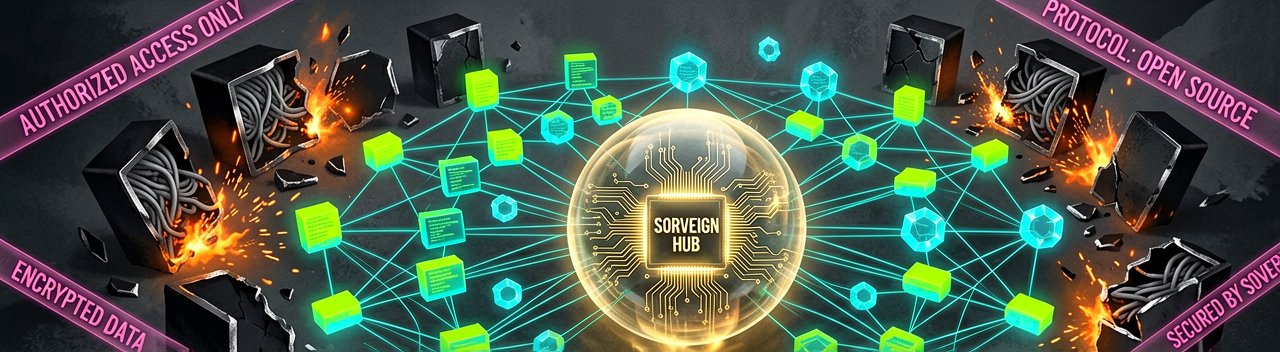
Stakeholders are also increasingly looking toward "Sovereign AI" as a way to claw back control. The move away from proprietary, "black box" models toward open-source foundations is becoming a strategic lever for digital sovereignty. As noted in the State of Sovereign AI report, organizations are prioritizing data control and transparency above all else. They’ve realized that being tethered to a third-party's security roadmap is a liability they can no longer afford in a world where AI vulnerabilities are being discovered at machine speed.
The final piece of the puzzle is a new collaborative front. We’re seeing a rare moment of unity where giants like AWS, Google, and Microsoft are funneling millions into the Open Source Security Foundation (OpenSSF) to defend the ecosystem. This isn't charity; it’s self-preservation. These companies realize that if the open-source foundation of the modern web crumbles under the weight of AI-generated threats, their own proprietary AI products won't have a secure environment to run on. The crisis is real, but the industry is finally waking up to the fact that security can't be an afterthought in the AI era.
If you've been feeling like the industry's breakneck sprint into AI is hitting a wall, you're not imagining it. A new report from the Linux Foundation confirms that we’ve officially moved past the "can we build it" phase and into a much messier "can we secure it" reality. Security concerns have skyrocketed as the top barrier to AI adoption, jumping from a mere 17% in 2024 to a staggering 48% today. It’s a sobering reminder that while generative models can write code in seconds, the human infrastructure required to vet and protect that code is lagging far behind.
The numbers paint a picture of an industry that's currently understaffed and overwhelmed. According to the data, 57% of organizations admit to a massive capacity gap in AI security and risk management, while 40% of respondents say they are flat-out understaffed in cybersecurity and compliance. This isn't just a technical hurdle; it’s an operational crisis. Leaders are finding that the cost of AI or the limitations of legacy systems aren't the primary inhibitors—it’s the terrifying prospect of deploying "black box" systems without a robust safety net.
What Most Reports Miss: The Maintenance Firehose
Behind the Scenes: Beyond the high-level percentages lies a more frantic reality for the people actually keeping the lights on. The rise of AI-assisted vulnerability research has inadvertently created a "noise crisis" for software maintainers. As reported by Help Net Security, even titans like Linus Torvalds have noted that security mailing lists are becoming unmanageable. AI tools are flooding maintainers with low-quality, duplicated reports, forcing experts to spend their days sifting through junk rather than patching the critical flaws that the Linux Foundation’s report warns about.
This friction is forcing a shift in how companies think about talent. Rather than just hunting for "AI unicorns" who may not exist, 57% of organizations are pivoting toward upskilling their existing staff. The logic is sound: institutional knowledge is a massive advantage when navigating the specific risks of a company's unique stack. Interestingly, upskilling is reportedly outperforming new hiring across every major dimension, including cost efficiency and team cohesion. It suggests that the path out of this security crisis is being paved by the engineers who already understand the systems they are now tasked with augmenting.
Stakeholders are also increasingly looking toward "Sovereign AI" as a way to claw back control. The move away from proprietary, "black box" models toward open-source foundations is becoming a strategic lever for digital sovereignty. As noted in the State of Sovereign AI report, organizations are prioritizing data control and transparency above all else. They’ve realized that being tethered to a third-party's security roadmap is a liability they can no longer afford in a world where AI vulnerabilities are being discovered at machine speed.
The final piece of the puzzle is a new collaborative front. We’re seeing a rare moment of unity where giants like AWS, Google, and Microsoft are funneling millions into the Open Source Security Foundation (OpenSSF) to defend the ecosystem. This isn't charity; it’s self-preservation. These companies realize that if the open-source foundation of the modern web crumbles under the weight of AI-generated threats, their own proprietary AI products won't have a secure environment to run on. The crisis is real, but the industry is finally waking up to the fact that security can't be an afterthought in the AI era.
The Paradox of AI-Driven Defense
Reading Between the Lines: There is a delicious irony in the fact that the industry is trying to solve an AI-induced security crisis by throwing more AI at the problem. We are witnessing a high-stakes arms race where the same generative capabilities used to find zero-day vulnerabilities are being marketed as the primary defense mechanism. This creates a circular dependency that seasoned skeptics should find alarming. If the defense relies on the same probabilistic logic as the offense, we haven't actually built a more secure system; we've just automated the speed at which we make mistakes.
The corporate obsession with "upskilling" also deserves a cynical second look. While the report champions training existing staff, one has to wonder if this is a genuine strategy or a convenient excuse for the fact that the cybersecurity talent pool is bone-dry. Asking a sysadmin who is already juggling legacy technical debt to suddenly become an expert in LLM prompt injection and model poisoning is a tall order. It risks creating a "jack of all trades, master of none" scenario where security becomes everyone's responsibility in theory but no one’s priority in practice.
Furthermore, the push for "Sovereign AI" feels like a nostalgic attempt to put the genie back in the bottle. While the desire for data control is valid, the reality of maintaining a truly independent, secure AI stack is financially ruinous for all but the largest enterprises. Most companies will likely end up with a "Sovereign-lite" setup—a thin veneer of local control draped over the same hyperscaler infrastructure they were trying to escape. True sovereignty requires a level of security expertise that the Linux Foundation report clearly states most organizations simply do not have.
Ultimately, this "readiness crisis" might be the best thing to happen to the industry. For years, "move fast and break things" was the gospel, but when the thing being broken is the foundational security of the global supply chain, the stakes are too high. We are entering a period of forced maturity. The hype cycles are finally being tempered by the cold, hard reality of compliance audits and risk assessments. Innovation is no longer about who has the fastest model, but who can prove their model won't accidentally leak the keys to the kingdom.
Deploying AI today is a bit like putting a jet engine on a tricycle: it'll certainly go fast, but you shouldn't be surprised when the wheels come off and the insurance company stops taking your calls.
Artūras Malašauskas is an AI Systems Integrator with 20+ years of production-grade web engineering experience. He has designed, shipped, and scaled enterprise Python/PHP systems for logistics, SaaS, and public-sector clients. For the past year, he has focused exclusively on AI integrations: deploying open-source LLMs, building generative media pipelines (image, audio, video), and engineering multi-agent workflows for real production environments. His standard: reproducibility, security, cost-efficient inference—no vaporware. He documents and evaluates emerging AI tooling, separating verified capabilities from marketing noise. Technical editor at: muza-ai.eu, ai-verslas.lt, ai-naujinos.lt Connect on LinkedIn
Comments