AITX Breathes AI Life into Legacy Hardware with SCANNA Debut
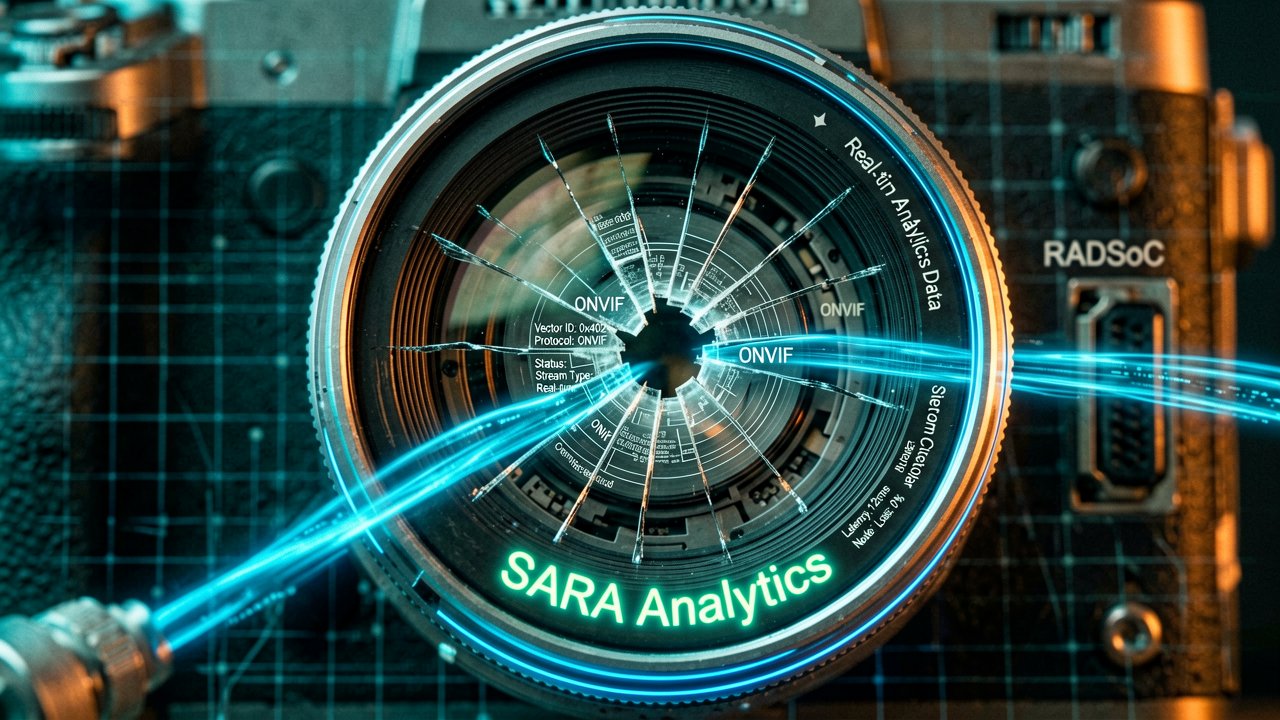
For years, the promise of "AI security" usually came with a hefty side of buyer’s remorse—mostly because it meant ripping out perfectly good IP cameras and starting from scratch. That's a tough sell for mid-sized firms watching their margins. However, GlobeNewswire reports that Artificial Intelligence Technology Solutions (AITX) and its subsidiary RAD are flipping the script with the release of SCANNA. Short for Security Camera Automated Network & Node Assistant, this software acts as a digital bridge, pulling existing IP cameras and Network Video Recorders (NVRs) directly into the company’s RADSoC platform. It’s a clever play: rather than demanding new hardware, AITX is essentially offering an "intelligence upgrade" for the gear you already own.
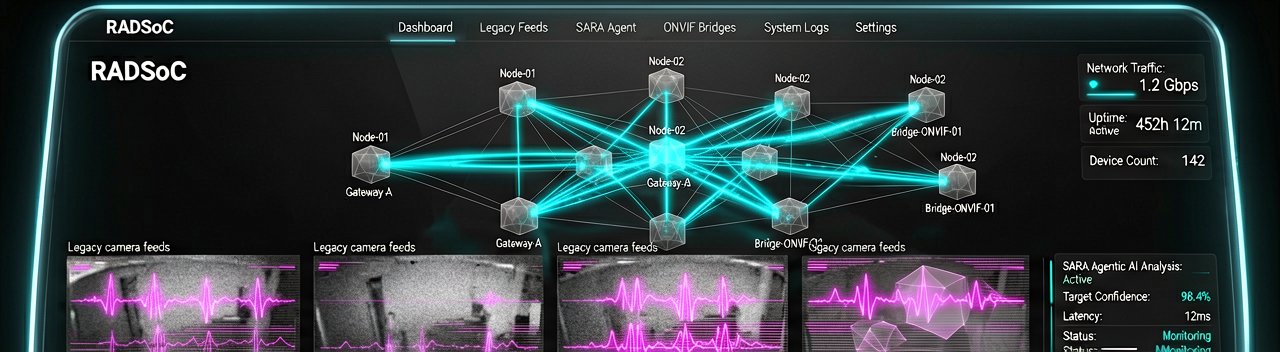
The real magic here isn't just the connectivity; it’s what happens once those "passive" video streams hit the RADSoC ecosystem. By plugging into the company’s SARA (Speaking Autonomous Responsive Agent) platform, these legacy cameras stop being mere recording devices and start acting as proactive security assets. We’re talking about agentic AI that can analyze video, process sensor data, and trigger specific workflows based on what it sees. It’s the kind of high-level incident management that was previously locked behind the gates of expensive, high-end command centers.
Breaking Down the Barrier to Entry
By leveraging the hundreds of millions of IP cameras already installed worldwide, AITX is positioning itself for what CEO Steve Reinharz calls a "land grab" in the AI security space. Analysts at TipRanks suggest this move could significantly broaden the company’s addressable market, particularly among organizations that can't justify a full infrastructure overhaul. It’s a pragmatic approach to scaling: prove the value with existing hardware first, then let clients scale into more advanced robotic solutions as their needs (and budgets) evolve.
This launch also aligns with the company’s deepening collaboration with monitoring software provider Immix, further cementing the idea that security is moving toward a software-first model. In an industry often bogged down by proprietary hardware locks, SCANNA represents a push toward democratization. It turns the "sunk cost" of old cameras into a foundation for a modern, responsive security environment that doesn't require a Silicon Valley budget to maintain.
The Hidden Strategy: Repurposing the Surveillance Graveyard
Beyond the Press Release: The real genius behind the SCANNA rollout isn't just the software architecture, but the strategic pivot away from the "hardware-first" bottleneck that has historically plagued the security industry. For decades, the sector was defined by proprietary lock-ins; if you bought Camera Brand A, you were stuck with Software Brand A. AITX is effectively hacking this legacy cycle by treating existing surveillance systems as a vast, untapped data set rather than obsolete junk. This move signals a shift from RAD being a hardware vendor to becoming a centralized intelligence hub that can overlay on top of any pre-existing infrastructure.
From a stakeholder perspective, this lowers the "activation energy" for risk managers who are under pressure to modernize without the capital expenditure of a full site redesign. By utilizing the Open Network Video Interface Forum (ONVIF) standards, SCANNA acts as a universal translator. This allows a facility manager to keep their ten-year-old dome cameras while gaining the benefits of modern object detection and behavioral analytics. It’s a pragmatic admission that in the real world, budgets move slower than silicon, and meeting customers where they already are is often the fastest path to market dominance.
There is also a significant historical context at play regarding the "Agentic AI" narrative that AITX is pushing. Traditional security systems are reactive; they record a crime so you can watch it later and feel bad about it. The integration of SCANNA with the SARA platform attempts to bridge the gap into active deterrence. By giving "dumb" cameras the ability to trigger verbal warnings or alert human monitors in real-time through the RADSoC, AITX is trying to solve the industry’s greatest pain point: the high cost of false alarms and the lag time of human response.
Industry veterans recognize that the scalability of this model is what makes it a potential game-changer for RAD’s recurring monthly revenue (RMR). Hardware sales are one-off events with tight margins, but software-as-a-service (SaaS) on existing hardware is pure leverage. As more firms look to consolidate their security operations into a single "pane of glass," the ability to pull in disparate legacy feeds becomes a massive competitive advantage. It transforms the security department from a cost center into a data-driven operational unit.
Furthermore, the partnership with Immix suggests that AITX isn't trying to build a walled garden, but rather an open ecosystem. This interoperability is vital for large-scale deployments where multiple generations of technology often coexist. Instead of waiting for a client to find the money for a fleet of robots, AITX can now walk into any building with a network and turn the lights on immediately. It is a land-and-expand strategy that prioritizes software footprint over physical presence, signaling a more mature, tech-centric phase for the company’s growth.
Ultimately, SCANNA represents a recognition that the future of security isn't just about better eyes, but a more capable brain. By decoupling the AI from the specific camera housing, RAD is betting that the intelligence layer is where the long-term value resides. As the market for autonomous surveillance matures, the winners won't necessarily be those with the best sensors, but those who can make the most sense of the billions of video streams already flooding our servers every day.
The Reality Check: Can Software Salvage Aging Glass?
Reading Between the Lines: While the promise of instant AI sophistication for legacy hardware makes for a compelling pitch, the technical reality often presents a more friction-filled landscape. The primary hurdle for SCANNA isn't the AI logic itself, but the "garbage in, garbage out" principle of data processing. A high-flying AI agent like SARA is only as effective as the visual data it receives; plugging a sophisticated neural network into a decade-old, low-resolution camera with a clouded lens is akin to asking a grandmaster to play chess through a frosted window. There is a inherent risk that users may expect the software to compensate for physical hardware limitations that simply cannot be bypassed by code alone.
Furthermore, the industry’s pivot toward "agentic AI" introduces a layer of liability that many firms are still grappling with. If an existing camera is retrofitted with SCANNA and subsequently fails to trigger a critical alert due to a network lag or a compatibility glitch between the old NVR and the new platform, the finger-pointing will be immediate. AITX is betting heavily on its ability to standardize the "un-standardizable" mess of global IP camera configurations. It is a bold technical gambit that assumes the RADSoC can maintain 99.9% reliability across a wildly heterogeneous environment of hardware it didn't design and doesn't control.
There is also the question of "AI fatigue" among corporate security directors who have heard the "legacy integration" siren song many times before. For years, various startups have claimed to bridge the gap between old-school CCTV and modern analytics, only to be bogged down by the sheer variety of proprietary protocols and security vulnerabilities inherent in older IoT devices. To truly disrupt the market, AITX must prove that SCANNA is more than just a sophisticated video overlay and that it can actually reduce the total cost of ownership without adding a new layer of IT maintenance headaches.
Finally, we must consider the competitive reaction from the hardware titans. If software-only solutions like SCANNA begin to eat into the replacement cycles of giants like Hikvision or Axis, expect those manufacturers to tighten their own software ecosystems or introduce "AI-ready" legacy bridges of their own. AITX’s window of opportunity relies on staying more agile and more "hardware-agnostic" than the very companies that built the infrastructure they are now piggybacking on. It is a parasitic relationship in the biological sense—benefiting the guest while utilizing the host—and it remains to be seen how long the hosts will allow the guest to dine for free.
In the end, AITX is trying to convince the world that you don’t need to buy a new car to get self-driving features; you just need to strap a very smart tablet to the dashboard and hope the old engine doesn't drop a gasket while the AI is busy looking for stop signs.
Artūras Malašauskas is an AI Systems Integrator with 20+ years of production-grade web engineering experience. He has designed, shipped, and scaled enterprise Python/PHP systems for logistics, SaaS, and public-sector clients. For the past year, he has focused exclusively on AI integrations: deploying open-source LLMs, building generative media pipelines (image, audio, video), and engineering multi-agent workflows for real production environments. His standard: reproducibility, security, cost-efficient inference—no vaporware. He documents and evaluates emerging AI tooling, separating verified capabilities from marketing noise. Technical editor at: muza-ai.eu, ai-verslas.lt, ai-naujinos.lt Connect on LinkedIn
Comments