AITS Flips the Script on Security with the New SCANNA Platform

Artificial Intelligence Technology Solutions (AITS) just handed a major win to the "if it ain't broke, don't fix it" crowd—or at least the crowd that can't afford to tear out every IP camera they own. Through its subsidiary, Robotic Assistance Devices (RAD), the company launched SCANNA (Security Camera Automated Network & Node Assistant), a software solution that bridges the gap between old-school hardware and modern intelligence. It’s a clever play; instead of forcing organizations to buy a whole new fleet of expensive sensors, SCANNA hooks existing IP cameras and Network Video Recorders (NVRs) directly into the GlobeNewswire-reported RADSoC incident management platform.
The real magic here is the integration with SARA (Speaking Autonomous Responsive Agent), AITS's flagship agentic AI. By pulling legacy feeds into these automated workflows, businesses can finally ditch the "passive observer" model where cameras just record crimes for later viewing. Instead, SCANNA turns those sleepy lenses into active participants that can trigger alerts and responses in real-time. For small and mid-sized outfits that don't have the budget for a 24/7 human-staffed command center, this kind of tech isn't just a luxury—it’s a massive force multiplier that levels the playing field.
Breaking Down the Barriers to Entry
AITS is clearly eyeing the massive graveyard of "dumb" IP cameras scattered across the globe. According to announcements on TipRanks, the company expects SCANNA to unlock value from hundreds of millions of existing cameras, effectively turning a sunken cost into a cutting-edge asset. It’s a strategic move that deepens their collaboration with monitoring software giants like Immix while providing a low-friction entry point for clients who might eventually want to scale up to full robotic security solutions. By lowering the financial hurdle, RAD isn't just selling software; they're selling an upgrade path to an "AI-native" security posture without the typical hardware headache.
The Bridge from Legacy to Logic
Behind the Surveillance Curtain: The security industry has long suffered from a "hardware hangover," where perfectly functional cameras are ripped out simply because they lack the brains to do more than record grainy footage. SCANNA represents a philosophical shift in how Artificial Intelligence Technology Solutions (AITS) views the existing infrastructure of its clients. Rather than treating legacy IP cameras as obsolete relics, this platform acts as a digital translator, pulling feeds from disparate, aging systems and feeding them into a modern, centralized nervous system. It’s an acknowledgment that the most sustainable way to move toward autonomous security is to work with what is already bolted to the walls.
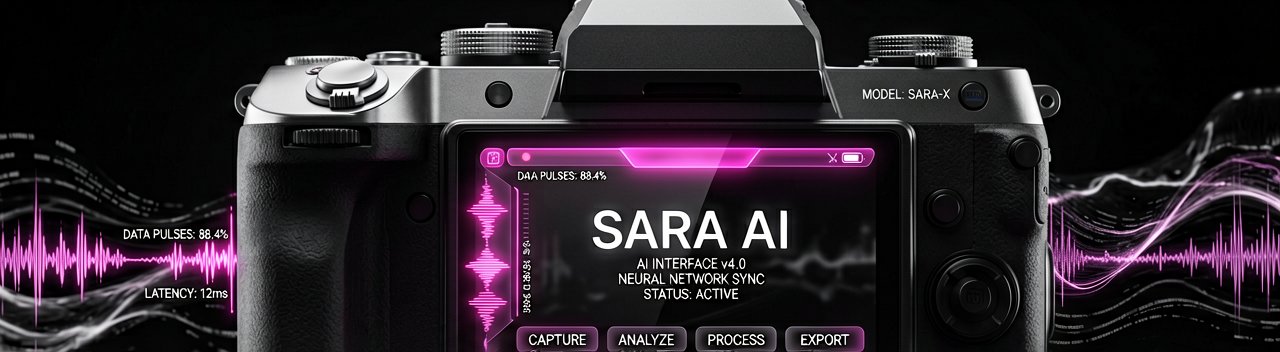
From a stakeholder perspective, this isn't just about saving money on hardware; it’s about shortening the distance between an incident occurring and an intelligent response being triggered. In traditional setups, a Network Video Recorder (NVR) is essentially a digital vault where footage goes to be forgotten unless a crime is reported. By integrating these feeds into the GlobeNewswire-detailed RADSoC ecosystem, AITS is effectively turning every "dumb" camera into an active sensor. This allows the SARA agentic AI to perform real-time analysis, transforming a passive record into a proactive deterrent that can alert authorities or trigger automated voice warnings instantly.
Industry veterans recognize that the real bottleneck in security has never been the quality of the image, but the human fatigue associated with monitoring it. No security guard can watch fifty screens at once for eight hours without missing something. SCANNA addresses this by applying a filter of machine logic to the noise. By only surfacing relevant incidents through its partnership with monitoring platforms like Immix, as noted on TipRanks, RAD ensures that human responders are only deployed when there is a verified need. This targeted approach dramatically reduces false alarms and operational overhead for the end user.
Historically, the move to AI-driven security required a massive "rip and replace" strategy that favored only the largest enterprises with deep pockets. SCANNA democratizes this capability. It allows a regional warehouse or a local retail chain to achieve the same level of automated vigilance as a Fortune 500 campus. This pivot toward software-first solutions suggests that AITS is looking to dominate the mid-market by removing the intimidation factor of high-tech security. They are betting that the easiest way to convince a business to adopt AI is to show them how it makes their current equipment better, rather than telling them to throw it away.
Ultimately, the rollout of SCANNA marks the maturation of the Robotic Assistance Devices (RAD) roadmap. It moves the conversation away from "robots on patrol" and toward "intelligence as a service." While a physical robot is a powerful deterrent, the ubiquitous IP camera is the real eyes of any operation. By capturing the data from these hundreds of millions of existing nodes, AITS is positioning itself not just as a hardware manufacturer, but as the essential software layer that makes the world’s existing security networks actually think.
The Reality Check: Software Over Hardware?
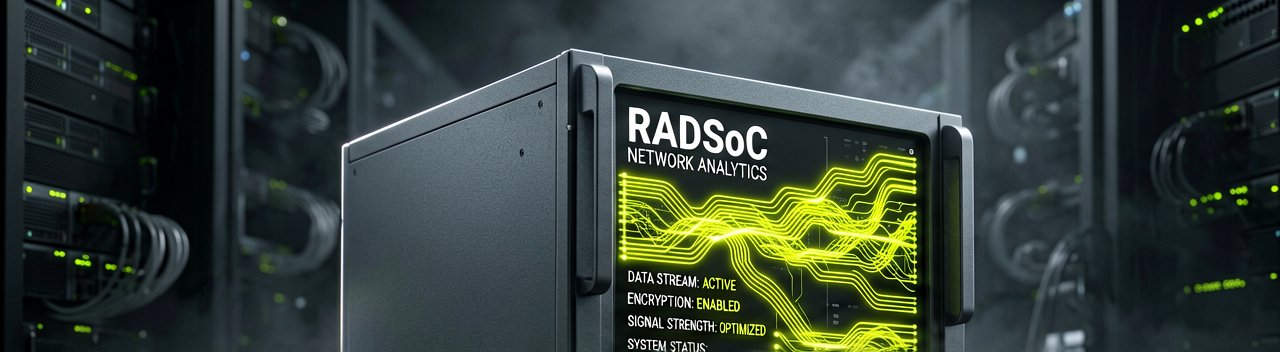
Reading Between the Lines: While the marketing narrative frames SCANNA as a democratic revolution for legacy hardware, the move also signals a strategic pivot for a company that built its brand on futuristic, physical robotics. By shifting the focus to a software-driven "Node Assistant," AITS is effectively admitting that the friction of hardware deployment—shipping, maintenance, and physical installation—is a scaling bottleneck that software simply doesn't share. It’s a pragmatic admission that while everyone loves the idea of a robot sentry, most facility managers would much rather just have their existing, dusty cameras actually do their jobs for once.
There is a inherent contradiction, however, in the promise of "unlocking value" from hundreds of millions of legacy cameras. The technical reality is that the quality of AI analysis is often tethered to the quality of the input. Feeding a low-resolution, poorly angled 2015-era analog-to-IP stream into a high-end agentic AI like SARA may not yield the CSI-style "enhance" results some stakeholders expect. According to details on GlobeNewswire, the system relies on the RADSoC platform to manage these incidents, but the liability of a missed detection due to a blind spot in an old camera remains a human-led risk that software can’t entirely scrub away.
Furthermore, the reliance on third-party integrations, such as those with Immix mentioned on TipRanks, creates a complex ecosystem where AITS is no longer the sole master of the user experience. By becoming the "intelligence layer" rather than the end-to-end provider, they are entering a crowded marketplace of VMS (Video Management System) plugins. The success of SCANNA will hinge not on the novelty of the AI, but on whether it can play nice with the often-cantankerous NVR hardware that has been sitting in server closets for a decade without a firmware update.
The long-term implication is a transition toward a recurring revenue model that looks less like a security firm and more like a SaaS (Security as a Service) powerhouse. This is a smart play for investors, as it smooths out the lumpy revenue associated with hardware sales, but it puts immense pressure on the AI to perform flawlessly. If SCANNA can truly turn a $50 plastic dome camera into a proactive security asset, AITS might just bypass the need for physical robots in many environments entirely, effectively disrupting their own original product line before a competitor has the chance to do it for them.
It turns out the future of security isn't a laser-equipped droid patrolling the halls; it's just your existing camera finally waking up from a ten-year nap and realizing it’s supposed to be looking for more than just the delivery guy's lunch.
Artūras Malašauskas is an AI Systems Integrator with 20+ years of production-grade web engineering experience. He has designed, shipped, and scaled enterprise Python/PHP systems for logistics, SaaS, and public-sector clients. For the past year, he has focused exclusively on AI integrations: deploying open-source LLMs, building generative media pipelines (image, audio, video), and engineering multi-agent workflows for real production environments. His standard: reproducibility, security, cost-efficient inference—no vaporware. He documents and evaluates emerging AI tooling, separating verified capabilities from marketing noise. Technical editor at: muza-ai.eu, ai-verslas.lt, ai-naujinos.lt Connect on LinkedIn
Comments