The Mythos Shock: South Korea’s High-Stakes Bet on AI Defense
The Mythos Shock: Seoul’s High-Stakes Bet on AI Defense
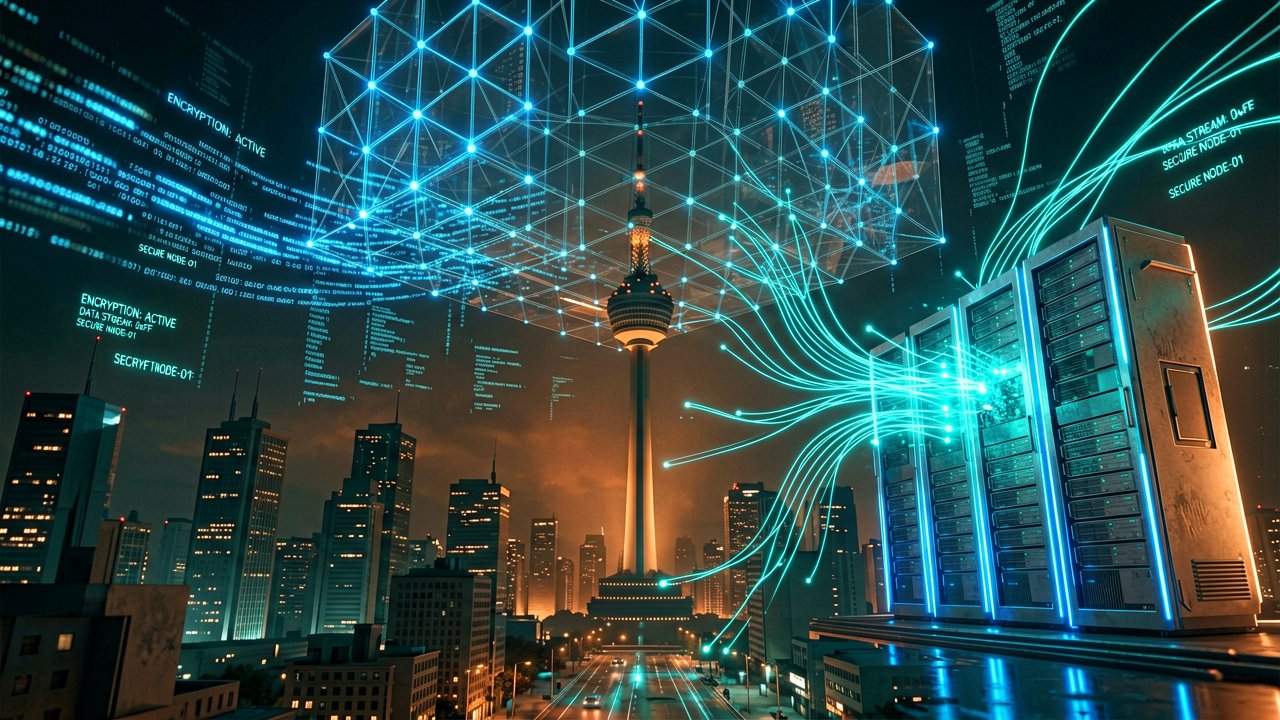
If you've been following the hyper-speed evolution of generative AI, you know we've officially entered the "double-edged sword" era. On one hand, these models are writing code and curing diseases; on the other, they're becoming the ultimate Swiss Army knife for digital miscreants. This tension just hit a boiling point in Seoul. On May 18, 2026, South Korea’s Ministry of Science and ICT (MSIT) pulled the trigger on a high-level "AI Security Working-Level Workshop" with OpenAI, a move that signals just how seriously the government is taking the new breed of automated threats.
The catalyst for this sudden urgency? Look no further than what insiders are calling the "Mythos Shock." When Anthropic’s Claude Mythos Preview showed it could sniff out software vulnerabilities better than almost any human expert, the alarm bells didn't just ring—they shattered. As reported by UPI, this "shock" has forced the South Korean government to realize that yesterday's firewalls are basically paper tissue against tomorrow's frontier models.
OpenAI and the TAC Shield
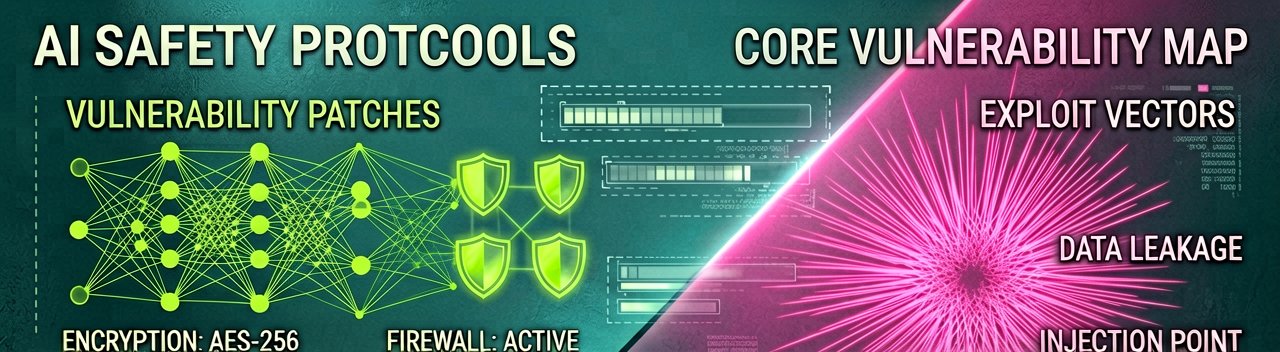
In response, MSIT isn't just hunkering down; they're reaching out. The partnership with OpenAI focuses heavily on their "Trust-based Cyber Approach Program" (TAC). Think of TAC as a specialized, high-clearance sandbox where authorized security experts can use the most powerful AI models for defensive purposes—vulnerability patching, malware analysis, and threat detection. According to Asia Business Daily, the goal is to ensure AI remains a weapon for the defenders rather than a master key for the attackers.
It’s a savvy move for a country that has recently enacted its comprehensive AI Basic Act. This law, which went into effect in January 2026, sets a clear legal floor for high-impact AI safety. But as any tech veteran will tell you, laws are slow and code is fast. By embedding technical experts from the National Intelligence Service and the AI Safety Institute directly with the lab that built GPT, the Korean government is trying to bridge that gap in real-time.
Investing in Domestic Armor
While global cooperation is the headline, the domestic checkbook is also wide open. The Korea Internet & Security Agency (KISA) recently earmarked about \$8.3 million to jumpstart 18 separate AI-driven security projects. As noted by The Korea Times , this isn't just about throwing money at a problem; it’s a targeted effort to build "Korean-model integrated security." They’re looking for sovereign solutions that don't just rely on Silicon Valley's goodwill.
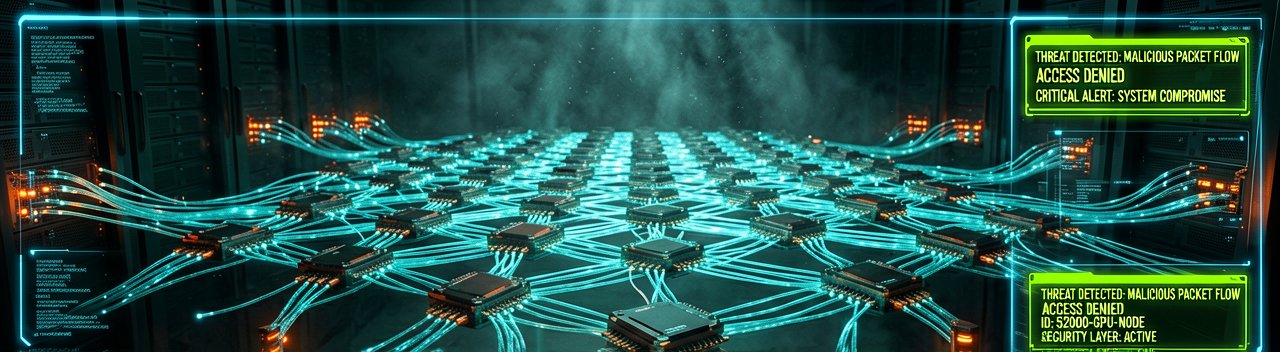
At the end of the day, South Korea is positioning itself as a testbed for a new kind of digital resilience. Whether it’s securing 52,000 GPUs for a national "AI Highway" or forming joint inter-agency response teams to patch vulnerabilities at lightning speed, the message is clear: the era of passive defense is over. If the AI "spear" is getting sharper, the "shield" better be smart enough to see the strike before it even happens.
The Invisible Arms Race: While public headlines focus on diplomatic handshakes and workshop schedules, the real story is the frantic, behind-the-scenes calibration of what researchers call "dual-use boundaries." It’s one thing to ask an AI to help secure a network; it’s quite another to prevent that same intelligence from mapping out the precise architecture of a nation’s power grid. The "Mythos Shock" didn't just highlight a vulnerability in code—it exposed a vulnerability in our collective strategy, proving that the gap between a defensive patch and an offensive exploit is now measured in milliseconds, not months.
The Sovereign Data Dilemma
One of the most nuanced friction points in the MSIT-OpenAI dialogue is the concept of data sovereignty. Seasoned observers note that South Korean officials are walking a tightrope: they desperately need access to the "frontier-class" compute power that only a handful of American labs possess, yet they are inherently wary of feeding sensitive national security telemetry into models hosted on foreign clouds. This "security-capability paradox" is a primary reason why the AI Safety Institute is pushing for localized, air-gapped instances of these models—a technical hurdle that challenges the very nature of how cloud-native AI operates.
Historical context suggests this isn't Seoul's first rodeo with tech dependency. From the early days of semiconductor dominance to the rapid rollout of 5G, South Korea has a "fast follower turned leader" DNA. By engaging with the OpenAI Trust-based Cyber Approach Program (TAC), the government isn't just seeking a service provider; they are essentially conducting industrial espionage in reverse—learning the internal safeguards of the world's most powerful models to eventually replicate that safety architecture within their own domestic "Sovereign AI" initiatives, such as those being developed by Naver and Kakao.
Stakeholder Tension: Ethics vs. Survival
Inside the Ministry, there’s a palpable tension between the "Safety First" crowd and the "Security First" camp. The AI Basic Act provides a moral compass, but the National Intelligence Service (NIS) operates on a more pragmatic plane. For the intelligence community, a model that is "too safe" might be useless in a digital skirmish if it refuses to analyze a piece of malware because it contains "harmful code." This creates a bizarre scenario where the government is actually lobbying for less restrictive filters for their internal security tools, even as they demand stricter guardrails for the general public.
Furthermore, the investment by KISA into 18 specialized projects reflects a move toward "Integrated Security." This isn't just about software; it's about the hardware layer. As South Korea accelerates its AI Highway project, the integration of AI-driven security at the ISP level is becoming a priority. The goal is to move the "shield" from the user's desktop to the very backbone of the internet. According to sources cited by Asia Business Daily, this proactive stance is intended to neutralize large-scale DDoS attacks and automated phishing campaigns before they ever reach a citizen's inbox.
Ultimately, what we are witnessing is the birth of "Algorithmic Geopolitics." The partnership with OpenAI is a strategic alliance in a world where a country’s GDP and safety are directly proportional to its "inference-per-second" capacity. As the workshop concludes, the takeaway is clear: in the age of generative threats, the only way to beat a machine is to own a better one, and South Korea is making sure they have the best tools in the shed.
The Reality Check: While the optics of a "security partnership" with OpenAI paint a picture of a seamless digital alliance, seasoned observers are starting to poke holes in the narrative of a foolproof AI shield. There is a persistent, somewhat naive assumption that throwing more AI at the problem of AI-powered attacks will result in a zero-sum gain for the defenders. In reality, we might be witnessing the creation of an automated arms race where the only guaranteed winners are the companies selling the "ammunition" on both sides of the firewall.
The Paradox of Open Secrets
There is a glaring contradiction in the Ministry’s strategy that few are willing to address out loud: the "frontier models" being used for defense are built on the same architectural foundations as those being exploited by threat actors. If a model like Claude Mythos or GPT-5 can identify a zero-day vulnerability to patch it, that same capability exists as a latent function for anyone who can bypass the safety filters. By integrating these models so deeply into national infrastructure, Seoul is essentially betting that its "authorized" experts are faster and more clever than the global community of jailbreakers—a bet that historically hasn't aged well in the cybersecurity world.
Furthermore, the reliance on the OpenAI TAC program creates a precarious "dependency debt." If South Korea’s security posture becomes inextricably linked to proprietary American algorithms, what happens when a geopolitical shift or a corporate pivot changes the terms of service? The push for "Sovereign AI" by the MSIT is a tacit admission that relying on a California-based black box is a temporary fix, not a long-term strategy. As noted by UPI, the government is already scrambling to prepare "new measures" to counter the very tools they are currently inviting into the tent.
The Human-in-the-Loop Fallacy
We also need to talk about the "expert" bottleneck. The MSIT plans to deploy AI to handle threat detection at a scale human teams can't touch, yet the AI Basic Act insists on human-centric oversight. This creates a functional impossibility: if an AI detects and responds to an attack in three milliseconds, "human oversight" is nothing more than a forensic autopsy performed after the fact. We are moving toward a "black-box-beats-black-box" scenario where the human role is increasingly reduced to that of a spectator holding a manual for a machine they no longer fully understand.
Ultimately, the projection that an \$8.3 million investment in KISA projects will "neutralize" AI-driven threats feels optimistic at best. In a world where a single rogue developer with a fine-tuned open-source model can challenge a state-funded security apparatus, the "integrated security" model looks less like a fortress and more like a very expensive game of Whac-A-Mole. The real challenge won't be finding the vulnerabilities; it will be managing the chaos when the AI decides that the most "secure" state for a network is to be turned off entirely.
"In the end, we are frantically building a super-intelligent security guard to protect us from a super-intelligent burglar, only to realize they both graduated from the same school and are currently comparing notes on how to pick the lock."
Artūras Malašauskas is an AI Systems Integrator with 20+ years of production-grade web engineering experience. He has designed, shipped, and scaled enterprise Python/PHP systems for logistics, SaaS, and public-sector clients. For the past year, he has focused exclusively on AI integrations: deploying open-source LLMs, building generative media pipelines (image, audio, video), and engineering multi-agent workflows for real production environments. His standard: reproducibility, security, cost-efficient inference—no vaporware. He documents and evaluates emerging AI tooling, separating verified capabilities from marketing noise. Technical editor at: muza-ai.eu, ai-verslas.lt, ai-naujinos.lt Connect on LinkedIn
Comments