The Script Before the Screen: How CrePal’s TVC Mode is Coding a New Era of AI Commercials

The Script Before the Screen: CrePal’s TVC Mode and the New Rules of AI Advertising
For the last year, the AI video landscape has felt a bit like the Wild West—a dizzying scramble of "text-to-video" tools that can churn out surreal clips of cats playing pianos but fall flat the second you ask for a coherent 30-second brand story. We’ve seen a lot of flash, but not much structure. That’s why the latest move from CrePal caught my eye. By launching "TVC Mode," they aren't just giving us another "generate" button; they’re trying to build the industry’s first real AI pre-production office.
If you’ve ever sat in a high-stakes production meeting, you know that the magic doesn’t happen when the cameras start rolling—it happens weeks before. You need a Character Bible to ensure your lead doesn't change hair colors between scenes, and a Shot Plan so the pacing doesn't feel like a frantic fever dream. CrePal's TVC Mode, as detailed in their recent announcement on EIN Presswire, automates these exact "boring" bits. It forces the AI to think like a director, generating those foundational assets before a single pixel is rendered.
This "pre-flight" check is arguably the missing link in generative video. Most creators today are still wrestling with "prompt engineering" (which is often just fancy talk for guessing), but CrePal is leaning into an agentic workflow. According to reporting from KrASIA, the platform functions as an orchestrator, toggling between various specialized sub-agents to handle scriptwriting, scene design, and final editing. It’s a shift from "AI as a tool" to "AI as a production team."
Solving the Consistency Crisis
The biggest headache in AI video has always been consistency. One frame looks like a Pixar movie, the next like a grainy CCTV feed. By integrating what they call "Scene Bibles," CrePal’s TVC Mode aims to lock in visual styles across multiple clips. It’s a necessary evolution as the market moves toward serious commercial applications. With U.S. digital video ad spend projected to blow past $80 billion by 2026, brands aren't looking for quirky glitches; they’re looking for "campaign-ready" reliability, a sentiment echoed in analysis by The Current.
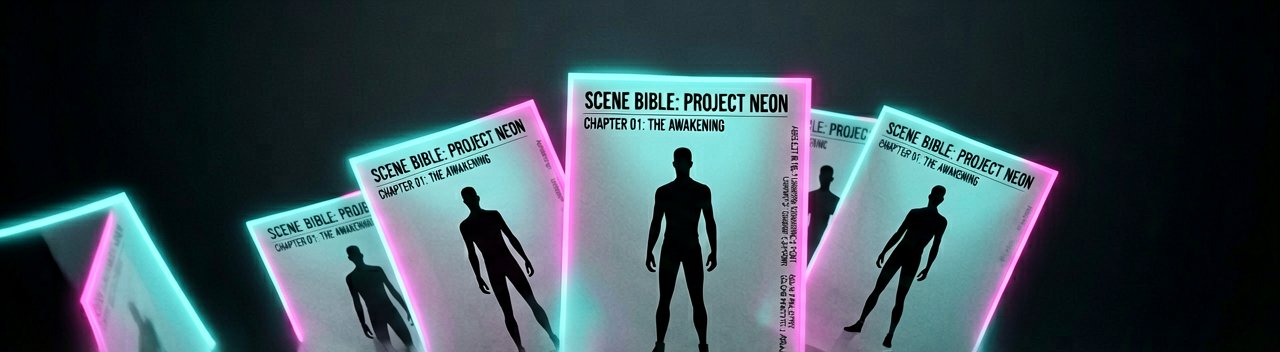
What I find most interesting is how this democratizes the high-end TVC (Television Commercial) feel. Traditionally, a professional storyboard and character design phase would cost thousands before you even rented a lens. Now, as noted by TechIntelPro, small agencies and solo marketers can compete with enterprise budgets by using these autonomous creative engines. It’s not just about speed; it’s about having a system that remembers the brand’s "voice" from scene one to scene ten.
Of course, the "human in the loop" debate isn't going anywhere. CrePal’s CEO, Jacky Liu, has been vocal on platforms like Product Hunt about the importance of "Director Mode"—a feature that lets pros keep their hands on the wheel while the AI does the heavy lifting. In the end, TVC Mode isn't trying to replace the director’s vision; it’s trying to make sure that vision doesn't get lost in the digital noise. For anyone tired of the "spray and pray" approach to AI video, this structured roadmap feels like a very grown-up step in the right direction.
Beyond the Render: Why Structural Guardrails are AI Video’s True "Killer App"
The Real Shift Under the Hood: While the tech world is currently obsessed with "Sora-killers" and pixel-perfect realism, the real bottleneck for commercial video isn't resolution—it’s narrative drift. Any seasoned creative director will tell you that a beautiful shot is worthless if it doesn't match the lighting, color grade, or character continuity of the shot that preceded it. What CrePal is doing with TVC Mode is effectively building a "digital spine" for the creative process, moving away from the chaotic spontaneity of traditional generative models.
Historically, the jump from "cool AI demo" to "broadcast-ready asset" has been a graveyard of failed projects. I’ve spoken with countless editors who spent more time trying to fix AI-generated continuity errors than it would have taken to just film the scene manually. By introducing the "Scene Bible" and "Character Bible" architecture, CrePal is acknowledging a hard truth: creativity requires constraints. In a professional environment, "infinite possibilities" is actually a bug, not a feature. You need the AI to know that the protagonist's jacket must be navy blue in every single shot, regardless of the lighting.
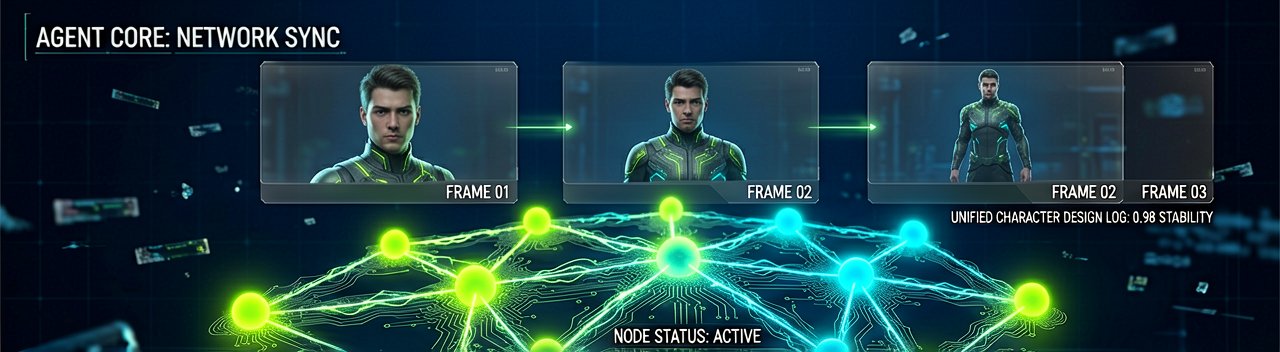
This structural approach mirrors the evolution we saw in the early days of CGI. When Pixar moved from shorts to features, the breakthrough wasn't just better rendering; it was the development of sophisticated asset management systems. TVC Mode is essentially the "Asset Manager" for the AI era. According to technical insights shared via EIN Presswire, the system uses a multi-agent framework where one "agent" acts as the continuity supervisor while another handles the cinematography. This mimics a real-world set where specialized roles prevent the production from devolving into a mess.
From a stakeholder perspective, the implications for ROI are massive. Currently, mid-market brands are often priced out of high-end TV spots because of the prohibitive costs of pre-production and post-production. If a "Video Agent" can handle the heavy lifting of storyboarding and scene planning, we’re looking at a world where a localized car dealership can produce a commercial with the production value of a national brand. As noted by KrASIA, the goal is to compress a process that usually takes weeks into a matter of hours, without sacrificing the deliberate "crafted" feel that defines professional advertising.
However, the industry remains cautious. There is a "uncanny valley" of storytelling that AI hasn't quite bridged yet—the subtle pacing and emotional resonance that only a human editor truly understands. This is why the "Director Mode" mentioned on Product Hunt is so critical. It positions the AI as the ultimate production assistant rather than the auteur. It’s about removing the friction of technical execution so the human can focus on the soul of the story. For the tech journalist watching this space, CrePal isn't just launching a tool; they're proposing a new standard for how AI enters the professional boardroom.
Reading Between the Lines: Can a Prompt Ever Truly Replace a Director’s Eye?
The Friction of Perfection: There is a seductive myth currently circulating in Silicon Valley that production "friction"—the long hours spent debating camera angles or tweaking a script—is a problem to be solved. CrePal’s TVC Mode is a masterful technical response to this, but it raises a thorny question: is the efficiency of an automated "Scene Bible" actually a threat to the happy accidents that make great advertising? When we automate pre-production, we risk trading creative soul for clinical consistency.
The contradiction at the heart of AI video is that while tools like CrePal make it easier to produce content, they also lower the barrier to entry so significantly that we may be headed for a "sea of sameness." If every mid-market brand uses the same multi-agent workflow to generate their "Character Bibles," the visual language of commercial video could become as homogenized as a template-based website. As The Current hints, lower costs are great for the bottom line, but they don't inherently buy you a better idea.
We also need to talk about the "Agentic" promise. CrePal’s move toward specialized sub-agents, as highlighted by KrASIA, is brilliant software engineering, but it assumes that a script can be neatly decoupled from cinematography and then "stitched" back together. In reality, film is an iterative, messy dialogue between these disciplines. Can an AI "Director Agent" truly push back against a client’s bad idea, or will it just produce a perfectly consistent version of a mediocre concept?
Furthermore, there is the looming shadow of the "black box" problem. When an AI system manages the entire pre-production pipeline, the "why" behind creative decisions becomes opaque. If a brand manager wants to change the emotional "vibe" of a scene, will they be wrestling with a prompt until 3:00 AM, or will the system be flexible enough to understand the nuance of "make it feel more nostalgic but less sad"? The transition from human storyboard artists to AI agents, discussed on TechIntelPro, is a massive win for speed, but potentially a loss for the subtle, non-linear thinking that defines human artistry.
Ultimately, CrePal's TVC Mode is a necessary reality check for the industry. It moves the conversation away from the "magic" of AI and toward the "mechanics" of AI. It’s an acknowledgment that for AI to survive in the boardroom, it has to stop acting like a parlor trick and start acting like a professional project manager. Whether that project manager has a sense of humor or a grasp of cultural zeitgeist, however, remains to be seen in the final render.
"We’ve finally reached the point where AI can handle the storyboards, the lighting, and the continuity checks—leaving humans free to do what we do best: taking all the credit while complaining that the 'AI didn't quite capture the vision' during the wrap party."
Artūras Malašauskas is an AI Systems Integrator with 20+ years of production-grade web engineering experience. He has designed, shipped, and scaled enterprise Python/PHP systems for logistics, SaaS, and public-sector clients. For the past year, he has focused exclusively on AI integrations: deploying open-source LLMs, building generative media pipelines (image, audio, video), and engineering multi-agent workflows for real production environments. His standard: reproducibility, security, cost-efficient inference—no vaporware. He documents and evaluates emerging AI tooling, separating verified capabilities from marketing noise. Technical editor at: muza-ai.eu, ai-verslas.lt, ai-naujinos.lt Connect on LinkedIn
Comments