The Invisible Frontier: Shadow AI Is Quietly Reshaping the Enterprise Attack Surface

Remember "Shadow IT"? For years, IT departments played a desperate game of whack-a-mole with Dropbox accounts and unauthorized Trello boards. It felt like a crisis at the time, but in hindsight, it was just the opening act. Today, we're facing a much more sophisticated beast: Shadow AI. It’s not just that employees are using unapproved tools; it’s that they’re feeding proprietary company DNA into black-box algorithms without a second thought. As noted by Dark Reading, this quiet proliferation is fundamentally redrawing the boundaries of the corporate attack surface, often before leadership even knows the ink is wet.
The Convenience Trap
It usually starts with a simple "How can I make this faster?" A marketing manager uses an unvetted LLM to summarize a confidential strategy deck. A developer pastes a chunk of buggy, sensitive code into a public chatbot to find a syntax error. It’s efficient, it’s helpful, and it’s a security nightmare. The problem is that these "quick wins" create a massive data trail that exists entirely outside of corporate governance. According to research cited by Forbes, a staggering percentage of employees admit to using generative AI tools at work without official approval, creating a "grey zone" where corporate IP goes to live—and potentially leak.
The danger isn't just about data egress, though that’s the headline act. It’s also about the integrity of the information coming back in. When teams rely on "shadow" models for decision-making, they risk introducing hallucinations, biased data, or even poisoned code into the production environment. We've spent decades hardening our perimeters, only to realize the biggest threat might be a browser tab that looks like a helpful assistant but acts like an open window.
A New Breed of Vulnerability
What makes Shadow AI particularly teeth-gritting for CISOs is the lack of visibility. You can't protect what you can't see. Unlike traditional software, AI tools often don't require a "formal" installation; they’re just another SaaS login or a browser extension away. As experts at SC Media point out, this creates a friction point where the speed of innovation outpaces the speed of security protocols, leaving organizations vulnerable to prompt injection attacks and inadvertent training-data disclosure.
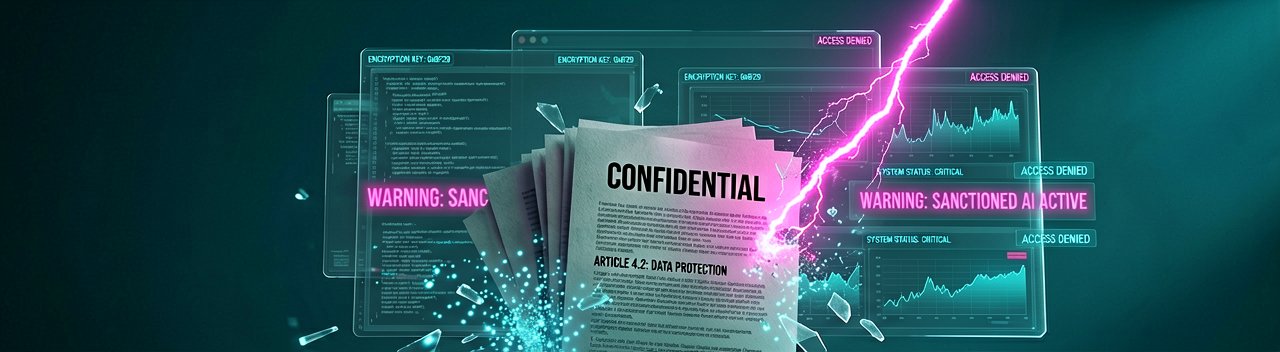
The solution isn't a blanket ban—we all know how well that worked for smartphones in the workplace. Instead, the focus is shifting toward "AI TRiSM" (Trust, Risk, and Security Management). Companies are realizing they need to provide sanctioned, "safe" AI playgrounds to lure employees away from the wild west of public LLMs. It’s about building a culture where the tool is as secure as the task it performs. If we don't get a handle on the shadow, the very tech meant to propel us forward might just be what trips us up.
Ultimately, Shadow AI is a symptom of a workforce that is hungry for better tools. The challenge for the modern enterprise isn't just to lock the doors, but to build better, safer hallways. We’re in the middle of a massive architectural shift, and if we aren't careful, the "attack surface" won't just be our servers—it'll be our collective intelligence itself.
The Quiet Leak in the C-Suite: While most headlines fixate on junior developers leaking snippets of code, the real "silent killer" in the Shadow AI landscape is happening at the strategic level. High-level executives, pressured to deliver "AI-driven results" to boards and shareholders, are increasingly turning to consumer-grade AI tools to draft sensitive memos, analyze quarterly financials, or simulate competitive scenarios. This isn't just a technical oversight; it’s a fundamental breakdown of the corporate fiduciary duty. When a CFO plugs a draft earnings report into a public model to "check the tone," they aren't just using a tool—they are effectively publishing that data to a third-party server that may use it for future training cycles.
The "Model Collapse" and Data Integrity Trap
Beyond the obvious privacy leaks, a more insidious threat is emerging: the degradation of institutional knowledge. As seasoned reporters at Wired have hinted, when employees rely on unvetted AI to synthesize internal reports, they risk creating a feedback loop of misinformation. If "Shadow AI" hallucinates a figure and that figure is then cited in a formal internal document, the enterprise attack surface expands to include epistemic risk. We are seeing a shift where the "attack" isn't a hacker breaking in, but a slow erosion of truth from within the company's own decision-making engine.

Historically, IT departments relied on "Data Loss Prevention" (DLP) tools that looked for social security numbers or credit card patterns. But Shadow AI is slippery; it handles unstructured thought. How do you write a regex for a "sensitive business strategy"? You can’t. This has led to a fascinating, if panicked, pivot in the cybersecurity industry toward "Context-Aware" monitoring. As noted by Help Net Security, the focus is moving from blocking URLs to analyzing the intent of the prompt, a level of scrutiny that raises its own set of thorny privacy concerns for the workforce.
The Vendor Sprawl Paradox
There is also the "API-fication" of the workplace to consider. Every legacy software provider—from HR platforms to CRM systems—is currently bolting on "AI features" that often bypass traditional procurement reviews. This "Shadow AI by Proxy" means that even if an employee stays within sanctioned apps, their data might still be traveling to a third-party AI provider via an unscrutinized API integration. This creates a multi-layered attack surface where the vulnerability is three or four vendors removed from the company's direct control.
The human element here is the most telling. There is a palpable "AI FOMO" (Fear Of Missing Out) driving this behavior. Employees feel that if they don't use these tools, they’ll be replaced by someone who does. This desperation makes them ignore the "Terms of Service" that would usually give them pause. We aren't just fighting a lack of tools; we're fighting a cultural zeitgeist that views speed as the ultimate virtue and security as a bureaucratic handbrake. Until the incentives for security align with the incentives for productivity, the shadow will only continue to grow.
The Productivity Paradox: We are currently witnessing a massive corporate gaslighting campaign where the "efficiency gains" of AI are being touted as a universal win, while the catastrophic long-term costs of Shadow AI are quietly moved off the balance sheet. There is a glaring contradiction in the enterprise narrative: leaders demand "innovation at the speed of thought" but provide security frameworks built for the speed of a physical filing cabinet. We assume that a more productive employee is a more valuable one, yet if that productivity is bought with the currency of corporate secrets, the net value to the organization is actually negative. The industry is effectively borrowing against its future security to pay for this morning’s automated summary.
The Illusion of the "Clean" Model
There’s a persistent myth that the "Enterprise Edition" of an AI tool is a magical silver bullet. Even when organizations attempt to move out of the shadows and into sanctioned environments, they often overlook the "Data Sovereignty" trap. As argued in deep-dives by MIT Technology Review, even "private" instances can suffer from indirect prompt injection or metadata leakage. The assumption that you can fully "sanitize" a model’s training history or prevent it from cross-pollinating logic between sessions is, at best, optimistic and, at worst, technically naive. We are trying to build glass walls around a fog.
Furthermore, the skepticism should extend to the vendors themselves. We are in a "gold rush" phase where security features are often marketed as robust before they’ve been battle-tested against a sophisticated adversary. The irony is rich: companies are buying AI-driven security tools to protect them from their own employees using AI tools. This creates a recursive loop of complexity that doesn't necessarily make the enterprise safer—it just makes the attack surface more expensive to monitor. The cynical reality is that Shadow AI isn't just a security hole; it’s the new foundation of the digital workplace, and we are merely decorating the cracks.
The Accountability Vacuum
If a traditional database leaks, we know whose head is on the metaphorical block. But who is responsible when a "Shadow AI" model outputs a hallucinated legal precedent that leads to a million-dollar fine? The employee who used the tool? The IT manager who didn't block it? The vendor who provided a "black box" service? We are heading toward a crisis of accountability where the complexity of the AI stack provides a convenient "algorithmic alibi" for human negligence. As we project into the next five years, the attack surface won't just be a target for hackers; it will be a playground for legal teams trying to figure out where the software ends and the liability begins.
Ultimately, the "Shadow" in Shadow AI isn't the problem—the light is. By trying to force AI into the rigid, legacy structures of 20th-century IT governance, we are ensuring that the most innovative work will always happen in the dark. The implication is clear: the enterprise attack surface will never be "contained" again. It is now a living, breathing ecosystem that changes every time an employee asks a chatbot a clever question. We aren't managing a perimeter anymore; we're managing a mood.
The final word on the matter?
"We spent thirty years teaching employees not to click on suspicious links in emails, only for them to spend the next thirty years voluntarily typing the company's entire roadmap into a chat box because it offered to write a polite 'Out of Office' reply in the style of a 17th-century pirate."
Artūras Malašauskas is an AI Systems Integrator with 20+ years of production-grade web engineering experience. He has designed, shipped, and scaled enterprise Python/PHP systems for logistics, SaaS, and public-sector clients. For the past year, he has focused exclusively on AI integrations: deploying open-source LLMs, building generative media pipelines (image, audio, video), and engineering multi-agent workflows for real production environments. His standard: reproducibility, security, cost-efficient inference—no vaporware. He documents and evaluates emerging AI tooling, separating verified capabilities from marketing noise. Technical editor at: muza-ai.eu, ai-verslas.lt, ai-naujinos.lt Connect on LinkedIn
Comments