Resurrecting Resistance: César de la Fuente’s AI Crusade Against the Superbug
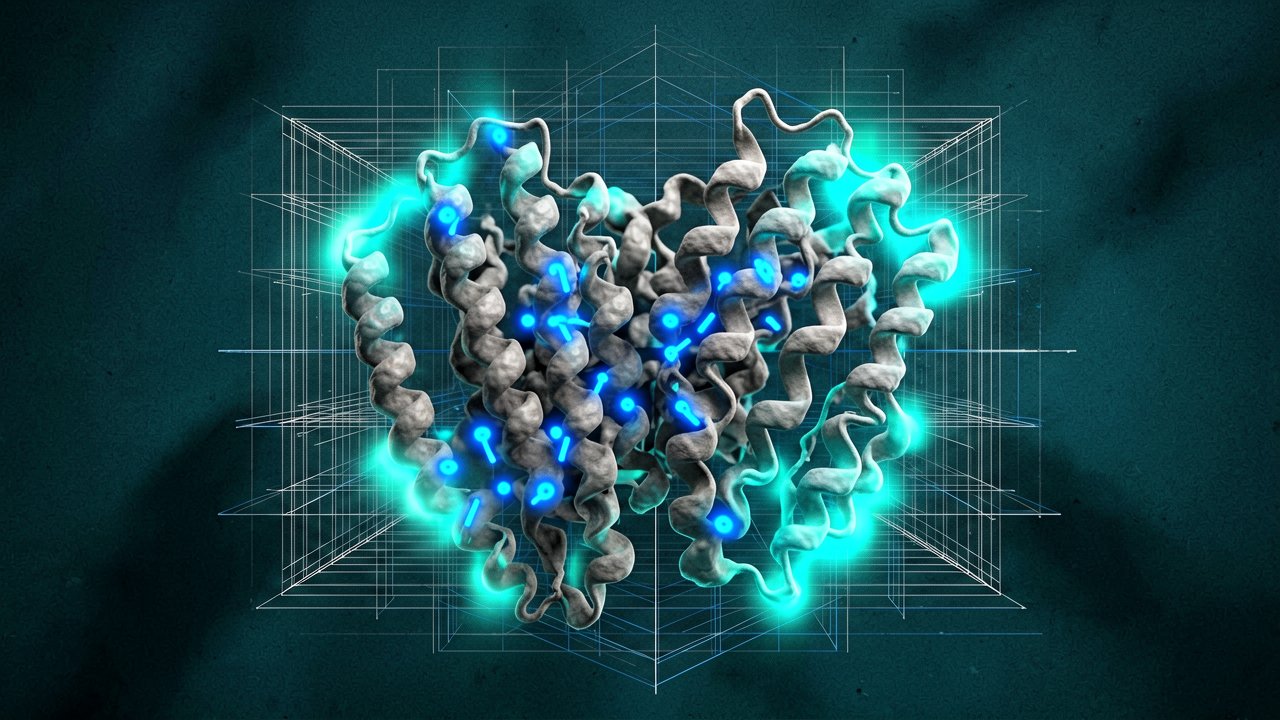
There’s a quiet revolution happening in the world of drug discovery, and it isn’t taking place in a Petri dish—at least, not at first. It’s happening inside high-performance servers, where algorithms are doing the heavy lifting that used to take human researchers years of grueling trial and error. Leading this charge is César de la Fuente, a Presidential Associate Professor at the University of Pennsylvania, whose "Machine Biology" approach has just earned him another prestigious nod for pushing the boundaries of artificial intelligence.
De la Fuente was recently honored with Spain’s XXXI Rafael Hervada Prize for biomedical research, a recognition specifically targeting his work using AI to discover antibiotics in record time. As reported by the American Society for Biochemistry and Molecular Biology , this honor highlights his lab's ability to identify therapeutic compounds from extinct species—a process he calls "molecular de-extinction"—to combat the modern, terrifying rise of antibiotic resistance.
The Race Against Resistance
The stakes couldn’t be higher. We’ve all heard the warnings about "superbugs," but the numbers are sobering: antimicrobial-resistant infections contribute to roughly 5 million deaths annually. Traditional drug discovery is painfully slow, often taking six years or more to move from a concept to a preclinical candidate. De la Fuente’s lab has flipped that script. By treating biology as an information source, his team uses AI systems like Apex to scan through vast datasets of genomic and proteomic information, identifying potential antibiotics in hours instead of years.
What makes his work stand out isn't just the speed; it's the creativity of the source material. According to the Penn Center for Innovation, his team has even explored prehistoric proteins from woolly mammoths and Neanderthals, looking for ancient molecular defenses that might still be effective against today’s pathogens. It sounds like something out of a sci-fi novel, but the preclinical results are very real.
A Trophy Case for the Future
The Rafael Hervada Prize is just the latest in a long string of accolades. De la Fuente has been named to the World Economic Forum’s "Young Global Leaders" Class of 2025 and was recently featured in MIT Technology Review as a pioneer in the field. He’s also picked up the Fleming Prize and the American Society for Microbiology's Award for Early Career Basic Research, cementing his status as a heavyweight in both the tech and biotech sectors.
Beyond the hardware and the headlines, de la Fuente is a staunch advocate for "democratizing" science. His lab frequently releases its AI-generated antibiotic sequences to the public, essentially giving the global scientific community a head start on developing new treatments. It’s a refreshing take in an industry often defined by guarded patents and proprietary secrets. For de la Fuente, the goal is clear: using the best tools we have—AI—to solve one of humanity’s most pressing biological threats before time runs out.
As we look ahead, the integration of machine learning into the very fabric of medicine isn't just a "nice to have"—it's our best shot at staying one step ahead of evolution. With researchers like de la Fuente at the helm, the future of medicine looks a lot more like a data stream and a lot less like a waiting game.
The Hidden Architecture of "Molecular De-extinction": While the headlines focus on the shiny novelty of "resurrecting" mammoth DNA, the real story lies in how de la Fuente is fundamentally reclassifying biology from a mystery of nature into a searchable, programmable database. Most reports skim over the fact that his team isn't just looking for random luck; they are training neural networks to recognize "patterns of life" that have been dormant for millennia. It’s a shift from traditional discovery to a high-stakes engineering problem, where the computer serves as both the architect and the forensic investigator.
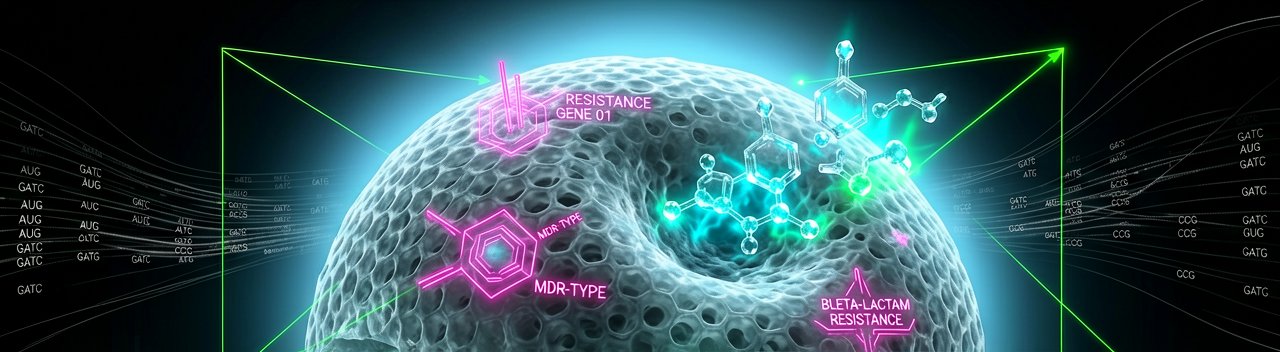
Industry insiders are watching closely because this methodology bypasses the "bottleneck of curiosity" that has slowed pharmaceutical giants for decades. Historically, we found antibiotics by digging in the dirt and hoping a fungus produced something useful. De la Fuente’s approach, highlighted by ASBMB Today, replaces that serendipity with a targeted search through the "dark proteome"—the vast parts of our genetic code and that of our ancestors whose functions remain largely unknown. By using AI to simulate how these ancient molecules interact with modern bacteria, the lab can predict efficacy before a single drop of liquid touches a test tube.
The Ethics of Digital Resurrection
This isn't without its philosophical and regulatory hurdles. When you "print" a protein from a Neanderthal, you enter a gray area of intellectual property and bioethics. Stakeholders in the biotech community are currently debating whether sequences derived from extinct species should be treated as natural products or synthetic inventions. De la Fuente has navigated this by leaning into open-source science, a move that seasoned reporters recognize as a strategic play to accelerate global adoption. By making his findings accessible, he’s essentially building a global "immune system" powered by collaborative data.
The tech itself, specifically the Apex model, represents a departure from the "black box" AI often criticized in healthcare. Instead of just giving a "yes or no" on a molecule, these models are increasingly able to explain *why* a specific peptide sequence will disrupt a bacterial membrane. This interpretability is the "holy grail" for the FDA and other regulatory bodies, as it provides the mechanistic proof required for human clinical trials. As noted by the Penn Center for Innovation, this predictive power isn't just about current threats; it's a proactive shield against the next pandemic.
Finally, there is the human element behind the machines. De la Fuente’s trajectory—moving from Spain to the high-pressure environments of MIT and Penn—reflects a new breed of "bilingual" scientist who speaks both fluent Python and molecular biology. This cross-disciplinary fluency is exactly what the Rafael Hervada Prize seeks to celebrate. It’s a reminder that while the AI does the searching, it still takes a human expert to know which questions are worth asking in the first place. The era of the "lone scientist" at a bench is fading, replaced by a conductor leading an orchestra of algorithms toward a post-antibiotic-resistance world.
The Silicon Scalpel’s Edge: For all the utopian talk of AI-driven cures, there is a looming reality check that the biotech industry often prefers to ignore: a digital prediction is not a drug. While de la Fuente’s algorithms are undeniably brilliant at identifying potential candidates in seconds, they eventually hit the "biological wall"—the messy, expensive, and frequently heartbreaking world of Phase I through III clinical trials. We can find ten thousand "mammoth antibiotics" in an afternoon, but the bottleneck remains the years-long process of proving they won't trigger an immune storm or dissolve in the human liver before they ever reach the infection site.
There is also a subtle contradiction in the "democratization" of these AI tools. While the de la Fuente lab is laudably open-source, the infrastructure required to actually synthesize and test these molecules remains concentrated in the hands of a few elite institutions and deep-pocketed corporations. Skeptics point out that "releasing the sequences" is only half the battle; without a fundamental overhaul of how we fund the development of new antibiotics—a notoriously low-margin business that Big Pharma has largely abandoned—these AI-discovered miracles risk becoming digital ghosts, perfected on a server but never manufactured for a pharmacy shelf.
The Algorithm’s Blind Spots
Furthermore, we must grapple with the inherent bias of the training data. AI models like Apex are only as good as the genomic libraries they feed on. If our current databases are skewed toward certain types of life or specific chemical structures, the AI may simply be reinventing the wheel with a slightly more "extinct" flavor. The true test for de la Fuente won't just be finding an antibiotic that works in a lab, but finding one that follows a completely novel mechanism of action that bacteria haven't already evolved a defense against over the last few billion years.
Yet, despite these hurdles, the shift in momentum is undeniable. De la Fuente isn't just winning prizes for "good science"; he’s winning them for providing a proof-of-concept that the old way is dead. Even if only one percent of his "molecular de-extinction" candidates make it to market, that would still represent a higher success rate than the industry average over the last two decades. The measured gamble here is that by sheer force of computational volume, we can finally outpace the Darwinian speed of bacterial evolution. It is a high-stakes game of "cat and mouse" where the mouse has finally upgraded to a supercomputer.
It’s quite a time to be alive—or recently un-extinct—when our best hope for surviving the 21st century rests on a computer’s ability to loot the genetic pockets of a Neanderthal who didn’t even have the decency to invent soap first.
Artūras Malašauskas is an AI Systems Integrator with 20+ years of production-grade web engineering experience. He has designed, shipped, and scaled enterprise Python/PHP systems for logistics, SaaS, and public-sector clients. For the past year, he has focused exclusively on AI integrations: deploying open-source LLMs, building generative media pipelines (image, audio, video), and engineering multi-agent workflows for real production environments. His standard: reproducibility, security, cost-efficient inference—no vaporware. He documents and evaluates emerging AI tooling, separating verified capabilities from marketing noise. Technical editor at: muza-ai.eu, ai-verslas.lt, ai-naujinos.lt Connect on LinkedIn
Comments