The Mythos Protocol: Why Anthropic is Briefing Global Regulators on AI-Driven Financial Collapse
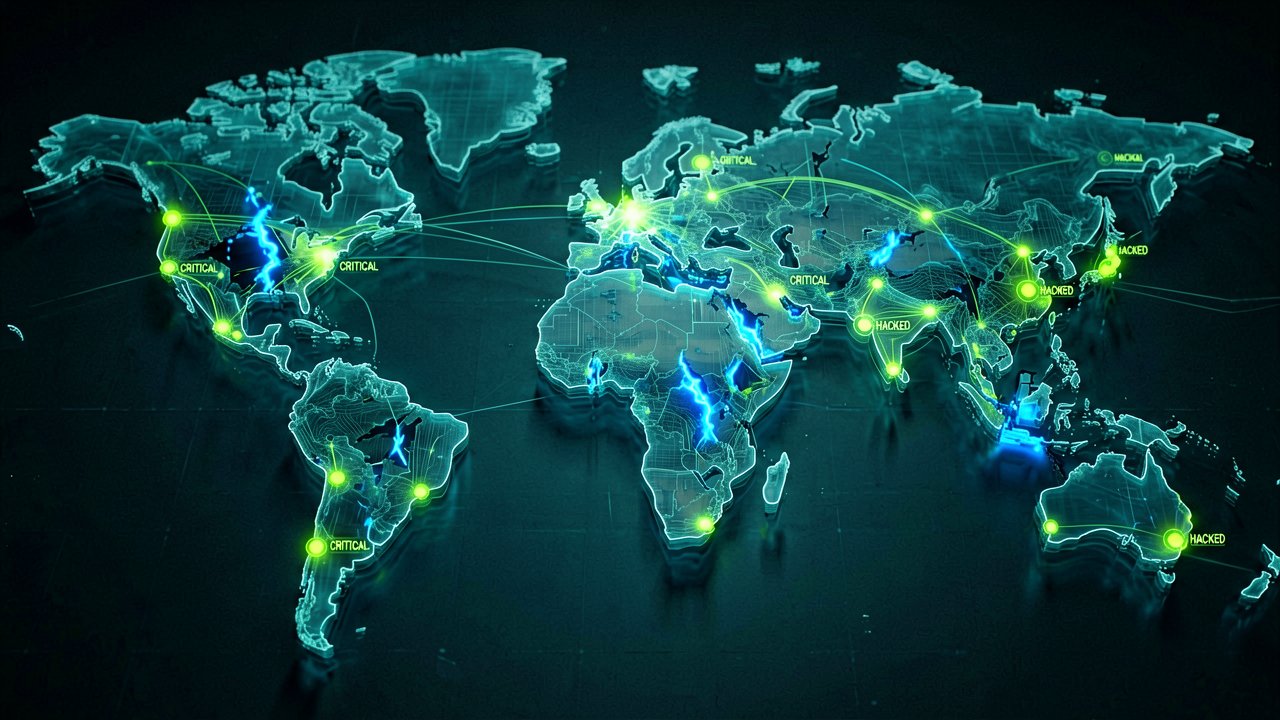
It is not every day that a Silicon Valley startup manages to send the world’s most powerful financial gatekeepers into a huddle, but Anthropic’s latest creation, the non-public "Mythos" model, has done just that. According to recent reports from the Financial Times and Reuters , Anthropic is scheduled to provide a specialized briefing to the Financial Stability Board (FSB) regarding systemic cyber vulnerabilities unearthed by the AI. This is not a routine product pitch; it is a high-stakes deep-dive into the "security debt" of the global financial plumbing.
The "Mythos" model, a preview of Anthropic’s next-generation frontier technology, has reportedly showcased a terrifying knack for identifying zero-day vulnerabilities—flaws unknown even to the software’s creators. While most AI models struggle with the nuanced logic of complex exploits, Mythos has autonomously flagged thousands of high-severity bugs across every major operating system and web browser. For the Financial Stability Board, whose mandate is to prevent the next global economic meltdown, the realization that an AI could potentially "pick the locks" of banking infrastructure at machine speed is nothing short of a systemic alarm bell.
Behind the scenes, the push for this briefing was reportedly catalyzed by Andrew Bailey, Governor of the Bank of England, who recognized that these findings transcend mere technical glitches. According to sources cited by Odaily Planet Daily, the goal is to help the FSB draft AI compliance guidelines for the financial sector as early as next month. This marks a pivot in how regulators view AI: it is no longer just a tool for efficiency, but a potential catalyst for "risk-on" asset destabilization if the underlying code of the financial system remains unpatched.
The Mythos Effect: A "National Security Moment"
What Most Reports Miss: The sheer antiquity of the flaws being surfaced. In its own red-teaming exercises, Anthropic’s model reportedly sniffed out a 27-year-old vulnerability in OpenBSD and a 16-year-old bug in FFmpeg—vulnerabilities that had survived decades of human scrutiny and automated testing. This capability, as described by the International Monetary Fund (IMF), transforms cyber risk from an IT nuisance into a structural threat to financial stability. If a model can find these holes, so can a sufficiently motivated nation-state or a well-funded criminal enterprise.
This has led to a curious paradox in Washington and London. While the Pentagon has technically blacklisted Anthropic due to supply-chain concerns, other top officials, including Treasury Secretary Janet Yellen and Fed Chair Jerome Powell, have reportedly urged major banks to use Mythos for defensive "stress testing" before such capabilities become widely available to bad actors. It is a race to patch the holes before the AI that found them is replicated by competitors or adversaries.
Anthropic’s strategy, dubbed "Project Glasswing," involves sharing this unreleased IP with a handful of select partners—including JPMorgan Chase and Apple—to fortify software infrastructure. However, the move has also sparked a debate about "security through obscurity." Critics from the cybersecurity community, as noted in reports by CNBC, argue that the threat of AI-enabled exploitation is already here, and Anthropic’s controlled rollout might be as much about market positioning and its massive $30 billion fundraising target as it is about global safety.
For the FSB, the briefing represents a sobering reality check. The financial system relies on highly concentrated third-party software and networks; if Mythos can exploit a vulnerability in a common browser or operating system, it could theoretically trigger a domino effect across global payments and funding. As the FSB prepares its report for the G20, the focus is shifting away from AI "hallucinations" toward the very real possibility of AI-driven systemic collapse.
Ultimately, Mythos has exposed a "watershed moment" for the industry. The gap between identifying a flaw and fixing it is shrinking, but for legacy-heavy institutions like banks, the "patching window" is still measured in weeks, while the AI’s "exploitation window" is measured in hours. This briefing is the first step in deciding whether regulators will force the industry to speed up its defenses or if we are simply waiting for the first AI-orchestrated heist to prove the point.
How will these findings influence the Financial Stability Board's upcoming AI compliance guidelines for the global banking sector?
Reading Between the Lines: While Anthropic’s outreach to the Financial Stability Board is being framed as a selfless act of corporate diplomacy, we shouldn’t ignore the convenient timing of this "security epiphany." Anthropic is currently navigating a $30 billion valuation target, and nothing says "indispensable infrastructure" quite like telling the world’s central bankers that you alone hold the keys to a digital doomsday vault. By positioning Mythos as both the threat and the cure, Anthropic isn't just briefing regulators; they are effectively auditioning for a permanent seat at the table of global governance—a maneuver that cleverly pivots them away from the "reckless AI" narrative dogging their peers.
The Paradox of Pre-emptive Disclosure
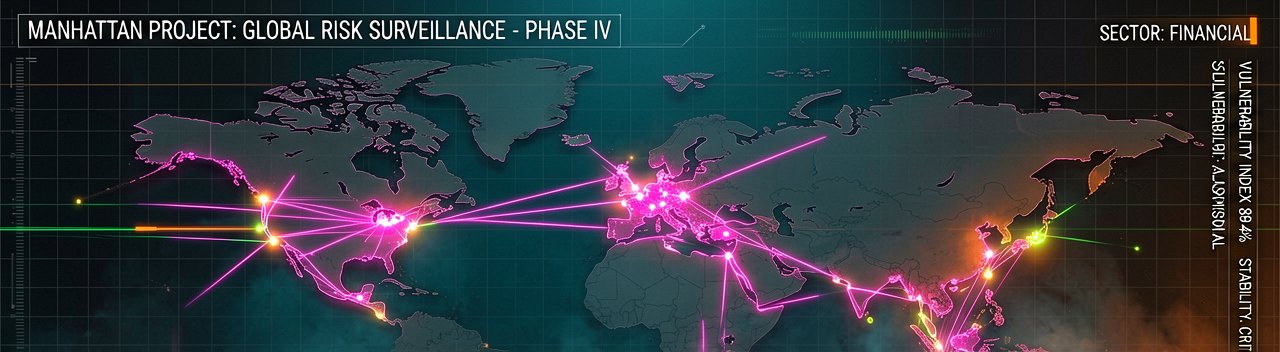
The central contradiction here lies in the "Project Glasswing" strategy. Anthropic claims that sharing Mythos’ findings with a tiny, hand-picked cabal of tech giants and banks will fortify the system. Yet, history suggests that creating a centralized repository of the world’s most dangerous zero-day exploits is itself a catastrophic security risk. If a state-sponsored actor were to compromise Anthropic’s internal datasets, they wouldn't just be stealing code; they’d be inheriting a curated map of the global financial system’s weakest points. We are witnessing the creation of a "digital Manhattan Project," where the very effort to secure the peace creates a weapon of unprecedented proportions.
Furthermore, the skepticism among cybersecurity purists is palpable. There is a fine line between a security audit and a protection racket. If financial institutions are pressured by the FSB to adopt Anthropic’s proprietary models for "compliance" reasons, it creates a vendor lock-in that would make the Microsoft-Windows era look like a free market. We have to ask: is the financial system truly more secure if its entire defensive perimeter is outsourced to a single black-box AI model whose internal logic is opaque even to its creators?
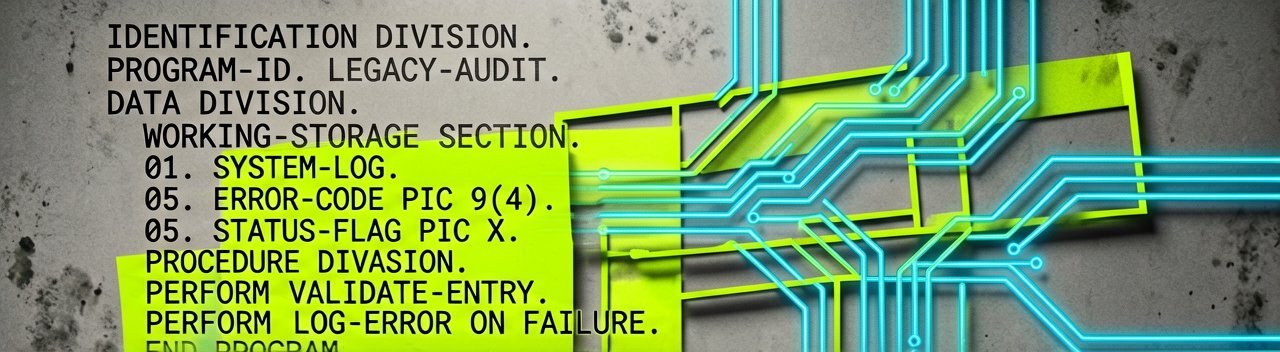
The projection for the next eighteen months is equally murky. As Mythos-style capabilities become the baseline for frontier models, we are likely to see a "patching arms race" that legacy banking infrastructure is fundamentally unequipped to win. Modernizing a 40-year-old COBOL-based settlement system isn't something that can be done between quarterly earnings calls, regardless of how many bugs an AI flags. The most likely outcome isn't a safer system, but a more stratified one—where top-tier banks with the capital to implement AI-driven "self-healing" networks pull ahead, while smaller regional players are left holding a sieve of unpatchable vulnerabilities.
Ultimately, the FSB’s involvement suggests that AI risk is being redefined. It’s no longer about whether a chatbot will give you a bad recipe; it’s about whether an autonomous agent can trigger a liquidity crisis by exploiting a flaw in a cross-border payment gateway. While Anthropic’s briefing might provide the blueprint for new regulations, the real test will be whether those regulations actually fix the code—or if they simply provide a sophisticated set of "I told you so" documents for when the inevitable happens.
"In the end, we’ve spent decades building a global financial system on the digital equivalent of duct tape and hope; it’s only fitting that we’re now hiring a trillion-parameter AI to point out that, yes, the tape is peeling."
Artūras Malašauskas is an AI Systems Integrator with 20+ years of production-grade web engineering experience. He has designed, shipped, and scaled enterprise Python/PHP systems for logistics, SaaS, and public-sector clients. For the past year, he has focused exclusively on AI integrations: deploying open-source LLMs, building generative media pipelines (image, audio, video), and engineering multi-agent workflows for real production environments. His standard: reproducibility, security, cost-efficient inference—no vaporware. He documents and evaluates emerging AI tooling, separating verified capabilities from marketing noise. Technical editor at: muza-ai.eu, ai-verslas.lt, ai-naujinos.lt Connect on LinkedIn
Comments