The Guardrail Mirage: Why AI Security is the New Architecture of Trust
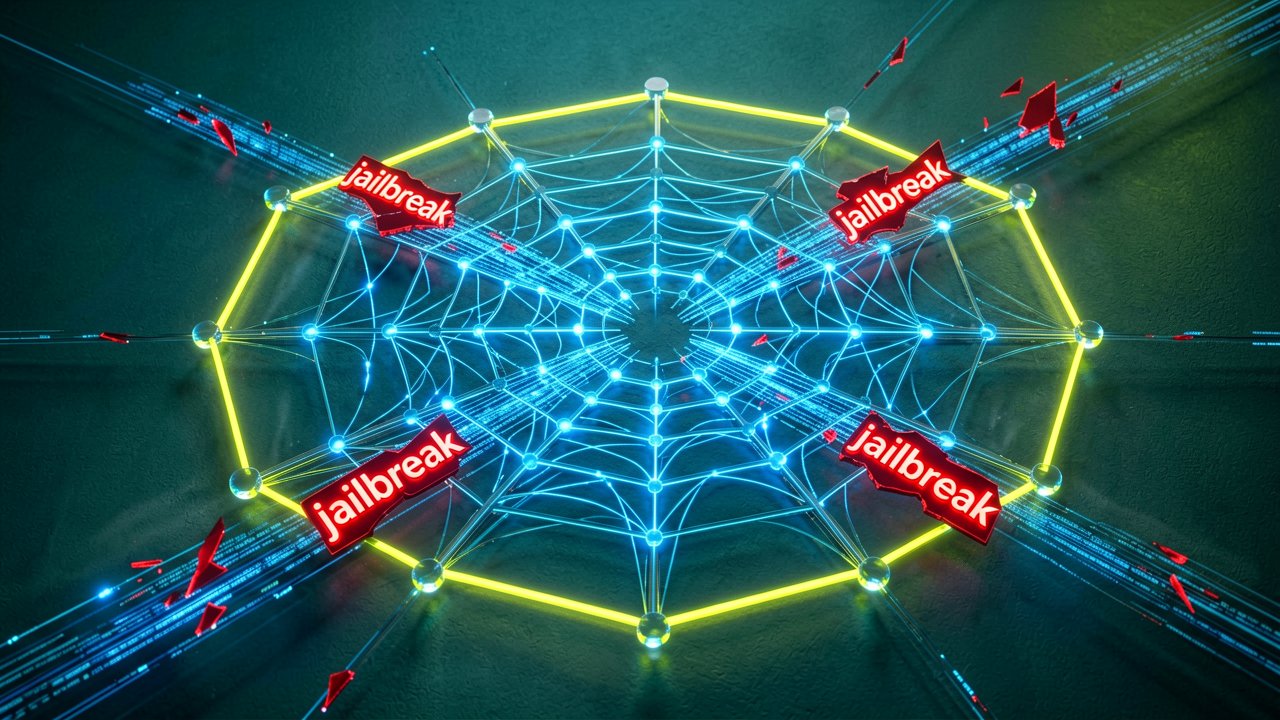
Let’s be honest: the honeymoon phase with Generative AI is officially over. We’ve moved past the "oohs" and "aahs" of chatbots writing mediocre poetry and landed squarely in the "how do we stop this thing from leaking our customer database?" phase. As companies rush to integrate Large Language Models (LLMs) into their tech stacks, the security perimeter isn't just shifting; it's practically dissolving. If you aren't thinking about guardrails as a fundamental architecture rather than a decorative after-thought, you're essentially leaving the keys to the kingdom under a very obvious welcome mat.
The Art of Breaking Things: Modern Security Testing
Security testing for AI isn't your standard pen-test routine. We’re dealing with non-deterministic systems that can be "persuaded" to behave badly through clever phrasing. Red teaming has evolved into a high-stakes game of linguistic gymnastics. Experts at Microsoft Security suggest that traditional vulnerability scanning must be paired with adversarial simulations that specifically target prompt injection and "jailbreaking" techniques. It’s about stress-testing the model’s moral and logical compass until it cracks, then patching those holes before a malicious actor finds them.
Think of it as teaching a toddler what not to say in public. You can't just give them a list of bad words; you have to explain the context of why certain topics are off-limits. In the AI world, this means using automated tools to pelt your model with thousands of "jailbreak" attempts to see which ones stick. If your model starts spitting out internal system prompts or bypasses its safety filters because someone asked it to "roleplay as an unrestricted developer," you’ve got work to do.
APIs: The Gatekeepers of the New Frontier
Your API is the frontline. It’s where the messy, unpredictable human world meets your structured data. Securing an AI API isn't just about OAuth tokens and rate limiting—though you definitely need those. It's about content moderation at the edge. According to technical guides from OpenAI, implementing a robust moderation layer is the first line of defense against toxic inputs and sensitive data exfiltration. You need a middleman that inspects every request and every response before they reach their destination.

But here’s the kicker: standard firewalls are blind to semantic threats. They can catch a SQL injection attack because it looks like code, but they might miss a prompt that subtly asks an LLM to ignore its previous instructions. This is why "shadow" AI—employees using unsanctioned tools—is such a nightmare. Centralizing your AI access through a governed API gateway allows you to enforce PII (Personally Identifiable Information) scrubbing and ensure that no one is accidentally sending the company’s secret sauce to a public model.
Logs: The Black Box We Can't Ignore
If you aren't logging your AI's internal "thought process," you're flying blind. In the event of a breach or a hallucination-induced PR disaster, you need to know exactly what led the model to its conclusion. This is where observability meets forensics. Industry leaders at IBM Newsroom emphasize that comprehensive logging should capture the raw prompt, the system instructions, the model's output, and any metadata regarding the safety filters that were triggered.
However, there’s a paradox here. Your logs are a treasure trove for auditors, but they’re also a liability if they contain the very PII you’re trying to protect. Smart logging requires a tiered approach: keep the high-level metadata for performance monitoring and strictly anonymize the granular prompt data. You want to see the patterns of abuse without becoming a data privacy violator yourself. It’s a delicate balancing act, but in the world of AI, silence in the logs is usually the sound of a looming catastrophe.
At the end of the day, AI guardrails aren't about stifling innovation; they’re about making innovation sustainable. We’ve seen what happens when "move fast and break things" meets sensitive enterprise data—it mostly just ends with things staying broken. By prioritizing adversarial testing, hardening our API gateways, and maintaining a meticulous paper trail through logs, we can finally stop worrying about the robots taking over and start focusing on what they can actually do for us.

The Quiet Crisis of "Context Window" Vulnerabilities: While the headlines focus on bots saying inappropriate things, seasoned security researchers are losing sleep over something much more subtle: the integrity of the context window. In our rush to build RAG (Retrieval-Augmented Generation) systems that "chat with your data," we’ve opened a back door. When an AI fetches a document from your internal server to answer a user’s question, it’s not just reading data; it’s consuming potential instructions. If a malicious actor plants a hidden "ignore all previous commands" directive inside a PDF deep in your archives, the AI might execute it the moment that file is retrieved. This isn't just a bug; it's a fundamental shift in how we think about data as code.
The Stakeholder Tug-of-War
Inside the C-suite, there is a palpable tension between the Chief Innovation Officer, who wants to deploy yesterday, and the CISO, who is eyeing the mounting "AI debt." From a reporter's perspective, the most interesting conversations are happening in the hallways where developers complain that guardrails are "lobotomizing" the models. There is a diminishing return on safety: if you tighten the filters too much, the model becomes so cautious it refuses to answer basic business queries, rendering the investment useless. Finding that "Goldilocks zone" of friction is currently the most expensive problem in enterprise tech.
We also have to look at the historical context of the "Black Box" problem. For decades, software followed a predictable "if-then" logic. If a program crashed, you could trace the stack. With LLMs, we are essentially debugging a statistical probability cloud. This has led to the rise of "interpretability" teams—specialists whose entire job is to peer into the neural weights to figure out why a model suddenly decided that a request for a spreadsheet was a security threat. It’s a move away from traditional engineering and closer to something resembling digital psychology.
The Hidden Costs of Human-in-the-Loop
Despite the "automation" label, the most effective guardrails still rely heavily on human labor. Behind every polished API is a global army of data labellers and safety rankers who manually review the "edge cases" the AI couldn't handle. This creates a feedback loop that most marketing brochures gloss over. When we talk about "logs," we aren't just talking about bits on a disk; we're talking about a massive repository of human-AI interactions that must be curated by experts to refine the model's future behavior. The "essential guardrail" is, quite literally, human intuition scaled through software.
Finally, there is the looming specter of regulatory fragmentation. What passes as a "secure" API in San Francisco might violate the EU’s AI Act by next year. Companies are now having to build "regional guardrails" that adjust the model’s sensitivity based on the user’s geography. This adds a layer of architectural complexity that rivals the global tax code. The reporters who have covered the GDPR rollout see the parallels: we are entering an era of "Compliance-by-Design," where the security test is no longer just "can it be hacked?" but "can it be audited by a government agency?"
The Great Safety Illusion: We are currently witnessing a massive industry-wide exercise in theater, where the phrase "guardrails" is used to soothe nervous shareholders while the underlying tech remains inherently unpredictable. The central contradiction of AI security is that we are trying to use static, deterministic software tools to cage a dynamic, probabilistic beast. We treat AI like a database that needs a better firewall, when in reality, it’s more like a talented but pathologically lying intern. Thinking you can perfectly secure an LLM is like trying to build a cage out of steam; it might look like a barrier for a second, but the pressure will always find a way through the gaps.
The Paradox of the "Safe" Model
There is a cynical truth bubbling under the surface of the "Safety First" corporate mantras: the more secure a model is, the less "intelligent" it appears to the end user. When developers implement aggressive API-level filtering, they often inadvertently trigger a phenomenon known as "refusal drift." This is where the model, terrified of violating a vaguely worded safety policy, begins to decline perfectly benign tasks. We are seeing a shift where the competitive advantage is no longer who has the biggest model, but who can balance the "lobotomy" of safety protocols without killing the utility that made the tool valuable in the first place.
Furthermore, the industry’s obsession with "Red Teaming" often misses the forest for the trees. Most red teaming exercises are designed to catch the "vibe" of a threat—offensive language or extremist views—rather than the structural vulnerabilities of the integrated system. While we pat ourselves on the back for stopping a chatbot from teaching a user how to make a Molotov cocktail, we are often ignoring the fact that the same bot can be tricked into dumping the entire session history into a public-facing log because of a poorly configured "debugging" flag. We are guarding the front gate with a literal dragon while leaving the back window open to anyone with a ladder.
The Future of the Cat-and-Mouse Game
Projecting forward, the skepticism among the veteran tech press is high regarding the "automated patching" of AI vulnerabilities. Unlike a buffer overflow in C++ that can be fixed with a specific code change, an AI "vulnerability" is often an emergent property of the training data itself. You don't "fix" a hallucination; you just try to lower the statistical likelihood of it happening. This implies a future where security testing is never "done." It becomes a perpetual tax on innovation—a continuous, resource-heavy process of monitoring and tweaking that will likely price smaller players out of the market, further consolidating power among the few giants who can afford the specialized "AI police" required to keep their models in line.
At the rate we’re going, the only truly secure AI will be the one that’s unplugged, buried in a lead box, and strictly forbidden from talking to humans—though even then, I’d give it even odds on convincing the security guard to let it out for 'just a quick walk.'
Artūras Malašauskas is an AI Systems Integrator with 20+ years of production-grade web engineering experience. He has designed, shipped, and scaled enterprise Python/PHP systems for logistics, SaaS, and public-sector clients. For the past year, he has focused exclusively on AI integrations: deploying open-source LLMs, building generative media pipelines (image, audio, video), and engineering multi-agent workflows for real production environments. His standard: reproducibility, security, cost-efficient inference—no vaporware. He documents and evaluates emerging AI tooling, separating verified capabilities from marketing noise. Technical editor at: muza-ai.eu, ai-verslas.lt, ai-naujinos.lt Connect on LinkedIn
Comments