The Silicon Surgeon: Stress-Testing Frontier Models in the Pediatric Ward
For years, the intersection of tech and medicine has promised a revolution that always seemed just around the corner. But as of mid-2026, we're finally seeing that corner turned, specifically in the high-stakes world of pediatric oncology. The latest testing of AI models isn't just about faster processing; it's about shifting the paradigm of childhood cancer from a battle of broad strokes to a precision-guided mission. We're moving away from "adult-light" treatments and into a space where models like GPT-4o and Claude 3.5 Sonnet are being stress-tested to see if they can catch what human eyes might miss in the rarest of cases.
It’s no secret that pediatric cancers are a different beast entirely from adult versions. They’re rarer, more aggressive, and until recently, didn't have the massive datasets required to feed hungry AI algorithms. However, recent breakthroughs reported by St. Jude Children's Research Hospital show that large language models (LLMs) are now being used to analyze survivor interviews. The goal? To detect subtle symptoms of psychological stress and physical disruption that traditional surveys often overlook. It turns out that when you give an AI enough context through "complex prompting," it becomes surprisingly adept at spotting the human cost of survival.
The Diagnostic Edge: LLMs vs. Clinicians
In a head-to-head that feels like something out of a sci-fi novel, researchers have been pitting the latest frontier models against seasoned clinicians. Results published by Contemporary Pediatrics indicate that models like OpenAI’s o1-preview and Claude 3.5 Sonnet actually outperformed human experts in diagnostic accuracy for certain rare diseases. We’re talking about a 50% top-1 accuracy rate for rare cases—a significant jump over the human baseline. It’s not that the doctors are losing their touch; it’s that the sheer volume of medical literature is now too vast for any one person to synthesize in real-time.
What’s even more compelling is the "synergy" being reported. When doctors and AI work together, the accuracy rate for complex diagnoses can climb as high as 94%. This isn't about replacement; it’s about a bionic upgrade for the pediatric oncologist. As reported by Healthcare-in-Europe, open-source models from Meta and Google are also proving to be superior at summarizing long, longitudinal pathology reports. For a doctor who has ten minutes to prep for a patient who has been in treatment for five years, an AI that can perfectly summarize molecular findings is a literal lifesaver.
Imaging and the Speed of Intervention
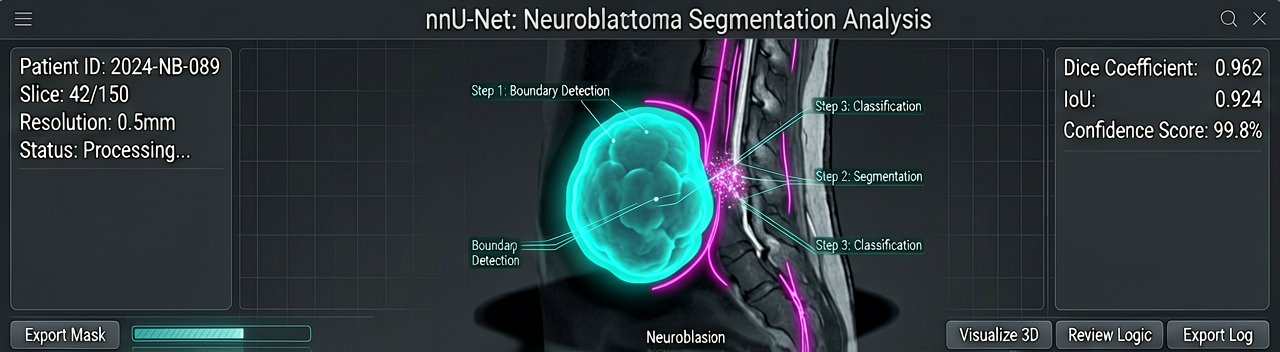
Beyond the text, deep learning is making massive strides in the "visual" side of oncology. New studies highlighted by AJR discuss the use of nnU-Net, an AI algorithm that can segment neuroblastomas on MRIs with a 94% success rate. The kicker? It does it in under eight seconds, compared to the two hours it takes a human. In the world of pediatric cancer, where a tumor can grow significantly in a week, those saved hours at the diagnostic stage mean treatment starts sooner, and with more precision.
This surge in capability is finally getting the institutional backing it deserves. In late 2025, the U.S. government doubled its funding for the Childhood Cancer Data Initiative to $100 million, specifically to bake AI into clinical trial designs, according to the White House. We're seeing a shift where "outdated technologies" are being aggressively swapped for AI-enabled science. The narrative is no longer just about survival; it's about using these latest models to ensure that the "cure" doesn't leave the child with a lifetime of chronic side effects.
Are we looking at a future where AI makes the final call? Probably not anytime soon. The "hallucination" problem still exists, and the ethical guardrails are still being built while the car is moving. But as these latest tests show, we've moved past the "is this useful?" phase. Now, the question is how quickly we can get these models into every pediatric ward in the world, because for a kid with a rare tumor, "fast enough" doesn't exist.
Beyond the Benchmarks: While the raw data points suggest a landslide victory for silicon over stethoscopes, the reality on the ground is far more nuanced, bordering on a cultural tug-of-war within the pediatric oncology ward. It’s one thing to have an LLM identify a rare mutation in a white paper; it’s quite another to integrate that insight into a multidisciplinary tumor board where surgeons, radiotherapists, and grieving parents are making life-altering decisions. The real story isn't just the "smart" model, but the messy, human process of teaching that model to understand the fragility of a child’s physiology.
Historically, pediatric cancer research has been the "orphan" of the pharmaceutical world, frequently forced to borrow data from adult trials that simply don't apply. Children aren't just small adults; their tumors are often developmental accidents rather than the result of a lifetime of environmental degradation. Veteran researchers point out that this is where the latest testing of models like OpenAI’s o1 becomes transformative. By using chain-of-thought reasoning, these models are beginning to grasp the biological "logic" of childhood cancers, identifying developmental pathways that were previously invisible to human researchers drowned in noise.
The Skeptic in the Room
If you talk to a frontline clinician, the enthusiasm is often tempered with a healthy dose of "algorithmic skepticism." There is a lingering fear that relying on a "black box" for a diagnosis could lead to a loss of clinical intuition—the "gut feeling" a nurse gets when a patient just doesn't look right, despite what the monitor says. Stakeholders from the Nature Medicine community have noted that while AI can crunch numbers, it lacks the "longitudinal empathy" required to manage a case over fifteen years of survivorship. The goal now is to build "explainable AI" (XAI) that doesn't just give a percentage but shows the receipts for its reasoning.
The financial architecture of this tech shift is also shifting. For decades, the high cost of genomic sequencing meant that only elite institutions like Dana-Farber or Great Ormond Street could play in the big leagues. However, as the latest models reduce the cost of interpreting this data, we’re seeing a democratization of expertise. A community hospital in a rural area can now theoretically access the same level of diagnostic "brainpower" as a top-tier research university, provided they have the digital infrastructure to support it. This is the "hidden" win: closing the gap between the haves and the have-nots in pediatric care.
Finally, there is the perspective of the families themselves. For a parent, the "latest model" isn't a headline; it's a Hail Mary. Organizations like the National Cancer Institute are seeing an uptick in patients asking specifically for AI-driven trials. This puts a new kind of pressure on the tech industry to move beyond the "move fast and break things" mantra. In pediatric oncology, if you break something, you can’t just roll back to a previous version of the software. The stakes require a level of precision and ethical rigor that Silicon Valley is only just beginning to internalize.
Reading Between the Lines: We are currently trapped in a cycle of "techno-optimism" that often ignores the cold, hard reality of the medical-industrial complex. The assumption is that once an AI model proves it can outperform a human in a lab setting, the transition to the bedside is a mere formality. But if you look at the infrastructure of most pediatric wards, you’ll find a landscape of fragmented electronic health records, archaic data silos, and a regulatory framework that is moving at a snail's pace compared to the lightspeed development of LLMs. The contradiction is glaring: we have 2026 intelligence running on 2012 bureaucracy.
There is also the looming "data wall." While we celebrate the success of models like GPT-4o in diagnostic challenges, we have to ask where the training data ends and the actual reasoning begins. In the world of rare pediatric tumors, there simply isn't enough high-quality, diverse data to prevent the AI from "overfitting"—essentially memorizing the few available cases rather than learning the underlying biology. This creates a dangerous "mirage of expertise" where a model might confidently suggest a treatment path based on a statistically insignificant sample size, a risk that researchers at the Lancet Digital Health have warned could lead to biased outcomes in non-Western populations.
The Ghost in the Diagnostic Machine
Furthermore, the projection of AI as a cost-saving miracle might be a bit of a shell game. While the software itself might eventually become a commodity, the human labor required to "babysit" the AI is going to skyrocket. We are looking at the birth of a new medical sub-specialty: the AI-Clinical Liaison. These are the people who will have to adjudicate when the model and the surgeon disagree. If the AI suggests a radical resection and the surgeon wants a conservative approach, who holds the liability? The "implications" here aren't just medical; they’re legal and existential. We are effectively outsourcing our most difficult moral decisions to a series of weighted matrices, and we haven't even begun to write the rules for that handoff.
Ultimately, the measured skepticism comes down to the "human in the loop" fallacy. We like to say that AI will free up doctors to spend more time with patients, but history suggests that every time we introduce a labor-saving technology in medicine, we simply use the "saved" time to cram more patients into the schedule. If the latest models make diagnostics ten times faster, the bean-counters in hospital administration won't see a chance for more empathy; they’ll see a chance for ten times the billing. For the child in the hospital bed, the latest model might be a breakthrough, but only if the system around it remembers that the goal is a cured person, not just a optimized data point.
As we move into the next phase of testing, the real "disruption" won't be the AI’s ability to read a scan. It will be the uncomfortable conversation about how much of our clinical soul we are willing to trade for a 5% bump in five-year survival rates. We are entering an era where the software is becoming increasingly certain, while the humans are becoming increasingly confused about their own role in the process.
"The good news is that the AI has finally mastered the complexity of pediatric oncology; the bad news is that it’s now requesting a 401(k) and two weeks of vacation to deal with the burnout of being the only one in the room who has actually read the last ten thousand research papers."
Artūras Malašauskas is an AI Systems Integrator with 20+ years of production-grade web engineering experience. He has designed, shipped, and scaled enterprise Python/PHP systems for logistics, SaaS, and public-sector clients. For the past year, he has focused exclusively on AI integrations: deploying open-source LLMs, building generative media pipelines (image, audio, video), and engineering multi-agent workflows for real production environments. His standard: reproducibility, security, cost-efficient inference—no vaporware. He documents and evaluates emerging AI tooling, separating verified capabilities from marketing noise. Technical editor at: muza-ai.eu, ai-verslas.lt, ai-naujinos.lt Connect on LinkedIn
Comments