The Data-Driven Bot: Experian and ServiceNow Bet Big on "Governed" AI Agents
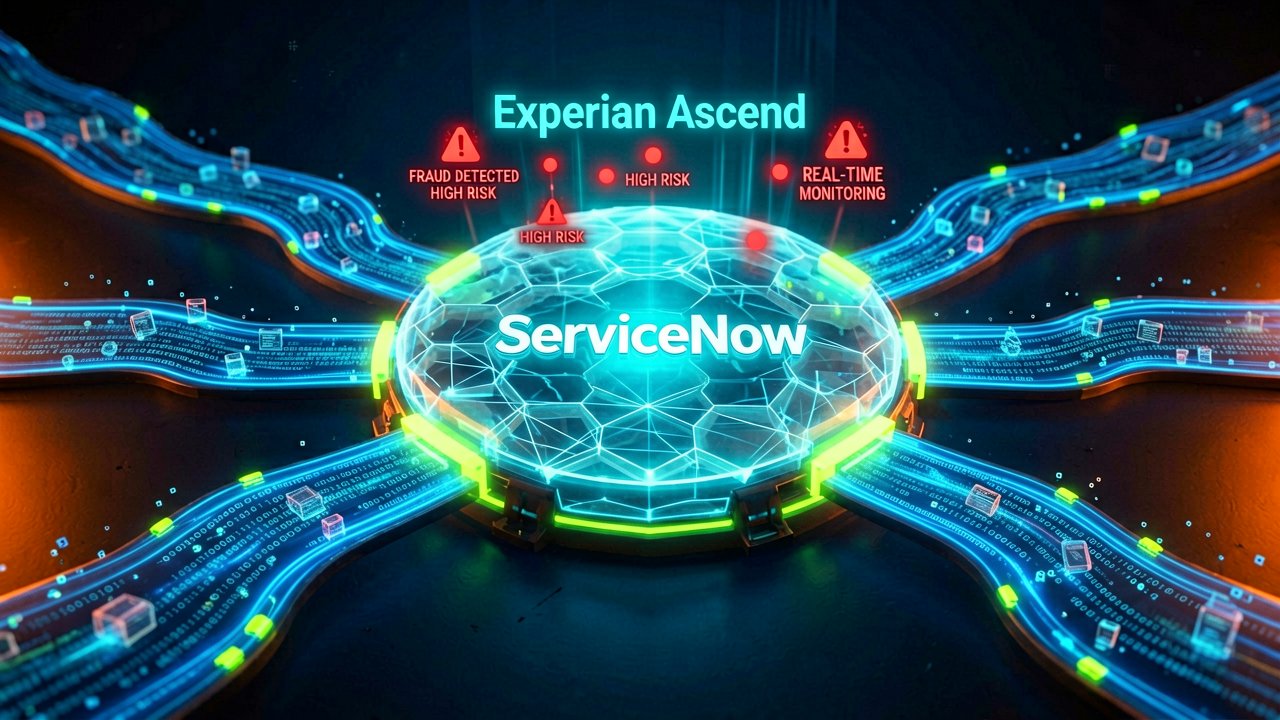
The tech world loves a good buzzword, and right now, "agentic AI" is the one everyone’s shouting from the rooftops. But as any seasoned IT manager will tell you, a shiny new AI agent is only as good as the data it can chew on. That’s precisely why the new global, multi-year partnership between Experian and ServiceNow is more than just another press release—it’s a calculated attempt to fix the "data bottleneck" that keeps 80% of enterprise AI projects stuck in the pilot phase, according to research cited by Business Wire.
Announced on May 15, 2026, this collaboration isn't just about linking two software stacks; it's about giving autonomous AI agents a brain filled with real-world financial and risk intelligence. By natively embedding Experian’s Ascend Platform into the ServiceNow AI Platform, these digital workers can now tap into trusted decisioning data without leaving their existing workflows. It’s a move designed to help agents act faster and—more importantly—more consistently than they ever could while pulling from siloed internal databases.
Solving the Scale Problem
We’ve all seen the demo: an AI agent perfectly automates a simple task. But try scaling that to 10,000 employees in a regulated industry like banking, and things usually start to crumble. The issue is trust. Most companies aren't comfortable letting an autonomous bot make high-stakes calls without a bulletproof data source. As reported by PYMNTS, this partnership aims to bridge that gap, providing a "foundation of trust" that allows AI to scale beyond experimental sandboxes and into the heart of corporate operations.
The initial focus is on the "heavy lifting" of the enterprise world. Think employee onboarding, third-party risk management, and model life cycle governance. In these scenarios, the AI agent isn't just suggesting a response; it’s pulling Experian’s verified insights to confirm identities or flag fraud risks in real time. It’s the difference between an AI that says "I think this is okay" and one that says "Based on Experian’s data, this meets our risk threshold."

Regulated Industries Take the Lead
For those of us watching the space, the target audience here is clear: highly regulated sectors. Companies in finance, healthcare, and insurance have been the most hesitant to let AI take the wheel because of the compliance nightmare a "hallucinating" bot could cause. By integrating Experian’s decisioning tools directly into ServiceNow's "AI control tower," these firms get a much-needed layer of auditability and governance.
ServiceNow’s EMEA President, Cathy Mauzaize, noted that businesses are finally ready to move past the "experimentation" phase. They need AI that delivers "real outcomes" in secure environments. This sentiment is echoed by MarketChameleon, which suggests that the direct integration of battle-tested intelligence into automated workflows is a "decisive move" to advance enterprise AI. If it works as promised, we might finally see the "autonomous workforce" move from a marketing slide to the cubicle next door.
Will this partnership finally crack the code for scaling AI in the enterprise?
The Unspoken Reality of the "Last Mile": While most headlines are obsessing over the sheer speed of these AI agents, the real story here is the quiet death of the manual "data hunt." For decades, enterprise efficiency has been stifled not by a lack of compute power, but by the "copy-paste" tax—employees jumping between Experian’s risk dashboards and ServiceNow’s case management tools just to verify a single vendor or employee. By collapsing these two worlds, this partnership effectively treats external risk data as a native system variable, removing the human friction that usually slows down high-stakes decisioning.

From a reporter’s lens, this feels like the logical evolution of ServiceNow’s "Platform of Platforms" strategy. They aren't trying to build their own credit bureaus or risk databases; they are building the plumbing that allows those specialized insights to flow into automated logic. According to insights shared via Business Wire, the integration leverages Experian’s Ascend platform to feed "high-velocity" data directly into AI workflows. It’s a classic move: ServiceNow provides the engine, and Experian provides the fuel, solving the "garbage in, garbage out" problem that has haunted early generative AI deployments.
The Governance Gambit
If you look closer at the stakeholder perspectives, this isn't just a win for the CTO; it’s a peace offering to the Chief Risk Officer (CRO). In the past, AI automation was a "black box" that made compliance officers lose sleep. By embedding Experian’s logic—which is already battle-tested in the world of global finance—ServiceNow is giving these agents a set of "guardrails" that are recognizable to regulators. This "governed autonomy" means that when an agent flags a third-party risk or denies an onboarding request, there is a clear, auditable trail back to verified data, a detail highlighted by MarketChameleon.
Historically, Experian has spent years trying to move beyond being "just a credit bureau" to becoming a global data powerhouse. This ServiceNow deal is arguably their most significant "agentic" play yet. It repositions Experian’s data not just as a report to be read by a human, but as a real-time instruction set for a machine. As noted by PYMNTS, this shift is critical for industries where the cost of a "fast but wrong" AI decision can run into the millions. By prioritizing accuracy over raw speed, the duo is betting that the future of AI isn't just about being smart—it's about being reliably informed.
Ultimately, the success of this tie-up hinges on how well these "native integrations" actually perform in the wild. If an AI agent can truly onboard a new global vendor in minutes—performing the KYC (Know Your Customer) and risk checks automatically through this pipeline—we’re looking at a fundamental shift in corporate back-office operations. It turns the AI agent from a fancy chatbot into a trusted digital colleague with the authority to move the needle on the balance sheet.
Is your organization ready to trust an AI agent with the keys to your risk management?
The "Magic Button" Fallacy: For all the talk of seamless integration and hyper-speed decisioning, we have to ask: at what point does the "human in the loop" become a "human in the way"? The industry is currently infatuated with the idea that plugging Experian’s vast data lakes into ServiceNow’s workflow engine will create a frictionless enterprise. But as any veteran of the ERP wars knows, the friction isn't usually in the data—it's in the policy. Moving data faster doesn't help if your internal compliance rules are still stuck in 2012, and there is a real risk that these high-velocity AI agents will simply find ways to hit a digital "red light" faster than ever before.
There is also a subtle contradiction in the promise of "agentic trust." We are told that these agents are more reliable because they use Experian’s verified data, yet the very reason we need AI is to handle the nuance that rigid data sets often miss. If an AI agent is merely executing binary logic based on a credit score or a risk flag, it isn't an "agent"—it’s just a very expensive macro. The true test for this partnership, as suggested by the technical implications discussed by Business Wire, is whether the ServiceNow platform can allow these agents to interpret Experian’s data with enough sophistication to handle the "gray areas" of business without a human babysitter.
The Monoculture Risk
From a market perspective, this deep integration creates a "golden cage" effect. When you bake Experian’s decisioning intelligence directly into your ServiceNow workflows, the cost of switching—or even diversifying your data sources—skyrockets. We are watching the birth of a data-and-workflow monoculture. While MarketChameleon points to this as a scalable win for enterprises, it also hands an incredible amount of leverage to these two vendors. If the AI "brain" and the "nervous system" are proprietary and interlocked, the enterprise loses its ability to swap out components as the AI landscape evolves.
Finally, we must consider the "Accountability Gap." If an autonomous agent makes a catastrophic lending error or a vendor-risk miscalculation based on an automated feed, who gets the blame? ServiceNow will point to the data; Experian will point to the implementation of the AI logic. As PYMNTS notes, the "foundation of trust" is the goal, but in the world of corporate litigation, trust is rarely a substitute for a signed affidavit from a human being. The partnership may solve the speed problem, but it has yet to solve the "blame problem" that keeps CEOs awake at night.
"We are officially entering the era where AI agents can ruin a vendor's day in milliseconds rather than hours—proving that while 'digital transformation' is a marathon, automated bureaucracy is definitely a sprint."
Artūras Malašauskas is an AI Systems Integrator with 20+ years of production-grade web engineering experience. He has designed, shipped, and scaled enterprise Python/PHP systems for logistics, SaaS, and public-sector clients. For the past year, he has focused exclusively on AI integrations: deploying open-source LLMs, building generative media pipelines (image, audio, video), and engineering multi-agent workflows for real production environments. His standard: reproducibility, security, cost-efficient inference—no vaporware. He documents and evaluates emerging AI tooling, separating verified capabilities from marketing noise. Technical editor at: muza-ai.eu, ai-verslas.lt, ai-naujinos.lt Connect on LinkedIn
Comments