Descript Opens API Beta with Workflow and Editing Updates
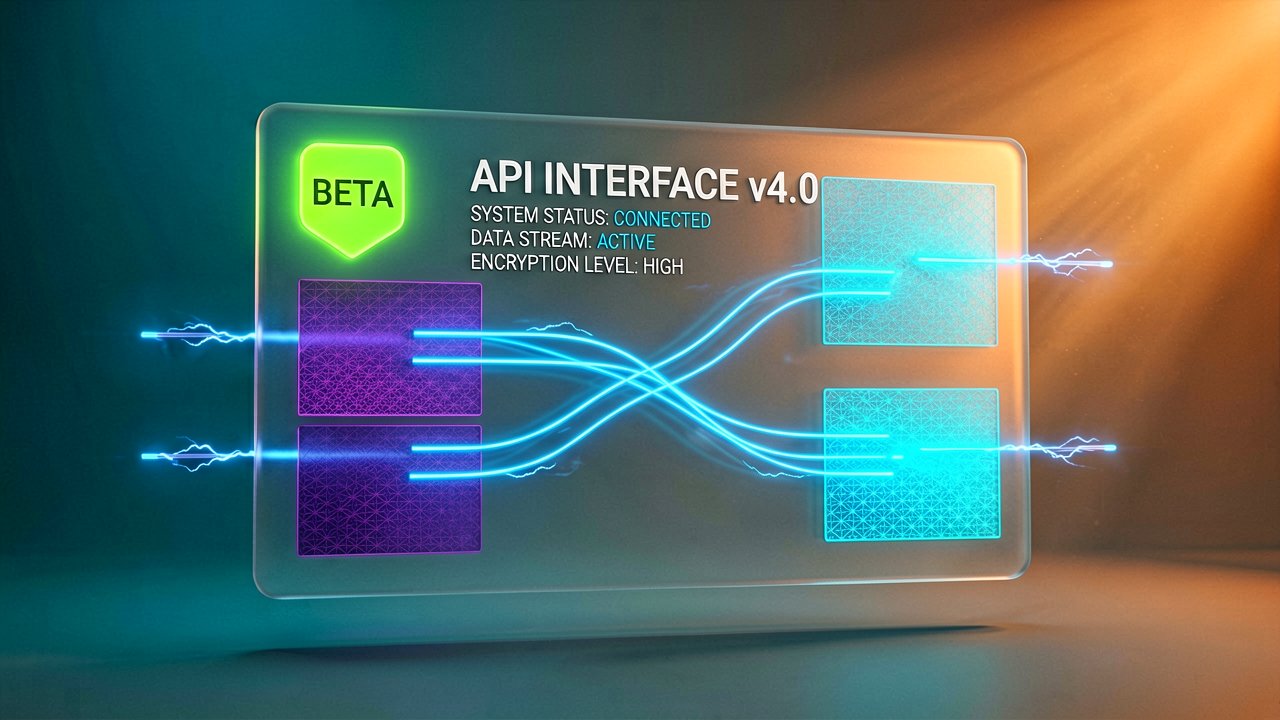
AI video editing platform Descript has released its API in open beta, marking a significant shift toward connected production environments. The announcement, made May 14, 2026, enables users to connect external tools to Descript and automate audio and video workflows without opening the application.
According to the official press release, the API allows integration with tools such as Claude and custom GPTs. Users can import files, create projects, and edit content programmatically. The API also supports running Underlord actions including Studio Sound, captions, and translation. While local file export remains unavailable in beta, the system supports exporting content through Descript share links.
The official press release details the full scope of the update. Laura Burkhauser, CEO at Descript, stated the release reflects a shift toward more flexible and connected production environments. Teams are increasingly moving toward workflows that extend beyond a single tool, and this makes it easier to coordinate those processes.
The API launch arrives alongside substantial platform improvements. Descript has rebuilt its color adjustment tools designed to improve usability and performance when making visual edits within video projects. The company also introduced updates to file handling and exports. Uploads now resume automatically if interrupted, while users can export all scenes from a project in a single action.
Descript's changelog confirms the API beta availability and provides additional context. The documentation notes that users can generate API tokens from their accounts and use them to connect Descript to their own tools and workflows. The API supports Model Context Protocol (MCP) connections so users can take actions in Descript using prompting from a GPT like Claude.
Recording system updates follow approximately four weeks of engineering work focused on stability and performance. These result in fewer crashes, higher recovery success rates after interruptions, and fixes for audio issues in Rooms recordings. Additional updates include clearer warnings during recording sessions and improved recovery options in the event of disruptions.
The physical reality of using Descript has changed in tangible ways. Uploads no longer restart from scratch after a network drop or laptop sleep. Large files resume from where they left off (a problem that has plagued users for years, frankly). Locked layers can now be unlocked directly from the canvas without opening the Layers panel. The UI interactions feel more responsive and the timeline renders faster.
For developers, the API opens new possibilities but comes with caveats. As this is a beta, some endpoints and behavior may change over time. The documentation warns that trying out the API results in rapidly burning through AI credits. Users should reach out to support so the team can help manage experimentation while the feature is still being tested.
Underlord now uses reasoning models for complex tasks like script writing, episode planning, and multi-step edits. This gives the system more room to think through a problem before responding. The Hedra Character 2 avatar video generation model has been turned off for all users. Hedra is discontinuing the model, and Kling is the new default.
Enterprise customers across healthcare, financial services, media, and technology use Descript to scale content production while maintaining human control over every creative decision. The API beta extends this capability to teams building custom integrations and automated workflows.
Whether developers actually build meaningful integrations or just burn through credits remains the real question. The API is available now, but the ecosystem around it is still forming. Time will tell if this becomes a genuine workflow revolution or another feature that sits unused in the background.
The API is in open beta as of May 14, 2026. Some endpoints may change before general availability. Check Descript's help center for full instructions and advanced documentation.
Artūras Malašauskas is an AI Systems Integrator with 20+ years of production-grade web engineering experience. He has designed, shipped, and scaled enterprise Python/PHP systems for logistics, SaaS, and public-sector clients. For the past year, he has focused exclusively on AI integrations: deploying open-source LLMs, building generative media pipelines (image, audio, video), and engineering multi-agent workflows for real production environments. His standard: reproducibility, security, cost-efficient inference—no vaporware. He documents and evaluates emerging AI tooling, separating verified capabilities from marketing noise. Technical editor at: muza-ai.eu, ai-verslas.lt, ai-naujinos.lt Connect on LinkedIn
Comments