LALIGA Launches GOALITOS AI-Powered Children's Series

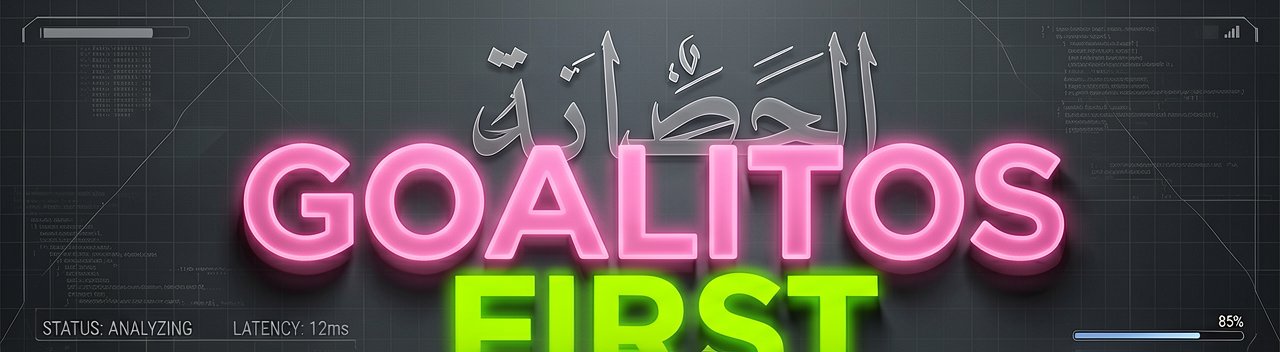
The Spanish football league LALIGA has entered the children's entertainment space with GOALITOS, its first original animated series built around generative artificial intelligence workflows. The announcement arrived via a GlobeNewswire press release distributed May 15, 2026, positioning the league as another major sports rights holder experimenting with AI-driven content production.
Each episode runs approximately five minutes and drops weekly on Fridays. The series features three animated characters—Rafa, Luna, and Max—who navigate football-themed adventures while integrating actual LALIGA match highlights and educational segments. Production happens through WSC Studios, described in the release as a human-led, AI-powered media and IP studio within WSC Sports.
The multilingual rollout is notable. Episodes are produced simultaneously in Spanish, English, and Arabic, distributed across LALIGA broadcasters, the league's owned channels, and digital platforms including a dedicated YouTube presence. This approach mirrors the scaling strategy many media companies now pursue: generate once, localize everywhere, distribute across every available surface.
According to the official LALIGA site, the series spans 15 weeks with 15 challenges, blending match-of-the-week coverage with kid-friendly storytelling. The format activates the league's wider digital ecosystem through clips, teasers, vertical formats, app integrations, and interactive elements like quizzes and challenges. Parents scrolling through a tablet will see the same content structure whether they're in Madrid, London, or Dubai (though the language changes, the friction points remain identical).

Jorge de la Vega, general director of business at LALIGA, framed the initiative in the press release as a continuation of the league's technology strategy. He stated that LALIGA has been committed to technology as a strategic driver for years, and with GOALITOS they are using artificial intelligence to create educational, engaging content specifically designed for young audiences. The quote is standard corporate positioning, but the execution details matter more than the rhetoric.
From a technical standpoint, the production integrates generative AI across creative and production steps. This typically means automated tools generating narratives, animations, and personalized content from sports data. For practitioners building similar systems, this implies integration of data pipelines that map sports events and metadata to templated narrative and animation workflows, plus automated localization layers to produce simultaneous language variants.
Such pipelines increase throughput but shift emphasis toward tooling for quality control, content safety, and rights management. When you're generating content for children, the margin for error shrinks dramatically. A misaligned animation or inappropriate narrative segment doesn't just look bad—it can trigger parental complaints, platform takedowns, or regulatory scrutiny.
The official LALIGA landing page for GOALITOS describes the series as a world where fun and heart matter more than the scoreboard. The page emphasizes adventure, friendship, companionship, family, and learning as core themes. This messaging aligns with the broader industry trend where sports rights holders experiment with AI to create new IP, reach younger audiences, and extend fan engagement beyond live events.
For media-tech vendors and ML engineers, projects like this are useful case studies. They combine real-time sports data ingestion, template-driven creative engines, multilingual natural language generation, and short-form video delivery across social and app surfaces. The challenge isn't building the pipeline—it's maintaining editorial quality while scaling.
Industry observers will likely monitor several factors: the fidelity and editorial quality of AI-generated narrative segments, how personalization and interactivity are implemented without compromising child safety, copyright and image-rights handling when AI repurposes match footage, and operational metrics such as engagement and retention on the weekly cadence. Reporting so far is limited to the press release and syndications; neither LALIGA nor WSC Sports have published detailed technical documentation, so product-level implementation details remain to be disclosed.
Companies using generative-AI toolchains for media production commonly aim to scale episodic, multilingual content while lowering per-episode production cost. GOALITOS fits that pattern. The five-minute format is short enough to maintain quality control while long enough to deliver narrative value. Weekly cadence creates routine without overwhelming production capacity.
For practitioners building or integrating similar systems, the focus should be on pipeline observability and human-in-the-loop checkpoints for content destined for children. Industry experience shows that hybrid teams combining editorial oversight with automated generation deliver the safest mix of scale and quality. Multilingual deployments require separate evaluation for cultural and linguistic appropriateness—what works in Spanish may not translate cleanly to Arabic or English without adjustment.
The LALIGA social media presence on X and Instagram has already begun promoting the series, with posts highlighting the three main characters and the Friday release schedule. The Instagram reel emphasizes football meeting fun, learning, and adventure, with new episodes dropping every Friday. This is standard promotional behavior, but the consistency across platforms suggests coordinated distribution rather than ad-hoc posting.
Whether this actually works remains the real question. Sports leagues have tried children's content before—some succeeded, most faded into obscurity. The AI angle is new, but the fundamental challenge hasn't changed: can you make something kids want to watch repeatedly while parents feel comfortable letting them watch it? The technology enables scale, but it doesn't guarantee engagement.
Parents will judge this by whether their children actually request episodes, not by how many languages the system supports. The league will judge it by whether the content drives engagement with their broader ecosystem. For now, the press release promises a lot, but the metrics will tell the real story. Whether users actually pay attention remains the real question—and whether the AI-generated content feels genuinely engaging or just efficiently produced is something only time will reveal.
Artūras Malašauskas is an AI Systems Integrator with 20+ years of production-grade web engineering experience. He has designed, shipped, and scaled enterprise Python/PHP systems for logistics, SaaS, and public-sector clients. For the past year, he has focused exclusively on AI integrations: deploying open-source LLMs, building generative media pipelines (image, audio, video), and engineering multi-agent workflows for real production environments. His standard: reproducibility, security, cost-efficient inference—no vaporware. He documents and evaluates emerging AI tooling, separating verified capabilities from marketing noise. Technical editor at: muza-ai.eu, ai-verslas.lt, ai-naujinos.lt Connect on LinkedIn
Comments