Reply Unveils Model Factory for Enterprise AI Production
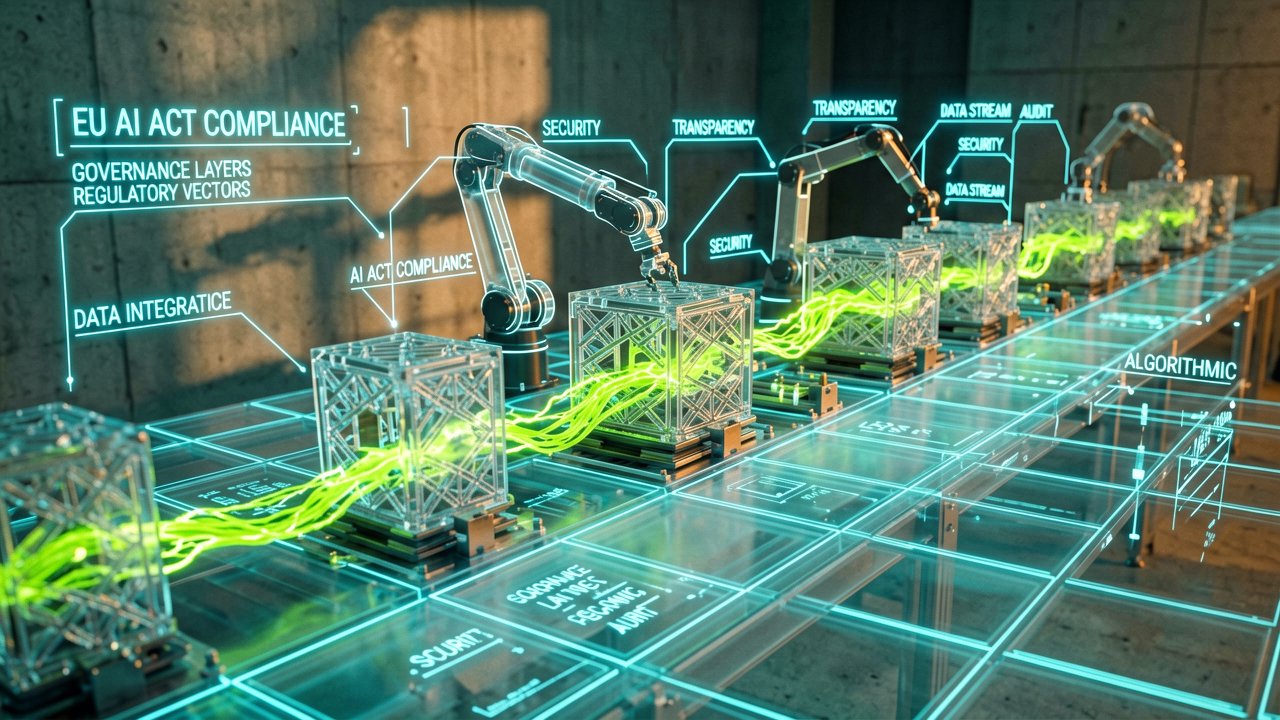
The Italian digital services firm Reply announced Model Factory on May 14, 2026, positioning it as an industrial production line for building frontier generative AI models grounded in corporate knowledge.
According to the official Business Wire press release, the platform addresses a fundamental gap: most AI models operate on public data while enterprises depend on internal knowledge like technical standards, regulatory requirements, and proprietary systems.
Model Factory lets organisations bring internal documentation, software repositories, business data, and process records into secure vaults. This knowledge trains models on the terminology, reasoning patterns, and operational constraints that define each environment.
The training layer combines four techniques. Pre-training builds domain awareness from customer datasets and internal assets. Supervised fine-tuning develops competence on specific tasks. Reinforcement learning strengthens expertise and agentic behaviour in line with policies. Distillation and speculative decoding make specialised models more efficient for deployment.

Each model releases as a versioned enterprise asset with controlled interfaces, embedded quality gates, and built-in alignment with the EU AI Act. (That compliance piece matters more than most vendors admit.)
Reply's product documentation on reply.com details the vault architecture. A Data Vault secures raw corporate knowledge and datasets. A Model Vault provides notarisation and audit trails for compliance and long-term governance.
Tatiana Rizzante, CEO of Reply, stated proprietary models will become a key lever of strategic differentiation. Competitive advantage comes from models built on an organisation's own knowledge, data, expertise, and intellectual property.
The physical reality of this system involves clicking through tiered security layers, watching training checkpoints progress in dashboards, and managing versioned assets that feel more like industrial components than experimental code. Load times, interface friction, and audit trail visibility become part of the workflow.

Reply operates across telecom, media, industry, services, banking, insurance, and public sectors. The firm's services include consulting, system integration, and digital services. Model Factory extends this portfolio into AI infrastructure.
Generic intelligence has limits. Enterprises need models that evolve with their own knowledge, processes, and expertise while remaining under their control. Model Factory industrialises data preparation, training, evaluation, deployment, and continuous improvement through a controlled lifecycle.
Modularity functions as a first-class citizen, enabling integration with the best technological stacks. Consistent ontologies track checkpoints, training recipes, and outcomes across runs.
Reduced project opacity matters in regulated or multi-stakeholder environments. Technical dependencies, decisions, and responsibilities become clearer.
The final model treats as an asset to validate, protect, monitor, improve, and scale over time. Not just a technical output.
Whether enterprises actually pay for this level of control remains the real question. The technology exists. The market for proprietary AI infrastructure is still forming. Most companies will test the waters before committing to full production lines.
Time will tell if Model Factory becomes the standard or just another vendor platform gathering dust in enterprise procurement queues.
Artūras Malašauskas is an AI Systems Integrator with 20+ years of production-grade web engineering experience. He has designed, shipped, and scaled enterprise Python/PHP systems for logistics, SaaS, and public-sector clients. For the past year, he has focused exclusively on AI integrations: deploying open-source LLMs, building generative media pipelines (image, audio, video), and engineering multi-agent workflows for real production environments. His standard: reproducibility, security, cost-efficient inference—no vaporware. He documents and evaluates emerging AI tooling, separating verified capabilities from marketing noise. Technical editor at: muza-ai.eu, ai-verslas.lt, ai-naujinos.lt Connect on LinkedIn
Comments