Cloudflare Launches Artifacts Beta for AI Agent Version Control
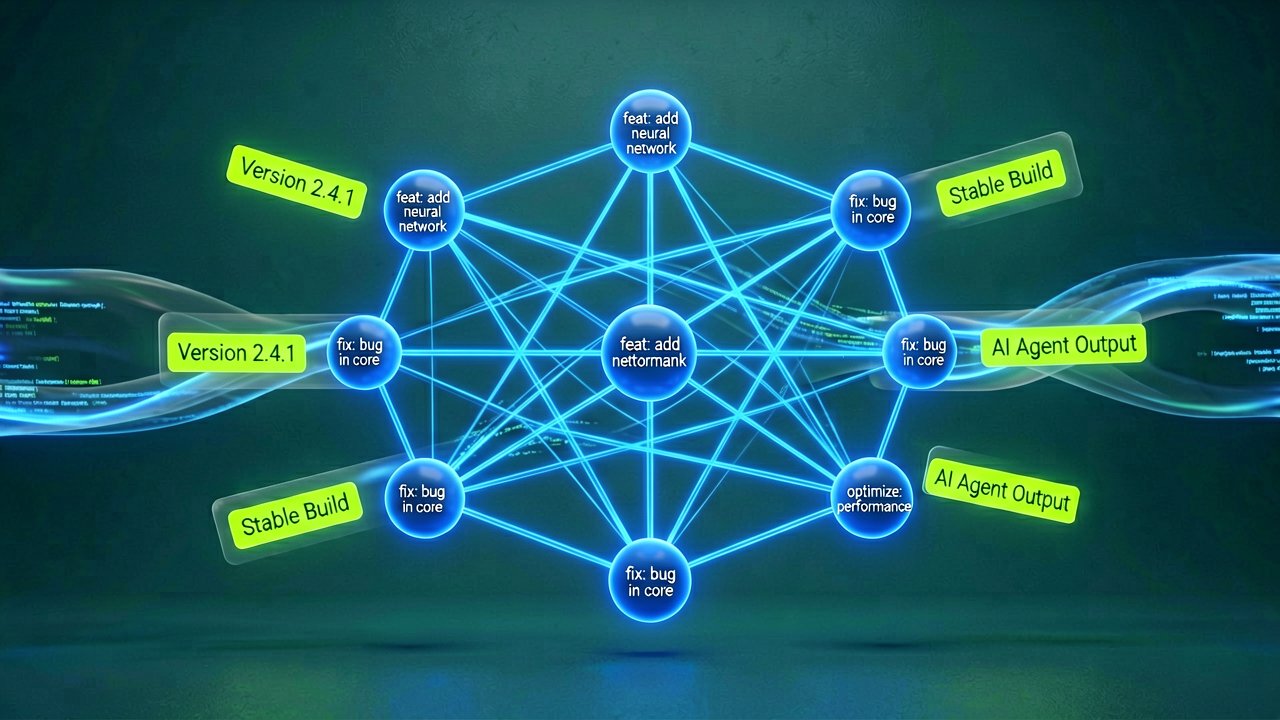
Cloudflare has announced the beta release of Artifacts, a versioned file system designed to bring Git-style version control to AI agents. The launch addresses a growing challenge in AI development: how to reliably manage the outputs, state, and behavior of increasingly autonomous agents operating in production environments. Unlike traditional software systems, AI agent outputs are often ephemeral, lacking clear lineage or auditability. Artifacts creates a persistent, versioned record of agent activity, enabling developers to understand how outputs evolve and ensuring that changes can be reviewed and governed.
According to the official Cloudflare blog post, the system allows developers to create repositories programmatically alongside agents, sandboxes, Workers, or any other compute paradigm. You can create 10,000 forks from a known-good starting point with a single API call. Every sandbox instance gets its own repo. Every agent session gets its own repo. That's the scale we're talking about here.
The technical implementation is straightforward but powerful. Artifacts exposes a REST API and native Workers API for creating repositories, generating credentials, and commits for environments where a Git client isn't the right fit. For serverless functions or edge compute scenarios, developers can simply pass back a token and remote URL to their agent. The agent then clones it and uses it like any regular Git remote. No special tooling required. No proprietary protocol to learn. Just HTTPS and Git.
Why Git specifically? The answer lies in training data. Agents know Git. It's deep in the training data of most models. The happy path and the edge cases are well known to agents, and code-optimized models are particularly good at using git. Cloudflare could have invented an entirely new, bespoke protocol, but then you have the bootstrap problem. AI models don't know it, so you have to distribute skills, or a CLI, or hope that users are plugged into your docs MCP. All of that adds friction. If you can just give agents an authenticated, secure HTTPS Git remote URL and have them operate as if it were a Git repo, though? That turns out to work pretty well.
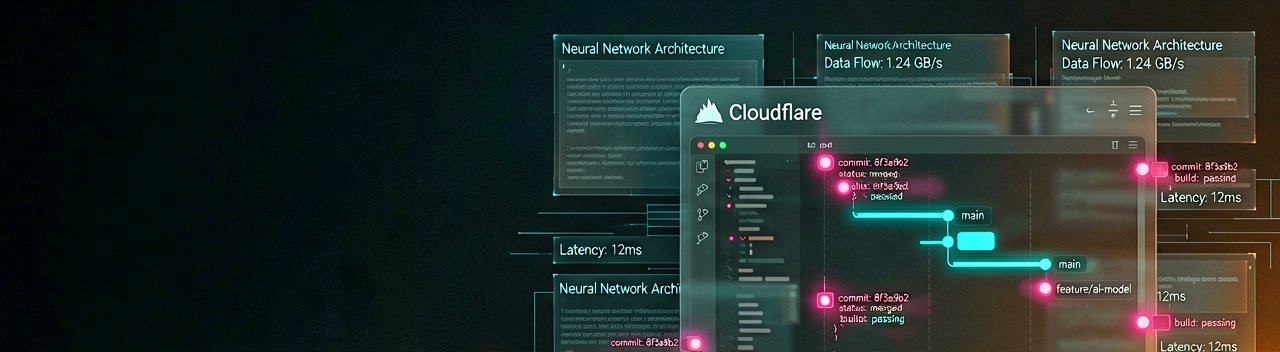
Inside Cloudflare, the company is using Artifacts for internal agents: automatically persisting the current state of the filesystem and the session history in a per-session Artifacts repo. This enables them to persist sandbox state without having to provision block storage around. They can share sessions with others and allow them to time-travel back through both session state and file state, irrespective of whether there were commits to the actual repository. Want to debug something and need another set of eyes? Send a URL and fork it. Want to riff on an API? Have a co-worker fork it and pick up from where you left off.
Independent reporting from InfoQ corroborates the scope and timing of the announcement. The system is particularly relevant for teams building multi-step or autonomous workflows, where agents may iteratively refine outputs or interact with external systems. By capturing each step as a versioned artifact, developers gain visibility into both the final result and the process that produced it, an essential requirement for debugging, compliance, and trust.
Artifacts is built on top of Durable Objects. The ability to create millions of instances of stateful, isolated compute is inherent to how Durable Objects work today, and that's exactly what Cloudflare needed for supporting millions of Git repos per namespace. Major League Baseball, Confluence Whiteboards, and Cloudflare's own Agents SDK use Durable Objects under the hood at significant scale. The infrastructure is already proven. Now it's being repurposed for a different problem entirely.
The physical reality of using this system is worth noting. When you create a repo, you get a URL that looks like https://x:${TOKEN}@123def456abc.artifacts.cloudflare.net/git/repo-13194.git. You can clone it with standard Git commands. You can push changes. You can fork it. The latency is edge-optimized because it runs on Cloudflare's global network. There's no waiting for a central server to respond. The commit happens where you are, not where some data center happens to be located.
This also introduces a layer of governance and accountability, addressing concerns around the unpredictability of AI systems. By making outputs traceable and reversible, Artifacts helps organizations manage risk while still benefiting from the speed and flexibility of agent-driven automation. The release reflects a broader shift in the industry as AI systems move from isolated tools to stateful, evolving components of production systems. Traditional tooling has struggled to keep up with this shift, particularly when it comes to tracking and managing non-deterministic outputs.
Other platforms are beginning to address the same problem, but approach it from different angles depending on where they sit in the stack. OpenAI and Anthropic have introduced capabilities within their respective ecosystems that allow developers to retain context and replay interactions, but these are typically tied to prompt/response histories rather than full artifact versioning. Orchestration frameworks like LangChain and LlamaIndex provide ways to persist intermediate steps and workflows, enabling some level of traceability, but they often rely on external storage or logging systems rather than offering a native, Git-like version control model for outputs.
On the more engineering-centric side, platforms such as Weights & Biases and Databricks focus on experiment tracking and data/version lineage, particularly for machine learning models and datasets. While these tools provide strong reproducibility and audit trails, they are typically optimized for model training workflows rather than dynamic, agent-driven output generation. Cloudflare's Artifacts sits in a slightly different space, closer to software development practices, by treating AI outputs as version-controlled assets.
Artifacts is available in private beta and Cloudflare is aiming to open this up as a public beta by early May 2026. The company has also exposed a REST API and (soon) language-specific SDKs for non-Git-speaking clients. Those clients can also use isomorphic-git, but in many cases a simpler TypeScript API can reduce the API surface needed. The documentation is available for teams who want to get started, or if you want to understand how Artifacts is being used, how it was built, and how it works under the hood.
Artifacts signals an emerging paradigm where AI outputs are treated as first-class assets, requiring the same level of management as source code. As organizations adopt more advanced AI workflows, the need for tooling that supports versioning, collaboration, and governance will only grow. The question isn't whether this becomes necessary. The question is whether developers will actually use it consistently enough to matter.
Artūras Malašauskas is an AI Systems Integrator with 20+ years of production-grade web engineering experience. He has designed, shipped, and scaled enterprise Python/PHP systems for logistics, SaaS, and public-sector clients. For the past year, he has focused exclusively on AI integrations: deploying open-source LLMs, building generative media pipelines (image, audio, video), and engineering multi-agent workflows for real production environments. His standard: reproducibility, security, cost-efficient inference—no vaporware. He documents and evaluates emerging AI tooling, separating verified capabilities from marketing noise. Technical editor at: muza-ai.eu, ai-verslas.lt, ai-naujinos.lt Connect on LinkedIn
Comments