monday.com Rebuilds Platform Around AI Work Agents
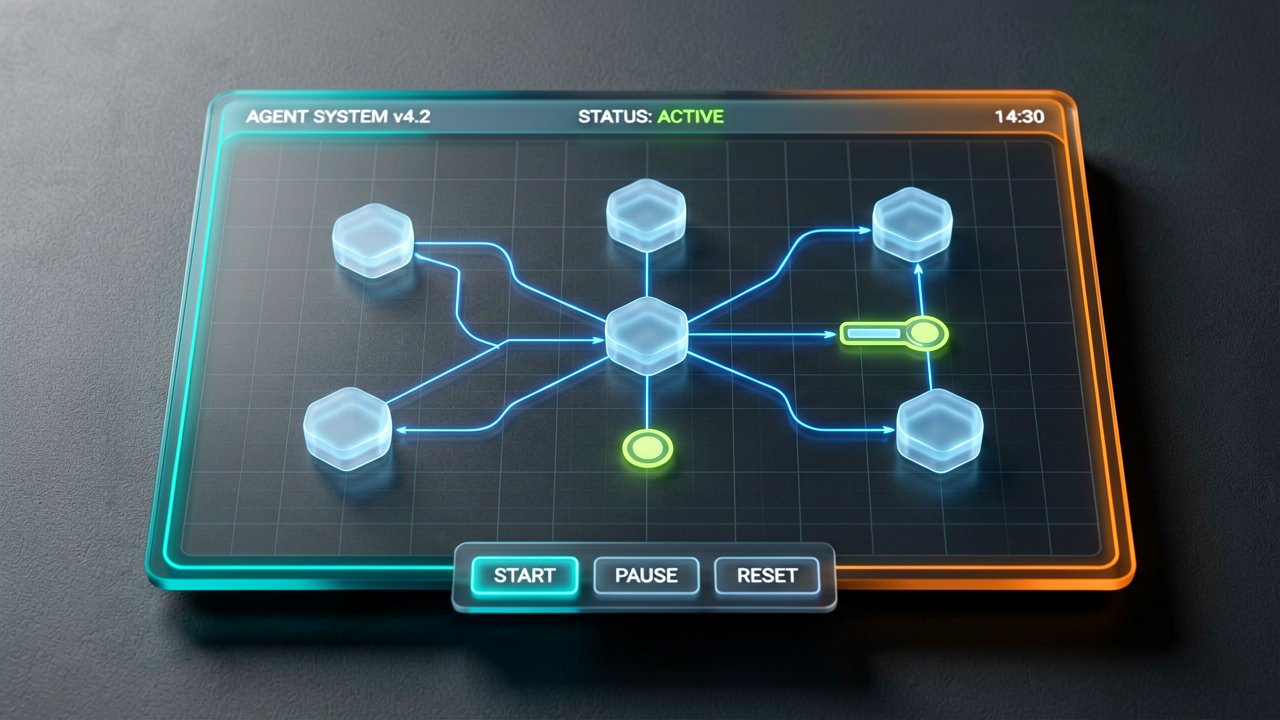
The work management platform monday.com has announced what co-founders call the biggest change in the company's history. The firm is repositioning from a tool that helps teams track work to one that performs the work itself through native AI agents.
This isn't a feature add-on. The company rebuilt core parts of its platform around agents, according to the official press release. monday.com's investor relations page details the full scope of the transformation. The agents are available across the platform starting today with no setup required.
Here's what actually changes for users. Instead of clicking through boards to manually update task statuses, agents can draft marketing campaigns, qualify sales leads, triage support tickets, generate reports, run project workflows, and handle budget approvals. They operate 24/7 under human supervision within existing security and governance controls. The physical experience shifts from constant dashboard monitoring to reviewing agent outputs and approving exceptions.
Co-founder and co-CEO Roy Mann framed the shift bluntly: "For over a decade, we helped teams manage work. Now we are in the business of getting it done." Co-founder and co-CEO Eran Zinman added that the company owes its 250,000 customers "more than another AI feature." They owe them a platform built for what comes next.

The architecture matters here. Unlike bolt-on AI tools that run outside core systems, monday.com's agents sit inside a single structured platform with context across an entire business. They draw on live data from every department, every workflow, and every priority. This means an agent can correlate marketing campaign timelines with sales pipeline velocity and product release schedules to surface insights that isolated systems miss entirely.
That's the difference between AI that impresses stakeholders and AI that reshapes daily operations. (Most companies are still stuck in the "impress stakeholders" phase, which is frustrating to watch.)
The company cited Deloitte research showing the gap between AI investment and AI impact. While enterprises have broadened AI access by 50%, only 25% have moved 40% or more of their experiments into production. Just 34% of companies are using AI to transform their businesses deeply. monday.com is built to close that gap by embedding AI directly into workflows teams already rely on.
Independent reporting from SiliconANGLE corroborates the timeline and scope of the changes. The outlet notes this repositioning puts monday.com into more direct competition with Asana, Atlassian, Smartsheet, and ClickUp, all of which have layered generative AI features into their work platforms over the last two years.

The launch expands monday.com's AI ecosystem with one-click connectors to leading AI platforms. Customers can integrate Anthropic's Claude, Microsoft 365 Copilot, OpenAI's ChatGPT, and Google Gemini. The company also announced access to multiple large language models through monday.com's AI Platform Gateway. New AI-powered development tools are coming to monday vibe, and a redesigned mobile app brings Sidekick and agents together in one place.
Think about the actual workflow. A marketing manager opens the mobile app. Instead of scrolling through task lists, they see agent-generated campaign drafts ready for review. They tap to approve, modify, or reject. The agent executes the approved version, updates the project board, and notifies stakeholders. The manager moves on to the next decision point. That's the physical reality of this shift.
Control frameworks are embedded at the architectural level. Teams configure access controls, approval workflows, and activity logs during initial setup. This determines whether teams will confidently delegate business-critical workflows to agents or restrict them to low-stakes tasks. The governance controls specify which teams' data an agent can read, which fields it can modify, which notifications it can send, and when it must request human approval before acting.
For work management teams operating on platforms where project data, team assignments, and cross-departmental workflows already exist in structured formats, architecture determines how effectively agents leverage that existing context. The richer and more structured your underlying data layer, the more sophisticated reasoning your agents can perform.
The pitch is aimed squarely at the gap between enterprise AI ambition and production deployment. Every product decision starts with one question: does this create real value for customers? With over 250,000 organizations already running their work on monday.com, the company claims it's uniquely positioned to make AI adoption real, not just possible.
They're not asking customers to change how they work. They're bringing AI into how they already work. That's the distinction between this and most AI launches we've seen in the last eighteen months (which mostly asked users to learn entirely new interfaces).
The repositioning represents monday.com's most significant strategic shift since going public in 2021. The company is now an AI Work Platform, an elevation of its mission and a place where people and agents get work done together across every team, every department, and every type of business.
Whether users actually pay for it remains the real question. The work management category is crowded, and the AI feature arms race has already driven up customer expectations without always delivering measurable outcomes. monday.com's bet is that embedding agents into existing workflows will close the gap between experimentation and production. Time will tell if the architecture holds up at scale.
The next phase of SaaS will be defined by who turns AI into real outcomes reliably, at scale, for every team in every kind of business. That's the bet monday.com is making, and the company is rebuilt around it. Whether that rebuild translates to customer retention and revenue growth is what matters now.
Artūras Malašauskas is an AI Systems Integrator with 20+ years of production-grade web engineering experience. He has designed, shipped, and scaled enterprise Python/PHP systems for logistics, SaaS, and public-sector clients. For the past year, he has focused exclusively on AI integrations: deploying open-source LLMs, building generative media pipelines (image, audio, video), and engineering multi-agent workflows for real production environments. His standard: reproducibility, security, cost-efficient inference—no vaporware. He documents and evaluates emerging AI tooling, separating verified capabilities from marketing noise. Technical editor at: muza-ai.eu, ai-verslas.lt, ai-naujinos.lt Connect on LinkedIn
Comments