Vibe Dot Wearable AI Targets Physical Workplace Gaps
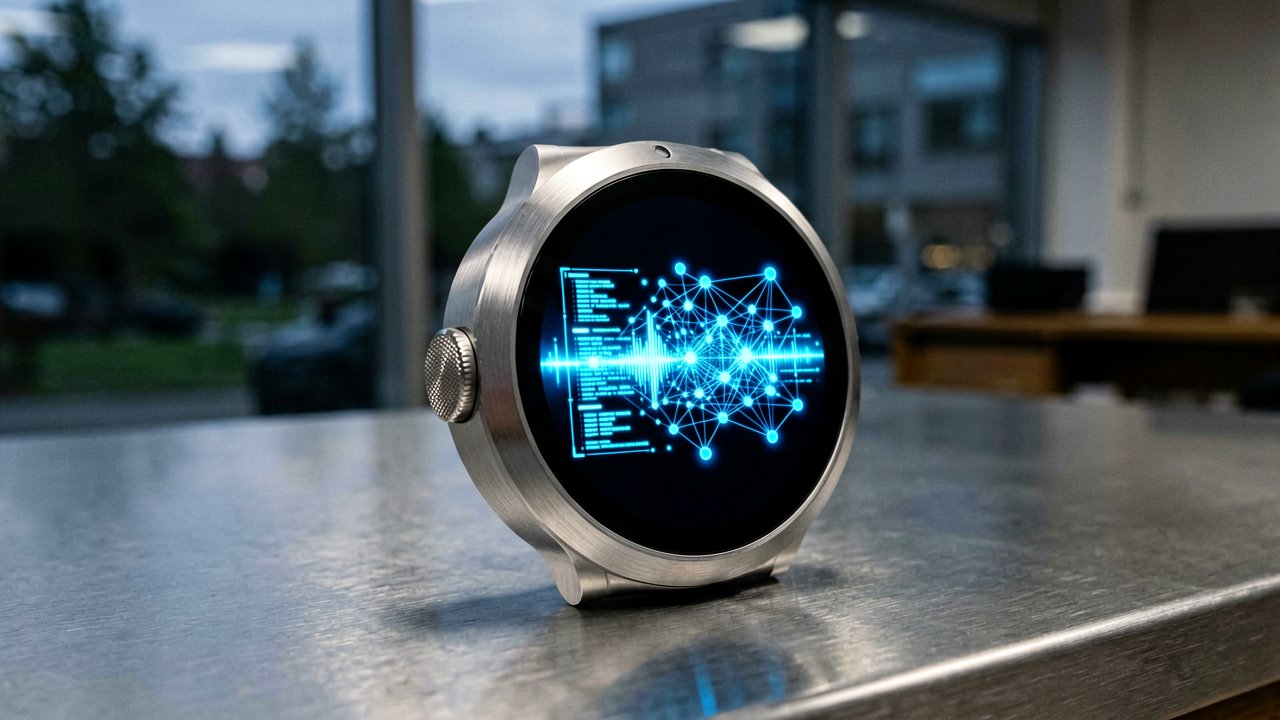
Vibe Inc. has introduced Dot, a wearable AI device designed to capture real-world workplace conversations and convert them into actionable tasks. The product launches at a price point of $199 for preorder, positioning itself as an enterprise tool rather than a consumer gadget.
Founder and CEO Charles Yang told SiliconANGLE that approximately 40% of all meetings still occur in physical spaces without Slack or Google Meet integration. This gap represents the core problem Dot attempts to solve.
The device itself is a round disk, slightly larger than most competitors but smaller than the palm of a hand. It's thin enough to clip onto a lapel or attach to the back of a phone using MagSafe for iPhones or a magnetic ring for Android devices. The physical form factor matters here — users can actually feel the weight of it on their clothing, and the button interface requires deliberate presses rather than accidental taps.
Five microphones enable a listening range of up to 16 feet. This allows Dot to capture complex, multi-person conversations rather than just one-on-one exchanges. The battery supports about 30 hours of continuous recording, which means users can set it and forget it for most workdays (a problem that has plagued users for years, frankly).
Interaction happens through physical buttons: long-press for voice memos and AI commands, double-click to trigger recordings, and single-click to capture key moments. There's also a standby mode that automatically starts and stops recording based on Voice Activity Detection and voice identification. The visible LED indicator ensures people in the room always know when Dot is capturing audio.
According to the company's press release, Dot syncs with the Vibe AI app as a central knowledge hub. Conversations become structured summaries that contribute to institutional memory, while voice commands can be sent to connected agents to take action. This differs from passive recording tools that simply transcribe without enabling downstream workflows.
Customers can bring their own AI agents to Vibe for offloading tasks. The device supports connections to Anthropic PBC's Claude Code or OpenAI's Codex for voice-triggered task execution. This flexibility prevents vendor lock-in, though the core service still requires Vibe's infrastructure for organization and storage.
Yang emphasized the enterprise focus during the announcement. "We are focused on teams. We are focused on enterprise," he said. "We focused on real B to B workflow, instead of trying to bring another wearable, fancy consumer product in the market." The distinction matters because consumer wearables often prioritize fitness tracking or notifications over professional workflow integration.

Dot builds on Vibe's earlier launch of Vibe Bot, an in-room AI device designed for conference rooms. Vibe Bot captured audio passively, organized decisions and next steps, and connected meeting context to enterprise tools. It also included voice interaction capabilities for asking questions about what was said or triggering agentic AI-driven actions.
The smaller form factor of Dot extends Vibe's strategy beyond the meeting room. It targets places where business conversations happen without formal video calls or collaboration apps attached — hallways, client sites, field work, and impromptu discussions. Yang called the design "not too big and also not too small," arguing that Vibe is focused on capturing work that happens in the physical world.
Security certifications include HIPAA compliance and SOC 2 certification, built for sensitive professional conversations. An encryption chip with FIPS 140-3 certification protects data if the device is lost or stolen. These credentials matter for healthcare, legal, and other regulated industries where dropped details can have real consequences.
Gregory Holdiness, Operations Manager at ElevateMD, provided a use case from healthcare. "In healthcare, a dropped detail isn't just an inconvenience — it can affect a patient's outcome," he said. "The tools we've had until now force you to choose between being present with the patient and capturing what happened. Vibe Dot eliminates that tradeoff."
Pricing structure includes core features free without a subscription. A Pro subscription costs $19 per month per user for those who exceed monthly transcription minutes or want extra agentic automation tokens. Higher tiers exist for larger teams with more aggressive needs. The $199 device cost is separate from ongoing subscription fees.
The device magnetically attaches to the back of MagSafe-compatible iPhones for calls and impromptu conversations. It clips onto clothing for hands-free capture and sits on a desk as a standalone device during meetings. Android users attach via an included magnetic ring. This versatility means the hardware adapts to different work contexts without requiring additional accessories.
Vibe, backed by Sequoia Capital China (now HongShan), was founded in 2018. The company embeds AI directly into devices where work happens. Its product suite includes the Vibe Board S1 and S1 Pro, Vibe Bot, and now Vibe Dot. The strategy transforms interactions into living memories that compound over time rather than resetting at the end of every meeting.
Whether users actually pay for the Pro tier remains the real question. Free core features reduce friction for adoption, but the business model depends on teams hitting transcription limits or wanting agentic automation. Enterprise buyers may find the $19 per user monthly cost reasonable compared to lost productivity, but individual professionals might balk at the ongoing expense.
The device also faces competition from existing meeting transcription tools and emerging AI wearables. Differentiation comes from the physical form factor and direct agent connections. But hardware carries higher barriers than software — shipping, returns, battery degradation, and compatibility issues all add complexity that pure software solutions avoid.
Time will tell if capturing 40% of physical meetings justifies the investment. For now, Vibe Dot represents a bet that workplace AI needs to leave the screen and enter the room where work actually happens.
Artūras Malašauskas is an AI Systems Integrator with 20+ years of production-grade web engineering experience. He has designed, shipped, and scaled enterprise Python/PHP systems for logistics, SaaS, and public-sector clients. For the past year, he has focused exclusively on AI integrations: deploying open-source LLMs, building generative media pipelines (image, audio, video), and engineering multi-agent workflows for real production environments. His standard: reproducibility, security, cost-efficient inference—no vaporware. He documents and evaluates emerging AI tooling, separating verified capabilities from marketing noise. Technical editor at: muza-ai.eu, ai-verslas.lt, ai-naujinos.lt Connect on LinkedIn
Comments