Minimax Algorithm in Artificial Intelligence Explained
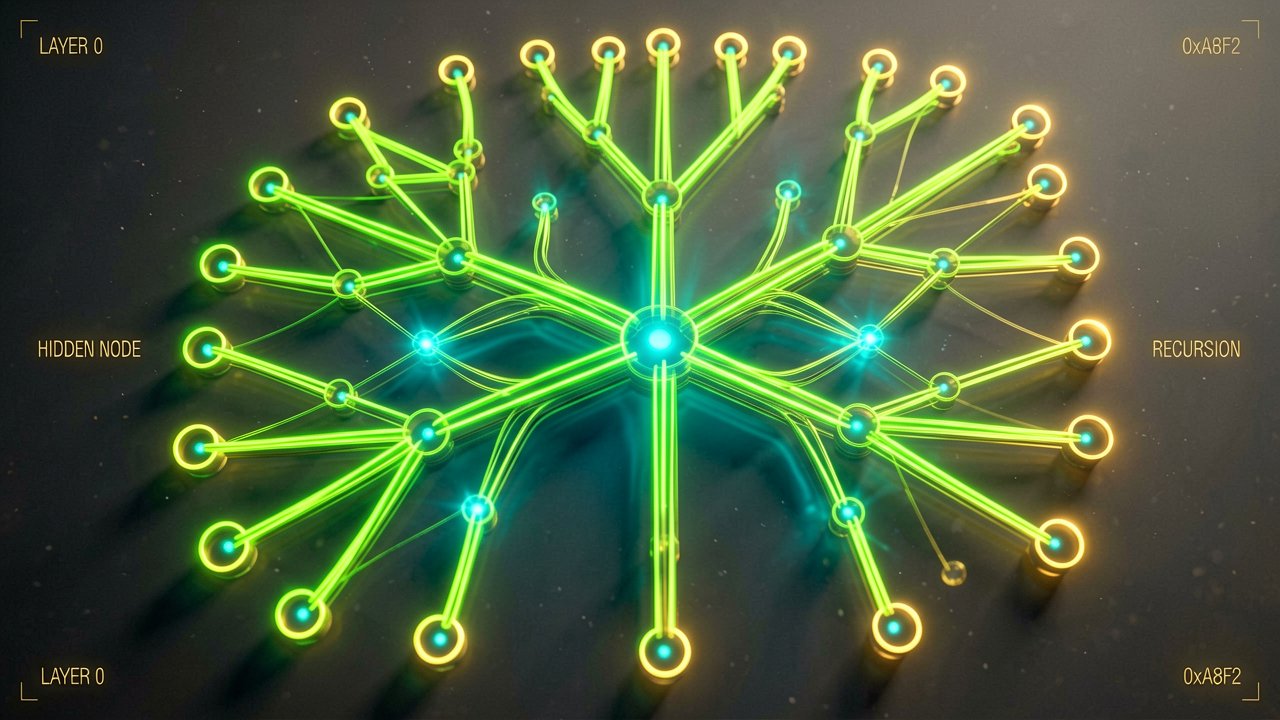
The Minimax algorithm remains one of the foundational decision-making frameworks in artificial intelligence, particularly for competitive environments where two agents face off. It operates on a deceptively simple premise: simulate every possible move, assume your opponent will always counter optimally, and select the path that delivers the best worst-case outcome.
At its core, Minimax treats games as zero-sum scenarios. One player's gain equals the other player's loss. The algorithm constructs a game tree representing all possible moves from the current state, then propagates utility values upward from terminal nodes to the root. This recursive evaluation forces the AI to hedge against optimal opposition rather than chase idealized victories.
Technical documentation from GeeksforGeeks breaks down the mechanics into four distinct steps. First, the system generates a complete game tree where each node represents a game state and each edge represents a possible move. Second, it assigns utility values to terminal states—typically +10 for a win, 0 for a draw, and −10 for a loss in simple implementations. Third, the algorithm propagates these values upward through alternating Max and Min nodes. Finally, it selects the move at the root that produces the highest guaranteed value.
The alternating structure matters. Max nodes represent the AI's turn, selecting the highest value from child nodes. Min nodes represent the opponent's turn, selecting the lowest value. This back-and-forth evaluation defines the algorithm's strategic depth. The AI doesn't just calculate what it wants to happen; it calculates what will happen if the opponent plays perfectly (which is the whole point, really).
Academic resources like the UC Berkeley CS188 textbook illustrate this with Pacman examples. In a two-agent board with an adversarial ghost, Pacman must choose between moving toward a pellet or retreating. The ghost-controlled nodes minimize Pacman's score, forcing the algorithm to recognize that chasing the pellet might lead to a worse outcome than hedging. The resulting decision tree shows Pacman moving away from the pellet to minimize defeat magnitude—a counterintuitive but mathematically sound choice.
Implementation-wise, Minimax behaves similarly to depth-first search. It performs a postorder traversal of the game tree, computing values from leftmost terminal nodes and working rightward. The pseudocode alternates between maximizing and minimizing players, evaluating utility values until the optimal move emerges. For a Tic-Tac-Toe board with 255,168 possible states, the algorithm can examine every single possible match to completion.
Practically, this means Minimax in Tic-Tac-Toe is unbeatable. If a user plays perfectly, the game always ends in a draw. If the user makes a mistake, the AI exploits it toward a +10 outcome. The physical experience of playing against such an opponent is frustratingly predictable—every move feels calculated, every counter feels inevitable.
However, raw Minimax has a critical flaw. Its time complexity matches depth-first search at O(b^d), where b is the branching factor and d is tree depth. For chess, with a branching factor around 35 and tree depth of 100+, this yields computational requirements far beyond practical limits. The algorithm would need to evaluate billions of states per move, which no consumer hardware can handle in real time.
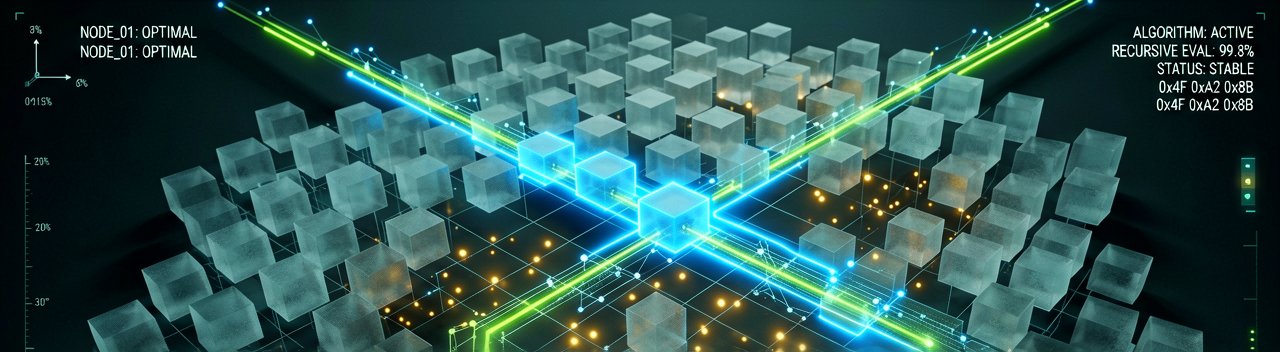
Alpha-beta pruning addresses this bottleneck. The optimization eliminates branches that cannot affect the final decision. During the search, if the algorithm knows a node's value can at best equal its parent's optimal value, it stops looking. Alpha represents the best value the maximizing player can guarantee so far; beta represents the best value the minimizing player can guarantee. When alpha ≥ beta, the remaining branches prune. This reduces effective branching factor without sacrificing optimality.
The pseudocode for alpha-beta pruning adds two parameters to the recursive function. After evaluating each action, it updates alpha or beta accordingly. If beta ≤ alpha during the maximizing player's turn, it triggers a beta cut-off. If beta ≤ alpha during the minimizing player's turn, it triggers an alpha cut-off. These early exits dramatically reduce computation time while preserving the algorithm's decision quality.
Modern game engines have evolved beyond basic Minimax. Early AI systems assessed thousands of game states per second. Today's engines can assess millions, incorporating heuristic evaluations, machine learning models, and domain-specific optimizations. The algorithm's core logic remains unchanged, but the surrounding infrastructure has grown exponentially more sophisticated.
Real-world applications extend beyond games. Developers apply Minimax principles to recommendation engines, decision-based simulations, and adversarial machine learning scenarios. Any system requiring strategic decision-making under uncertainty can benefit from the framework. The key constraint remains computational feasibility—complex games require pruning, heuristics, or hybrid approaches.
For developers building game AI, understanding Minimax strengthens foundational knowledge. The algorithm teaches recursive thinking, state-space exploration, and opponent modeling. It also exposes the trade-off between optimality and performance. You can't have both without significant computational resources.
Whether users actually care about perfect play remains the real question. In casual gaming, a slightly suboptimal opponent often provides better entertainment than an unbeatable one. The algorithm's mathematical elegance doesn't always translate to user satisfaction. Sometimes losing feels better than drawing against a machine that never makes mistakes.
Artūras Malašauskas is an AI Systems Integrator with 20+ years of production-grade web engineering experience. He has designed, shipped, and scaled enterprise Python/PHP systems for logistics, SaaS, and public-sector clients. For the past year, he has focused exclusively on AI integrations: deploying open-source LLMs, building generative media pipelines (image, audio, video), and engineering multi-agent workflows for real production environments. His standard: reproducibility, security, cost-efficient inference—no vaporware. He documents and evaluates emerging AI tooling, separating verified capabilities from marketing noise. Technical editor at: muza-ai.eu, ai-verslas.lt, ai-naujinos.lt Connect on LinkedIn
Comments