Meta Enters the Vibe Coding Arena With a Quiet Rollout of Pocket

The tech industry's obsession with generative artificial intelligence just shifted from writing corporate emails to crafting interactive entertainment. In a move that subverts the typical high-production-value keynote, Meta Platforms Inc. quietly released a standalone mobile application named Pocket, effectively planting its flag inside the emerging landscape of vibe coding. The application surfaced on both the Apple App Store and Google Play on June 29, 2026, without a single shred of formal marketing or public announcement.
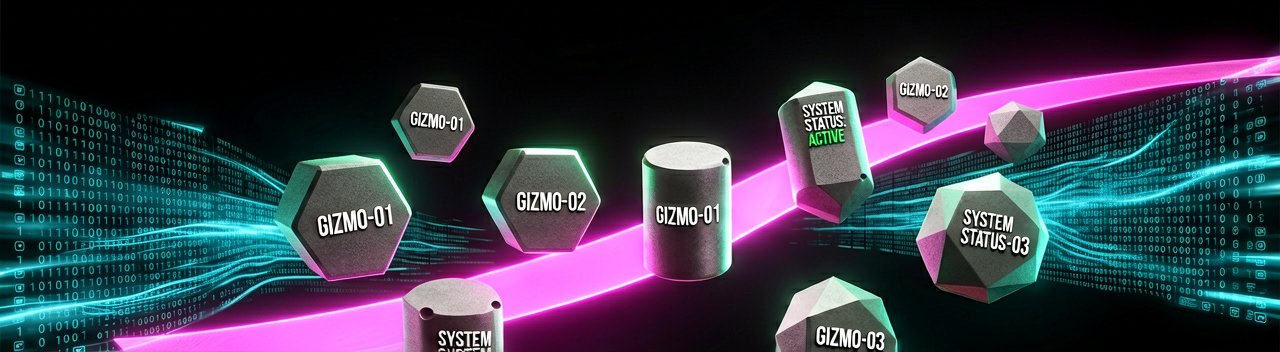
Instead of demanding lines of C++ or complex logic trees, Pocket relies completely on a natural language interface where everyday consumers can spin up fully playable, interactive mini-games—coined "gizmos"—using basic English text prompts. It is an direct attempt to capitalize on the fast-moving hype around prompt-based creation. Early testers can describe their creative vision, tweak the generated outputs through subsequent text-based commands, and watch the software engine instantly compile functional code on the back end while they simply focus on the creative vibe.
The Social Mechanics of Prompt-Based Micro-Gaming
Rather than feeling like an integrated development environment, the platform operates like a traditional vertical video feed, echoing the user interface choices of TikTok. Users can open the application to scroll through a continuous pipeline of public gizmos, jump instantly into games built by other players, and leave engagement feedback. The technical underpinnings are surprisingly robust for an experimental mobile app, allowing generated mini-games to interact directly with hardware components inside contemporary smartphones, including touch gestures, audio playback, cameras, and device orientation sensors.
According to an analysis by TechCrunch , the software framework behind Pocket did not appear out of thin air; it is built on top of Meta's earlier, low-profile corporate acquisition of the engineering team from Atma Sciences Inc., creators of a highly rated standalone application named Gizmo. Even the Android installation code for Pocket preserves remnants of the original startup package name, revealing exactly how Meta repurposed the acquired asset to fast-track its push into user-generated interactive entertainment. Meta has acknowledged in its Help Center documentation that the application remains restricted to specific geographic regions during this initial server testing and moderation optimization window, though players who have access can log into the service via their existing Meta credentials.
A Massive AI Playground With Hidden Strategic Hooks
The monetization structure is absent for now, but the underlying data collection strategy is perfectly aligned with the parent company's core machine learning ambitions. Support guidelines indicate that every prompt entered and every programmatic interaction logged within Pocket will feed back directly into optimizing Meta's foundational language models. This dual-purpose strategy transforms a casual user base into an enormous, distributed testing ground for real-world software synthesis. Industry analysts covered by Yahoo Finance point out that the experimental software expands an aggressive slate of standalone consumer-facing AI apps, standing alongside the company's dedicated AI assistant and its synthetic video generation tool, Vibes.
There are also explicit community mechanics built in to encourage continuous engagement, specifically allowing users to remix other creators' public gizmos to launch altered iterations into the algorithm. This approach poses interesting copyright and data retention challenges, given that once a creator opens a gizmo to community remixing, deleting the original post will not erase the derivative games made by other platform members. By embedding this automated loop inside a familiar social environment, the tech giant is looking to bypass standard developer friction, turning algorithmic game building into a viral social mechanic.
Behind the Scenes of Meta's Hidden AI Synthesis Play
What Most Reports Miss: The rapid rollout of Pocket is less about Meta entering the video game publishing business and far more about securing an unassailable lead in the war for synthetic data. While competitors like Microsoft and OpenAI pour billions into training large language models on static text from the web, Meta has realized that the next frontier of artificial intelligence requires real-time, interactive feedback loops. By transforming millions of teenagers into casual prompt-engineers, the company has effectively crowdsourced the highly complex task of debugging and optimizing code generation models at a scale that traditional software firms cannot match.
This stealthy incubation strategy mirrors the historical playbook Meta utilized during its early acquisitions of Instagram and WhatsApp. By keeping Pocket separated from the core Facebook and Instagram ecosystems during its initial regional testing phase, the company can freely experiment with controversial moderation policies and edge-case AI behaviors without risking mainstream brand damage. Veteran developers note that the transition from Atma Sciences' original standalone "Gizmo" infrastructure to a fully integrated Meta product took less than a year, showcasing a highly aggressive engineering push behind closed doors to outpace decentralized open-source coding assistants.

The engineering architecture behind Pocket also signals a massive paradigm shift in how mobile operating systems interact with third-party software. Traditionally, Apple and Google have maintained strict, heavily policed boundaries regarding executable code on their platforms to prevent security vulnerabilities. By building a sandboxed environment where AI compiles and executes mini-games on the fly using native device sensors, Meta is subtly challenging the traditional app store duopoly. If a user can instantly generate an app within an app simply by asking for it, the traditional friction of downloading software from an external marketplace evaporates entirely.
Inside the broader developer ecosystem, the arrival of vibe coding has triggered an intense philosophical debate regarding the future of technical education and labor. Skeptics argue that prompt-based generation lacks the deterministic reliability required for complex software, frequently resulting in logic loops that users cannot easily debug without foundational coding knowledge. Conversely, proponents argue that democratizing software creation removes the high economic barrier to entry that has historically kept creative minds out of the tech sector, shifting the developer's primary role from syntax management to high-level architectural oversight.
Ultimately, Pocket serves as a live-fire test for Meta's long-term computing ambitions, acting as a crucial bridge between two-dimensional social feeds and spatial computing environments. The lightweight, text-to-game pipeline being perfected on mobile screens today is designed to eventually populate the horizon of future augmented reality glasses with instantaneous, user-generated environments. As the platform scales, the distinction between a software consumer and a software creator will continue to blur, rewriting the rules of digital engagement in an era dominated by automated code.
Reading Between the Lines: The Mirage of Frictionless Creation
The Hidden Catch: Meta's marketing pitch for Pocket hinges on the utopian promise of total democratization, yet the reality of "vibe coding" quickly collides with foundational software engineering constraints. While generating a basic physics toy through a simple text prompt feels magical during the first five minutes of use, maintaining and iterating on that creation exposes severe structural limitations. Because the user lacks direct access to the underlying code repository, fixing a specific bug or adding a nuanced gameplay mechanic requires submitting additional, increasingly convoluted text prompts. This creates a bizarre paradox where the developer is trapped in a game of semantic telephone with an unpredictable language model, turning what should be a precise technical refinement into an exercise in pure frustration.
This structural friction highlights a fundamental contradiction in Meta's long-term consumer strategy. The platform is designed to mimic the mindless, low-effort consumption loop of short-form video algorithms, yet game design is inherently an analytical, high-effort discipline. The vast majority of casual social media users seek passive entertainment rather than the painstaking trial-and-error process required to balance gameplay mechanics or debug asset collisions. By attempting to merge these two conflicting behavioral archetypes, Meta risks creating a ghost town of abandoned, shallow, and highly repetitive mini-games that fail to hold community attention once the initial novelty of prompt-generation wears off.
Furthermore, the long-term legal and ethical implications of this crowd-sourced synthesis model remain entirely unaddressed by the tech giant's current framework. When a user "remixes" a public gizmo, the underlying AI does not simply copy a script; it synthesizes a new iteration based on weights derived from countless other creators' inputs. This completely obfuscates intellectual property ownership, creating an environment where original creative concepts can be instantly cloned, tweaked, and monetized by the algorithm without giving credit to the human originator. As Meta inevitably moves to inject targeted advertisements or premium features into these user-generated virtual spaces, the tension between corporate monetization and exploited digital labor will become impossible to ignore.
From an infrastructure perspective, running real-time, LLM-powered code compilation for millions of daily active users presents a staggering, highly unsustainable computational cost. Every text prompt submitted to Pocket demands significant energy and server overhead, raising serious questions about the economic viability of the platform if it ever achieves mainstream social scale. Unless Meta can drastically reduce the carbon footprint and inference costs of its foundational models, Pocket may ultimately join the company's long list of expensive, short-lived standalone experiments that are quietly shuttered the moment the corporate hype cycle shifts toward a newer, shinier technological buzzword.
"We have officially reached the point in technological progress where humans will spend hours aggressively arguing with a trillion-parameter artificial intelligence just to make a digital pixelated ball bounce slightly higher on a smartphone screen, proudly calling the resulting software defect a feature."
Artūras Malašauskas is an AI Systems Integrator with 20+ years of production-grade web engineering experience. He has designed, shipped, and scaled enterprise Python/PHP systems for logistics, SaaS, and public-sector clients. For the past year, he has focused exclusively on AI integrations: deploying open-source LLMs, building generative media pipelines (image, audio, video), and engineering multi-agent workflows for real production environments. His standard: reproducibility, security, cost-efficient inference—no vaporware. He documents and evaluates emerging AI tooling, separating verified capabilities from marketing noise. Technical editor at: muza-ai.eu, ai-verslas.lt, ai-naujinos.lt Connect on LinkedIn
Comments