The Vibe Coding Surge: How AI-Driven Development Is Doubling App Store Releases

The mobile gaming market is experiencing an unprecedented expansion as the barrier to software engineering collapses. According to recent market tracking by Digital Trends via research firm ATTN Economy, an astonishing 181,000 mobile games launched in the six-month period ending in May 2026, representing a 118% surge on iOS and a 73% increase on Android compared to the previous year. This massive influx is driven by "vibe coding"—a paradigm shift where creators use natural language prompts rather than manual syntax to build and ship fully functional applications.
This rapid democratization has fundamentally transformed app store dynamics, overwhelming traditional platform infrastructure and changing the economics of mobile publishing. While developers can now transition from a concept to a playable package in mere hours, the sudden explosion of content has introduced significant friction into marketplace visibility and platform gatekeeping.
Market Saturation and the Revenue Gap
While the volume of newly published software has expanded dramatically, commercial viability remains heavily concentrated at the top. Data from the game market analytics firm Naavik, covered by Digital Today, reveals that despite the massive spike in product submissions, the number of games generating at least \$20,000 in revenue grew by only 14%. This disparity highlights a stark reality: lowering production barriers does not automatically generate consumer demand or solve discoverability challenges in a crowded marketplace where the top 1% of publishers command roughly 80% of all downloads.
Platform Gatekeeping and Quality Control Fractures
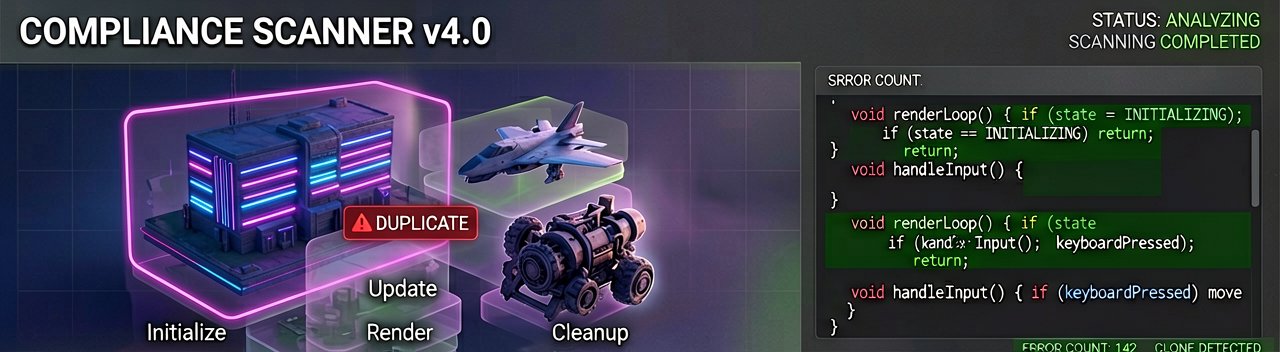
The sudden influx of AI-generated content has strained ecosystem infrastructure, leading to a significant backlog in platform maintenance. Reports published by Fast Company outline that App Store submissions surged by 84% in the first quarter of 2026, causing standard review times to skyrocket. In response, platform compliance teams are tightening regulations, aggressively rejecting template-based functional clones and enforcing rules regarding execution boundaries under existing ecosystem guidelines to prevent marketplaces from becoming saturated with identical, low-effort clones.
Strategic Imperatives for Modern Studios
For established mobile studios, the rise of prompt-driven deployment forces a pivot from technical execution to creative differentiation. Success in this new landscape depends heavily on intellectual property, advanced game loop design, and sophisticated user acquisition strategies that AI cannot easily replicate. While lightweight tools allow independent creators to spin up micro-experiences instantly, long-term retention and monetization still require human-led architectural oversight and deep product monetization expertise.
Behind the Scenes: The explosive democratization brought about by natural-language software generation masks a volatile structural crisis within the game development labor market. According to tracking by Digital Trends via a recent industry report, approximately one in four game development professionals has been laid off over a consecutive two-year period leading into 2026. This stark workforce contraction directly mirrors the rising corporate adoption of generative AI tools. As studios leverage automated workflows to synthesize and compile functional code on demand, the reliance on traditional entry-level engineering roles has diminished, resulting in sharp, structural displacements across major and mid-tier publishing houses.
This rapid displacement has driven a profound cultural ideological shift among technical and creative teams who view automated code generation with growing alarm. Industry tracking indicates that 52% of gaming professionals now view generative AI tools as actively detrimental to the longevity of the sector, a significant escalation from 30% in 2025 and a mere 18% in 2024. The most pronounced resistance is concentrated within visual arts, technical design, and narrative departments, where professionals report that automated pipelines frequently prioritize raw output velocity over structural stability, artistic cohesion, and original IP development.
The Technical Debt of Prompt-Driven Architecture
At the engineering level, the primary risk of relying on conversational code compilers is the accumulation of brittle, unverified software frameworks. While independent creators utilize agentic platforms to assemble immediate proofs-of-concept, the lack of granular human oversight during initial compilation frequently introduces severe architectural vulnerabilities. Without structured manual testing, these prompt-generated assets scale into complex webs of technical debt, where diagnosing an execution error or applying a simple logic update requires deciphering layers of heavily abstracted, machine-written code.

Furthermore, this shift introduces significant long-term vulnerabilities to the broader software ecosystem by disrupting the collaborative frameworks that sustain modern computing. As highlighted by academic research covered in Wikipedia , the expansion of vibe coding threatens the economic model of the open-source software movement. Because prompt-reliant builders primarily consume pre-existing open-source repositories without actively engaging with or contributing back to original maintainers, the vital feedback loop of documentation, code reviews, and community patches is beginning to fray, leaving foundational digital infrastructure increasingly underfunded and vulnerable.
Market Congestion and Platform Redistribution
The friction generated by this production boom extends directly to consumer marketplaces, prompting major tech platforms to radically alter their gatekeeping mechanics. As reported by 9to5Mac , the volume of digital assets arriving at Apple's doorstep has scaled to unprecedented heights, with developers submitting over 1,000 new software builds every single hour following major developer ecosystem updates. This ongoing deluge has effectively forced a re-evaluation of current platform distribution strategies, forcing marketplace operators to pivot toward stricter algorithmic enforcement and enhanced structural vetting to filter out derivative applications before they reach consumer devices.
Reading Between the Lines: The celebratory rhetoric surrounding the democratization of mobile game publishing overlooks a fundamental structural paradox: as the cost of production plummets toward zero, the cost of discoverability scales exponentially. Platforms and tech evangelists frequently champion vibe coding as an equalizer that liberates indie creators from the tyranny of massive engineering budgets. In reality, substituting automated code generation for manual labor does not solve the acute problem of consumer acquisition, but rather intensifies it. In an ecosystem where the app stores are flooded with thousands of structurally identical, prompt-engineered titles every day, visibility is no longer a function of engineering merit, but purely a function of paid marketing leverage.
This reality exposes a glaring contradiction in the current generative AI narrative, which falsely conflates software abundance with market vitality. While the sheer volume of mobile game submissions has doubled, player attention and disposable income remain fixed, finite resources. The marketplace is experiencing a severe dilution of value, where a tiny fraction of entrenched publishers utilizing proprietary data loops absorb the vast majority of consumer spending. Consequently, the reliance on automated code generation creates a treadmill effect: developers must produce more titles at a faster rate simply to maintain their existing baseline visibility, accelerating a race to the bottom that structurally disincentivizes deep, multi-year product development.
The Disconnection from Genuine Innovation
Moreover, the mechanics of conversational programming are fundamentally at odds with genuine structural innovation in game design. Because generative models compile software by predicting the most statistically probable next token based on historic training data, they are inherently backward-looking engines designed to optimize for the average. This architectural limitation means vibe coding is highly effective at replicating established genres, cloning viral hyper-casual loops, and generating superficial variations of existing templates, but lacks the capacity for disruptive, paradigm-shifting originality. The inevitable result is an environment characterized by systemic homogenization, where consumers are forced to sift through an ocean of indistinguishable digital noise.
Ultimately, this shift risks turning the app store ecosystem into a self-referential feedback loop that alienates the core user base. As platforms rely more heavily on automated algorithms to filter out automated submissions, the entire relationship between creator and consumer becomes highly abstracted. When software creation is reduced to a series of linguistic prompts and marketplace selection is reduced to programmatic gatekeeping, the human element of deliberate, interactive craftsmanship is pushed to the margins, fundamentally altering the cultural value of the medium.
"We were promised a future where artificial intelligence would liberate humanity to write the next great interactive masterpiece; instead, we got an automated assembly line that allows a single developer to flood the marketplace with ten thousand identical Flappy Bird clones before lunchtime."
Artūras Malašauskas is an AI Systems Integrator with 20+ years of production-grade web engineering experience. He has designed, shipped, and scaled enterprise Python/PHP systems for logistics, SaaS, and public-sector clients. For the past year, he has focused exclusively on AI integrations: deploying open-source LLMs, building generative media pipelines (image, audio, video), and engineering multi-agent workflows for real production environments. His standard: reproducibility, security, cost-efficient inference—no vaporware. He documents and evaluates emerging AI tooling, separating verified capabilities from marketing noise. Technical editor at: muza-ai.eu, ai-verslas.lt, ai-naujinos.lt Connect on LinkedIn
Comments