Kiteworks Launches ownCloud Open Source Program Office
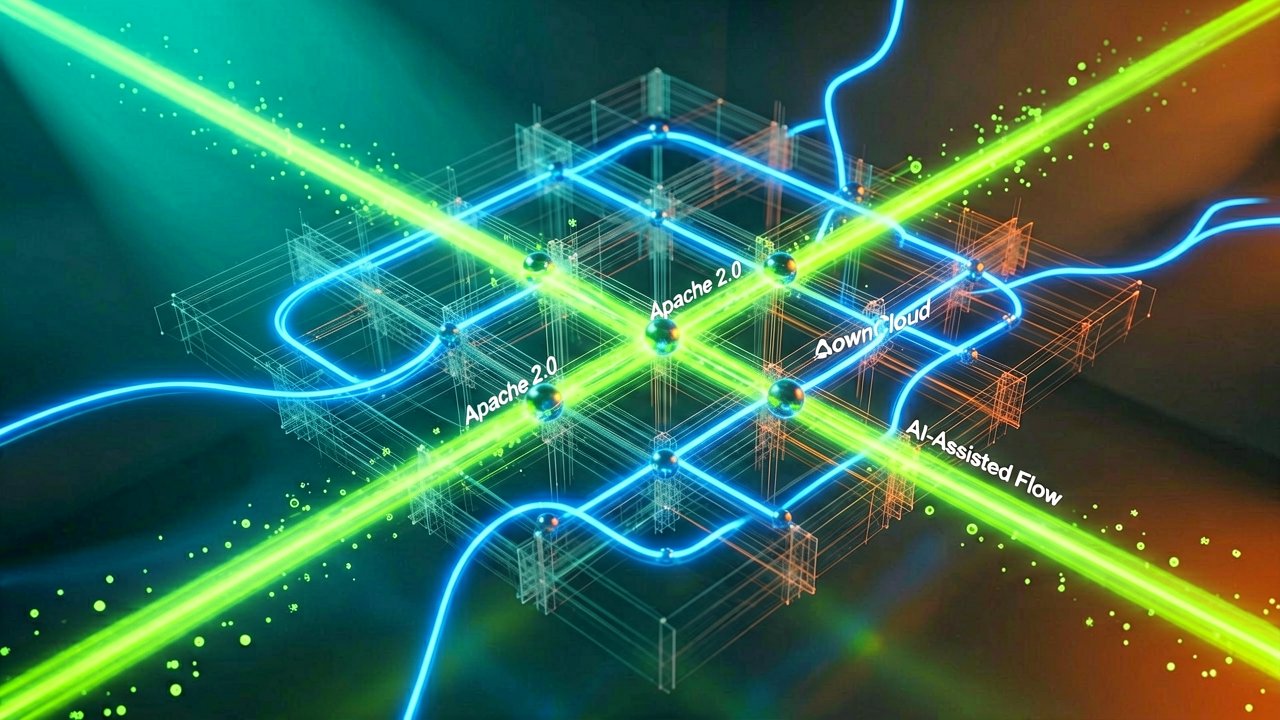
The enterprise data security firm Kiteworks has established a formal Open Source Program Office (OSPO) to steward the ownCloud platform, marking a significant shift in how the company manages its open-source commitments. The announcement, made on May 6, 2026, introduces structured governance, relicensing of over 100 projects to Apache 2.0, and a new policy welcoming AI-assisted contributions.
This is not a cosmetic rebranding exercise. The OSPO represents two years of engineering work that shipped quarterly releases, rebuilt CI/CD pipelines on GitHub Actions, and delivered new desktop and mobile clients while operating with limited public communication. Now the governance structures are being formalized alongside the code.
According to the official Kiteworks press release, the OSPO consolidates all of Kiteworks' open-source activities under a single organizational body operating under the ownCloud brand. David Walter has been appointed Vice President of the Open Source Program Office, tasked with operationalizing what the company calls "stewardship" rather than passive sponsorship.
The relicensing effort is substantial. Over 100 projects are moving to Apache 2.0, a permissive license that removes barriers for enterprise adoption. The legacy Contributor License Agreement (CLA) is being retired in favor of the Developer Certificate of Origin (DCO). This change means contributors retain copyright ownership of their work rather than assigning it to ownCloud GmbH. The DCO model uses a simple git commit -s flag to append a Signed-off-by line with the contributor's name and email. It's the same model the Linux kernel has used for two decades.
From a contributor's perspective, the friction difference is tangible. Instead of navigating a legal document that requires copyright assignment, developers now sign off on individual commits. The process takes seconds, not hours of legal review. For enterprise procurement teams evaluating open-source dependencies, the Apache 2.0 license removes ambiguity around commercial use and liability.
The AI-assisted contribution policy is perhaps the most forward-looking element of the launch. Most commercially backed open-source projects have avoided taking a formal position on AI-generated code. ownCloud is not. The policy sets four requirements: disclosure of the tool used, contributor comprehension of all submitted code, adequate testing, and licensing compliance. Two oCIS web extensions have already been merged through this workflow.
David Walter's position is clear: "The quality bar is the same as for any other contribution; the tooling used to produce it is not a disqualifier." This stance acknowledges the reality that AI coding assistants are now ubiquitous in developer workflows. Blocking them would be like refusing to accept contributions from developers who use IDEs instead of text editors.
The governance charter, explicitly labeled v0.1, establishes four roles: Contributor, Reviewer, Maintainer, and OSPO. It defines a contributor-to-maintainer pathway and sets a 10-business-day clock for dispute resolution. Governance that takes 90 days to resolve a contribution conflict is not governance; it's attrition. The charter also commits to a 30-day public comment period for any future changes.
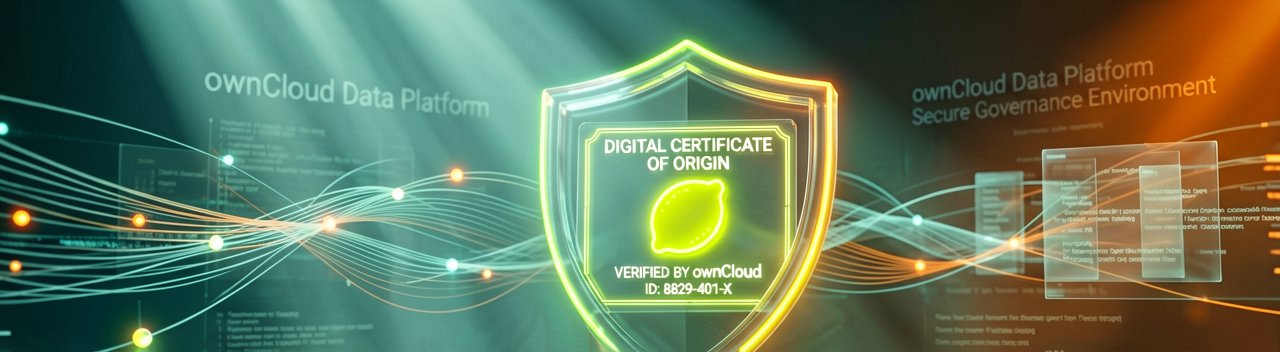
ownCloud operates two platforms simultaneously. ownCloud Infinite Scale (oCIS) is the modern platform written as microservices in Go, fully cloud-native, and already licensed under Apache 2.0. It's deployed at scale in European public sector environments, including a German federal states official school cloud serving millions of users and the European Open Science Cloud. ownCloud Classic, the Linux/Apache/SQL/PHP platform also known as ownCloud 10, remains under active maintenance and has been upgraded from PHP 7.4 to PHP 8.3.
A migration tool from ownCloud Classic to ownCloud Infinite Scale is being released under https://github.com/owncloud/migrate_to_ocis. For organizations running the legacy platform, this is critical infrastructure. The tool handles the database migration, configuration transfer, and client compatibility checks that would otherwise require manual intervention.
The security program is operational with a Vulnerability Disclosure Program at security.owncloud.com and a YesWeHack bug bounty offering tiered rewards up to $5,000 for critical findings. This is standard for enterprise-grade open-source projects but worth noting because security posture often lags behind feature development in open-source ecosystems.
A Community Advisory Board is planned for Q4 2026, and a first annual OSPO report is scheduled for Q1 2027. The report will provide public accounting of governance activity, contribution volume, security program outputs, and progress against the charter's commitments. These are concrete milestones with committed target windows, not claimed achievements.
The timing aligns with broader industry trends. Recent research shows 92% of EMEA IT managers now consider enterprise open-source software critical to achieving digital sovereignty. Germany's federal budget for 2026 allocated €250 million for open-source development. Third-party involvement in data breaches doubled year over year to 30% of all incidents.
ownCloud's history has been shaped by the cycle of growth and divergence that defines open-source communities. The platform experienced two forks — Nextcloud in 2016 and OpenCloud in 2025. The governance structures now being formalized reflect hard-won lessons about sustaining a project over the long term: transparency paired with inclusive governance, active listening matched with shared ownership, and freedom balanced with responsible stewardship.
The OSPO sits under Kiteworks and is funded by Kiteworks. The company is not pretending to be a foundation-governed project. What it commits to is that steering happens in public, that every rationale is documented, that the community has meaningful channels to influence direction, and that every governance artifact is open for comment and revision.
For developers, the practical impact is immediate. The Contribution Guide is published at https://owncloud.dev, replacing the legacy CLA with the DCO model. New repositories default to Apache License 2.0. Existing repositories will be relicensed in the future, though this requires individual review of all prior commits and signed CLAs.
The ownCloud Desktop Client is the first fully open-source application available to every customer. This matters because desktop clients are often the most visible touchpoint for end users. When the client is open-source, users can verify the code, audit security claims, and contribute fixes without waiting for vendor approval.
Whether this governance model actually prevents the community fragmentation that plagued previous iterations remains to be seen. The charter is aspirational in parts, and the Community Advisory Board hasn't been formed yet. The annual OSPO report won't exist until 2027. These are commitments, not guarantees.
Kiteworks is betting that transparent governance, permissive licensing, and inclusive contribution policies will sustain ownCloud as both a commercially viable enterprise platform and a living digital commons. The engineering work is done. The governance structures are published. Now the community will decide if they're sufficient.
Artūras Malašauskas is an AI Systems Integrator with 20+ years of production-grade web engineering experience. He has designed, shipped, and scaled enterprise Python/PHP systems for logistics, SaaS, and public-sector clients. For the past year, he has focused exclusively on AI integrations: deploying open-source LLMs, building generative media pipelines (image, audio, video), and engineering multi-agent workflows for real production environments. His standard: reproducibility, security, cost-efficient inference—no vaporware. He documents and evaluates emerging AI tooling, separating verified capabilities from marketing noise. Technical editor at: muza-ai.eu, ai-verslas.lt, ai-naujinos.lt Connect on LinkedIn
Comments