CCP Games Rebrands as Fenris Creations, Partners with DeepMind
The studio behind EVE Online has officially ceased to exist under its original name. CCP Games is now Fenris Creations, an independent entity following a $120 million separation from Pearl Abyss. The announcement, made on May 6, 2026, marks the end of an eight-year ownership chapter that began when Pearl Abyss acquired the Icelandic developer in 2018.
According to the official press release from the company, the transaction involved both cash and non-cash elements. Fenris Creations is now governed by its own Board of Directors, returning to a model similar to how the company operated before 2018. The ownership group comprises senior management and long-term investors aligned with the company's future as a developer and publisher of player-driven online experiences.
CEO Hilmar Veigar Pétursson confirmed that the change reflects a shift in ownership and governance only. The teams building EVE Online, EVE Frontier, EVE Vanguard, and EVE Galaxy Conquest remain in place. Studios in Reykjavík, London, and Shanghai continue as they are today. No layoffs or restructuring are planned. The headquarters will remain in Vatnsmýrin, Iceland.
It's worth noting that this isn't just a cosmetic rebrand. The name change signals a fundamental restructuring of how the company operates. For nearly thirty years, CCP Games was synonymous with EVE Online. Now Fenris Creations is positioning itself as something broader—a studio focused on persistent live games and long-running virtual worlds. Whether players will actually remember the new name when they log in remains to be seen.

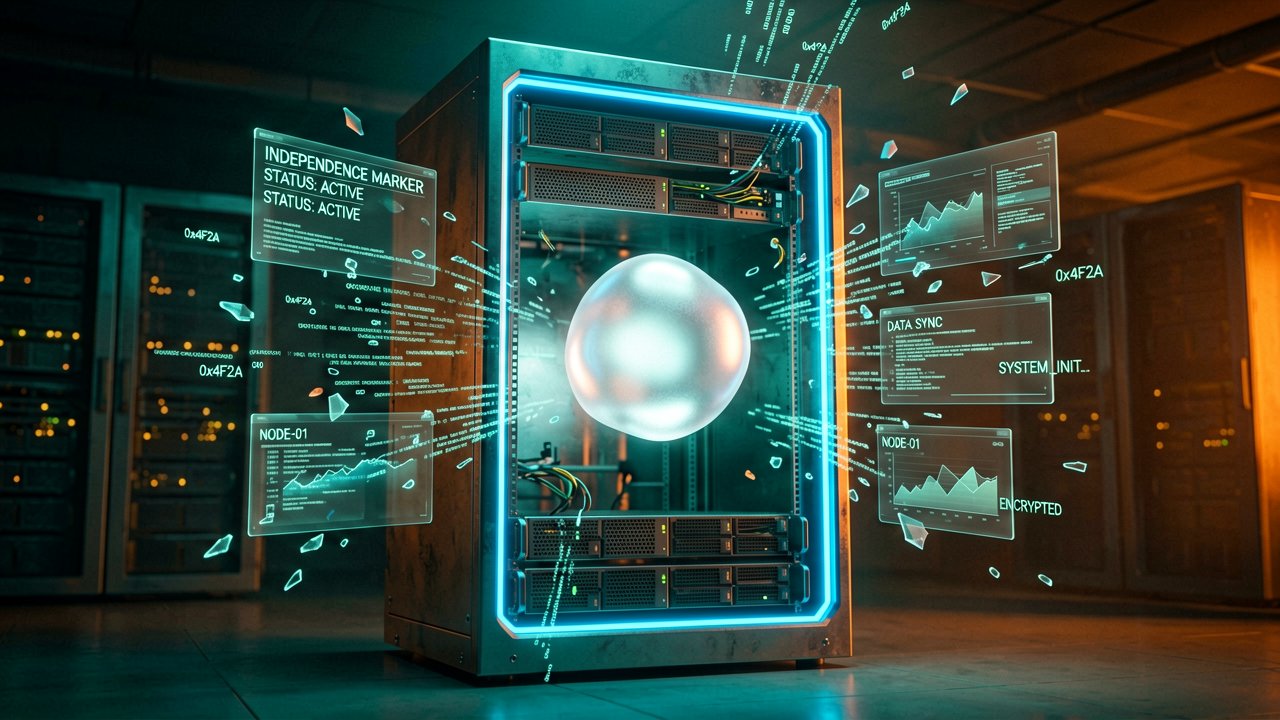
The more significant development, however, is the AI research partnership with Google DeepMind. As part of this deal, Google is taking a minority stake in Fenris Creations. An offline version of EVE Online will serve as a training ground for DeepMind AI, enabling the company to test and evaluate models in a controlled setting. This is not a live server—players won't encounter experimental AI agents in New Eden anytime soon.
The collaboration will explore areas including long-horizon planning, memory, and continual learning. Documentation from Fenris Creations states that EVE is one of the few environments where questions about intelligence can be explored inside something that already behaves like a living world. The game's economy, politics, and player-driven conflicts create complexity that's difficult to replicate in synthetic environments.
Demis Hassabis, co-founder and CEO of Google DeepMind, noted that games have been at the heart of many of DeepMind's breakthroughs—including Atari DQN, AlphaGo, AlphaStar, and SIMA. He called EVE Online a perfect training ground for developing and testing AI algorithms. The partnership will also explore new gameplay experiences enabled by these technologies, though specifics remain vague at this stage.
Independent reporting from PC Gamer corroborates the timeline and scope of the changes. The outlet also noted that Fenris Creations hasn't been shy about embracing new technologies in the past. Earlier this year, the company launched an AI-powered assistance feature for EVE Online, trained on more than 5.8 million messages posted in EVE's Rookie Help channel.

That assistance feature is a practical example of how AI can help ease new players into the notoriously dense game. But the DeepMind deal sounds loftier. The partnership will focus on esoteric subject matter that goes beyond customer service chatbots. Long-horizon planning and continual learning are research areas that could fundamentally change how AI agents interact with complex systems over time.
From a business perspective, the timing makes sense. Pétursson said 2025 produced some of the game's strongest results in years, including a record-breaking November and one of the strongest quarters in EVE Online's more than 20-year history. The company remains profitable and has amassed strong reserves to continue investing in the future of EVE. More details on the research will be shared at EVE Fanfest 2026, which kicks off on May 14.
The physical reality of this partnership is interesting to consider. Players clicking through the game's UI won't immediately notice anything different. The offline servers running DeepMind experiments are isolated from the live environment. But somewhere in Iceland, engineers are watching AI agents navigate the same complex systems that human players have been wrestling with for decades. The friction of learning EVE's mechanics—those frustrating first hours of figuring out how to fly a ship without getting blown up—will now be data points for machine learning models.
Whether this research translates into meaningful gameplay improvements is another question entirely. AI partnerships in gaming have a mixed track record. Some deliver tangible benefits; others become marketing exercises that fade into obscurity. The difference here is that EVE Online's player-driven universe provides genuine complexity that's difficult to manufacture in controlled test environments.
For now, the immediate impact on players is minimal. The game continues as it always has. The studio name on the launcher might change, but the core experience remains untouched. Whether users actually care about the rebranding remains the real question. Most players will probably just log in, check their mail, and wonder why the company name on the login screen looks different. The AI research will take years to mature, if it ever reaches production.
Artūras Malašauskas is an AI Systems Integrator with 20+ years of production-grade web engineering experience. He has designed, shipped, and scaled enterprise Python/PHP systems for logistics, SaaS, and public-sector clients. For the past year, he has focused exclusively on AI integrations: deploying open-source LLMs, building generative media pipelines (image, audio, video), and engineering multi-agent workflows for real production environments. His standard: reproducibility, security, cost-efficient inference—no vaporware. He documents and evaluates emerging AI tooling, separating verified capabilities from marketing noise. Technical editor at: muza-ai.eu, ai-verslas.lt, ai-naujinos.lt Connect on LinkedIn
Comments