ServiceNow Build Agent Expands to Major AI Coding Tools
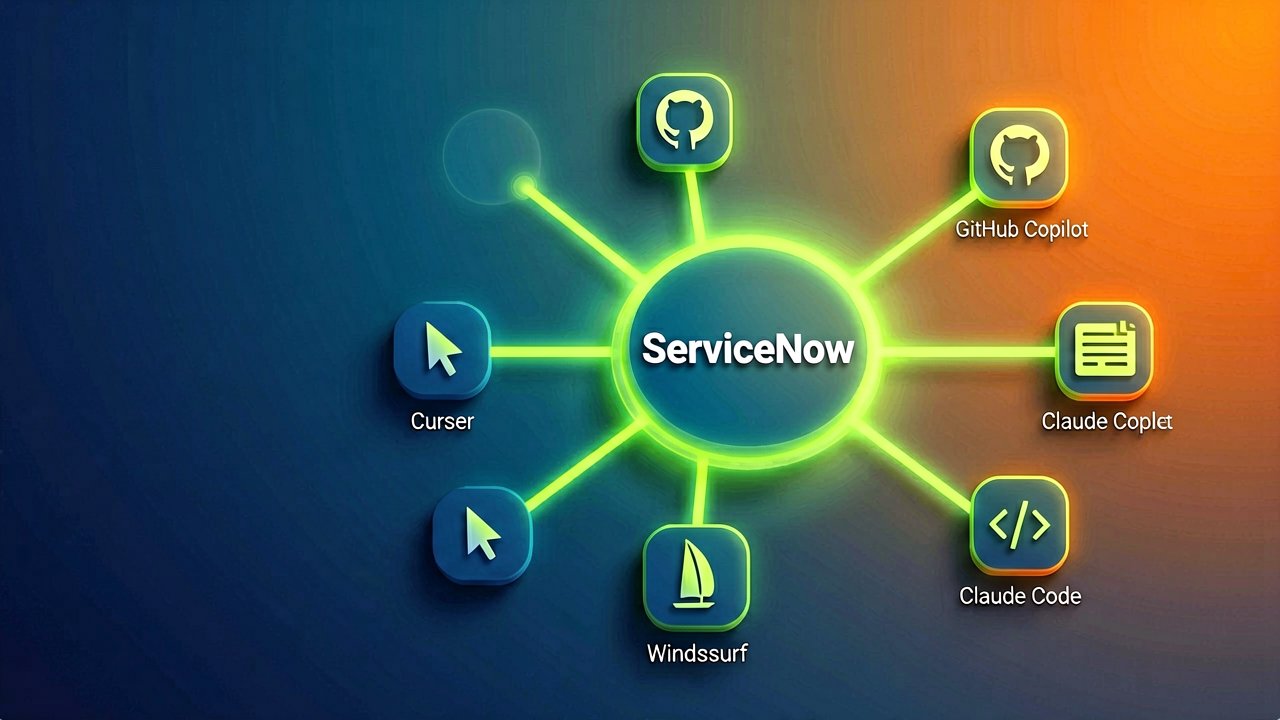
At Knowledge 2026, ServiceNow announced that Build Agent is now generally available in ServiceNow Studio and extended into four major AI coding environments: Cursor, Windsurf, Claude Code, and GitHub Copilot. The update addresses what the company calls a growing shadow development problem where ungoverned applications multiply faster than IT teams can secure them.
The core announcement comes from ServiceNow's official press release, which details the platform expansion. Developers can now build from any integrated environment with full ServiceNow AI Platform context and governance baked in by default.
Jithin Bhasker, group vice president and general manager of Creator Workflows and App Engine at ServiceNow, framed the issue bluntly: "Vibe coding is transforming how fast people can build. But speed without governance and an enterprise runtime produce apps that too often look ready but aren't." The company's solution embeds governance into the development workflow itself rather than treating it as a post-build checkpoint.
Build Agent's core skills are now available through the ServiceNow SDK, giving developers full platform intelligence anywhere they build. Once deployed to the ServiceNow AI Platform, every application inherits enterprise-grade audit trails, security checks, compliance, scalability, and performance. Developers also get their own sandbox environment to test and validate before going live.
For those who prefer building directly on the platform, Build Agent is now powered by Anthropic models. This enables longer context sessions, so developers can work through entire application builds without losing continuity (a problem that has plagued users for years, frankly). The tool also connects to external partner tools as an MCP Client, pulling design specs from Figma, requirements from Miro, and code context from GitHub.
The physical reality of this integration matters. Instead of context-switching between a chat interface, an IDE, and a separate governance portal, developers now work within their existing environments. The generated code carries platform intelligence about live instances, including existing data models, configurations, and policies. Build Agent can generate complete applications with workflows, catalog items, UI components, and configurations in a single session.
For the millions of customizations enterprises make to their ServiceNow environments each year, Build Agent now works across the entire platform, including out-of-the-box applications, not just custom apps built from scratch. Until now, that work depended on a limited pool of specialized ServiceNow developers, creating backlogs that slowed the business.
App Engine Management Center (AEMC) is now available to all ServiceNow customers at no additional cost. Customers building with Build Agent get deployment approvals, release management, and application lifecycle governance — from AI-assisted development to governed deployment. Build Agent also includes a self-healing test loop that validates generated work against quality gates to help ensure what it produces is reliable and maintainable over time.
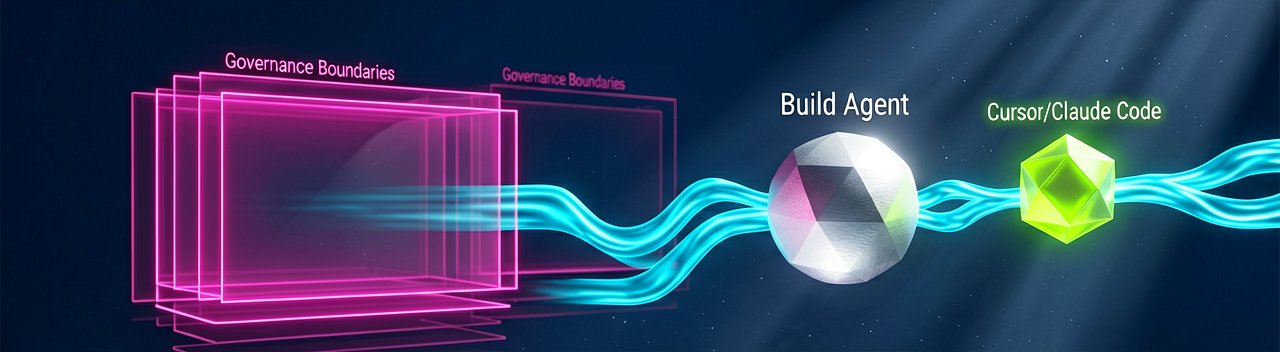
Custom Instructions let customers encode their own development standards into Build Agent, so AI-assisted development reflects each organization's unique patterns and policies. This is where the governance piece becomes tangible rather than theoretical.
The reimagined AI Agent Studio changes how enterprises build AI agents with a guided, conversational creation experience that makes it easier for a broader range of builders to create and deploy AI agents. When developers build custom applications with Build Agent, in-app AI agents are now embedded into app workflows by default. These agents answer questions, surface insights, and take action on behalf of end users, all within the context of the application and under full AI Control Tower oversight.
Independent reporting from Las Vegas Sun corroborates the announcement timeline and scope of the changes made at Knowledge 2026.
The market context matters here. AI coding tools have made it faster than ever to generate code, but applications built outside governed platforms often introduce risk, create technical debt, and fail to meet compliance requirements. Every app built but never adopted is wasted AI investment. At the same time, platform administrators, business analysts, and citizen developers, the people closest to business problems, have lacked AI-native tools that make it easy to build.
ServiceNow addresses both challenges by expanding who can build enterprise applications, while helping ensure everything built meets enterprise standards by default. The company is essentially trying to solve the shadow IT problem before it happens rather than cleaning up the mess afterward.
Whether this actually reduces technical debt or just accelerates the creation of more governed technical debt remains to be seen. The real test will be whether enterprises can balance speed with control without creating new bottlenecks in the approval process.
Artūras Malašauskas is an AI Systems Integrator with 20+ years of production-grade web engineering experience. He has designed, shipped, and scaled enterprise Python/PHP systems for logistics, SaaS, and public-sector clients. For the past year, he has focused exclusively on AI integrations: deploying open-source LLMs, building generative media pipelines (image, audio, video), and engineering multi-agent workflows for real production environments. His standard: reproducibility, security, cost-efficient inference—no vaporware. He documents and evaluates emerging AI tooling, separating verified capabilities from marketing noise. Technical editor at: muza-ai.eu, ai-verslas.lt, ai-naujinos.lt Connect on LinkedIn
Comments