Atomic Heart Director Rejects AI Dependency, DLSS 5 Still Under Review
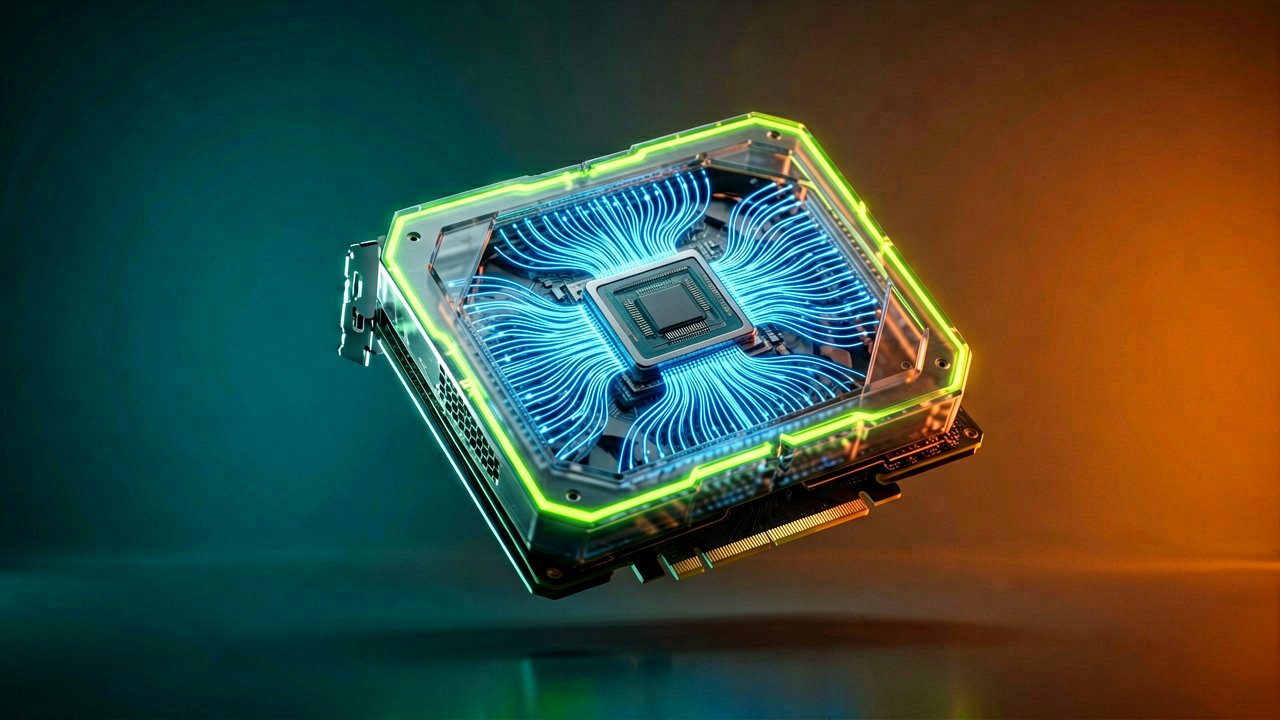
Mundfish founder and CEO Robert Bagratuni has made his position clear on two of gaming's most contentious topics: generative AI development tools and Nvidia's DLSS 5 rendering technology. The studio behind Atomic Heart is taking a measured stance that prioritizes human creativity over automated workflows, even as the industry rushes toward neural rendering.
During an interview with Wccftech, Bagratuni explained that while the team has researched AI systems for pre-production tasks like concept iteration and prototyping, they've decided against integrating these tools into their daily pipeline. The studio is currently developing Atomic Heart 2 and The Cube, an MMORPG shooter, without relying on AI-generated assets.
"Despite the obvious advantages of AI, we are confident that our team can achieve massive success without relying on it daily," Bagratuni stated. He added that the company continues monitoring AI evolution and doesn't rule out future adoption if the technology proves genuinely useful. The distinction matters: AI as a tool versus AI as a replacement for artists, writers, and developers.
This philosophy extends to rendering technology as well. Atomic Heart already supports DLSS Super Resolution and Frame Generation, making players curious about DLSS 5 integration. Bagratuni described the new technology as "a very new and highly promising technology" but stopped short of confirming support. The studio is evaluating whether it would actually benefit players before making any decisions (a problem that has plagued users for years, frankly).

The cautious approach reflects broader industry tensions. DLSS 5's neural rendering feature has sparked debate among developers. Kingdom Come: Deliverance director Daniel Vávra called it "just a little uncanny beginning." Liquid Swords, the studio behind Samson, reported that DLSS 5 doesn't seem production-ready just yet. These concerns aren't theoretical—players can feel the difference when AI-generated frames introduce visual artifacts or inconsistent motion blur during fast camera turns.
From a technical perspective, the decision makes sense. DLSS 5 represents a shift from frame interpolation to full neural rendering, where the AI generates more of the image rather than just smoothing existing frames. This introduces new variables: texture fidelity, edge consistency, and how the technology handles complex particle effects or dynamic lighting scenarios. Testing these elements in a production environment requires time and resources that studios may not have available.
Bagratuni's comments also touch on the economics of game development. AI tools promise faster iteration cycles, but they also introduce new costs: licensing fees, training data requirements, and the need for specialized technical staff to manage the systems. For a studio like Mundfish, which has already proven it can deliver a commercially successful title without these tools, the ROI calculation becomes less compelling.
The physical reality of game development matters here too. Artists spend hours tweaking shader parameters, animators adjust keyframes by milliseconds, and level designers place props with deliberate precision. AI-generated alternatives might speed up initial drafts, but they often require extensive manual refinement to match the studio's quality standards. The time saved in concept generation can be lost in cleanup work.

Secondary reporting from PC Guide corroborates the timeline and scope of Mundfish's position. The studio's current projects will likely ship without DLSS 5 support, though that could change by the time Atomic Heart 2 reaches production maturity. The technology landscape shifts quickly in gaming.
Whether users actually pay for AI-enhanced development remains the real question. Studios marketing AI integration as a selling point have had mixed results. Players care about performance, stability, and visual fidelity—not the tools used to create the experience. Mundfish's stance suggests they understand this distinction better than competitors chasing the latest buzzwords.
The industry will continue pushing AI and neural rendering forward regardless of individual studio decisions. But Mundfish's position offers a counterpoint: human creativity can still drive massive success without daily AI dependency. Whether this approach scales as development costs rise is another matter entirely.
Artūras Malašauskas is an AI Systems Integrator with 20+ years of production-grade web engineering experience. He has designed, shipped, and scaled enterprise Python/PHP systems for logistics, SaaS, and public-sector clients. For the past year, he has focused exclusively on AI integrations: deploying open-source LLMs, building generative media pipelines (image, audio, video), and engineering multi-agent workflows for real production environments. His standard: reproducibility, security, cost-efficient inference—no vaporware. He documents and evaluates emerging AI tooling, separating verified capabilities from marketing noise. Technical editor at: muza-ai.eu, ai-verslas.lt, ai-naujinos.lt Connect on LinkedIn
Comments