Capcom Frames DLSS 5 Backlash As Validation of Original Character Design
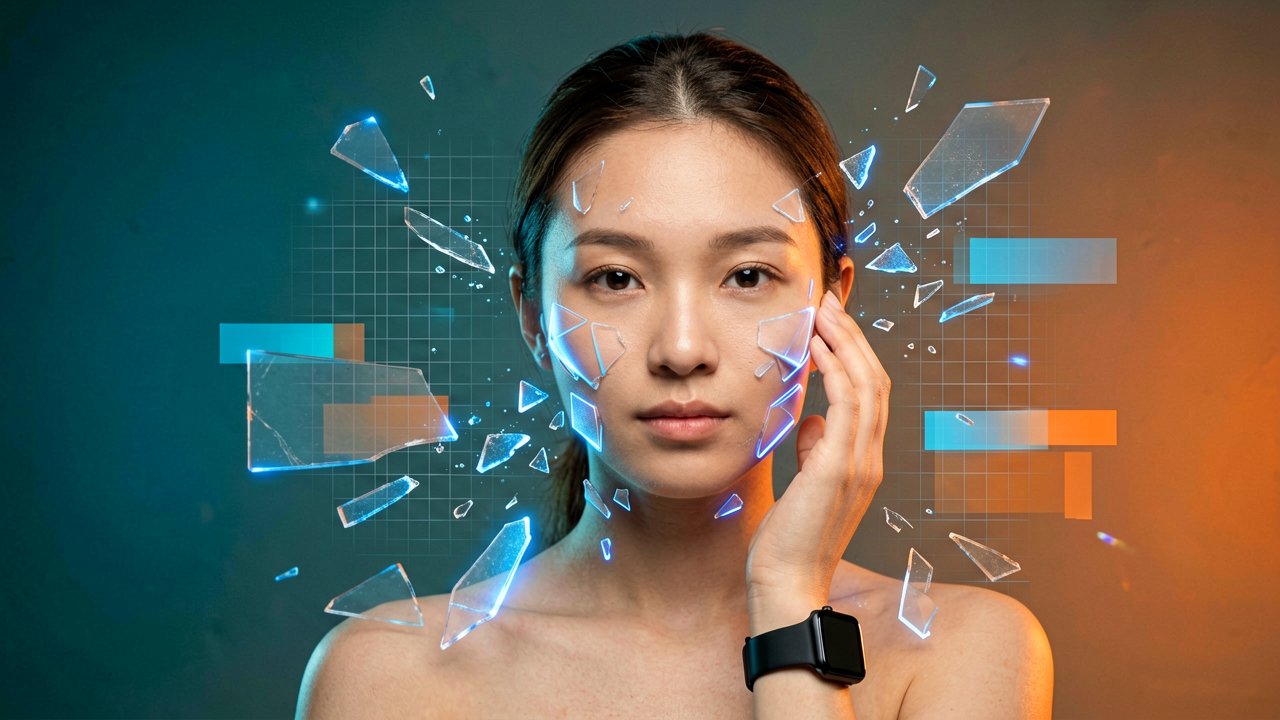
Capcom producer Masato Kumazawa has taken an unusual stance on the Nvidia DLSS 5 controversy, describing the backlash against the AI-altered version of character Grace Ashcroft as a positive signal. The statement emerged during an interview with Eurogamer where Kumazawa discussed development insights for the survival horror franchise's latest entry.
The core claim is straightforward: player outrage confirmed the original design resonated. "The fact a lot of players commented they really liked the original design of Grace and didn't want to see it changed was a positive," Kumazawa said. He added that the strong preference demonstrates Grace quickly established herself as a fan favorite. (Which is, frankly, the only reasonable interpretation of this situation.)
Grace Ashcroft debuted as one of two playable characters in Resident Evil Requiem, which launched in February 2026. The character shares screen time with Leon S. Kennedy, yet fans gravitated toward her design. According to Kumazawa, this attachment is precisely why the AI-altered version revealed by Nvidia in March 2026 triggered such a negative reaction. The Dataconomy report documents the producer's full comments on the matter.
The DLSS 5 showcase attempted to demonstrate next-generation visual capabilities but faced immediate criticism across multiple titles. Resident Evil Requiem became the focal point of dissatisfaction. Players described the AI version of Grace's face as resembling social media filters rather than intentional character design. One comment read, "This is horrendous." Another stated, "I love seeing my comfort character turned into a sloppy AI mess." The physical reality of this experience matters: when a player loads into a scene expecting a familiar character model, the uncanny valley effect of AI-generated facial features creates immediate visual friction.
Independent reporting from IGN corroborates the timeline and scope of Kumazawa's remarks. The outlet confirms the producer did not comment directly on Capcom's involvement in the DLSS 5 reveal itself. This distinction is important. Some Capcom developers reportedly had no advance knowledge that Resident Evil Requiem would feature in Nvidia's showcase. The disconnect between game developers and technology partners during such announcements creates awkward positioning for studios.
Bethesda also responded to the broader backlash, stating its artists would gain more control over the technology moving forward. This suggests the controversy extended beyond a single studio. Multiple publishers faced similar criticism when their games appeared in the DLSS 5 reveal video. The pattern indicates a wider industry concern about AI-generated character representations.
Looking ahead, Capcom has outlined its AI strategy. The company plans to employ AI to aid game development but intends to avoid generative AI for creative assets. Kumazawa reassured players that Grace would not receive an AI-generated makeover in the near future. This distinction between development tools and generative content remains a critical boundary for many studios navigating the technology.
The practical implications for players are limited but meaningful. Those who purchased Resident Evil Requiem can expect the original character models to remain unchanged. The controversy itself, however, highlights a tension between technology companies showcasing capabilities and game studios protecting their creative work. When a tech giant uses a character model without explicit coordination, the resulting friction becomes a public relations problem for both parties.

Whether this reframing actually helps Capcom's position remains uncertain. Calling backlash a positive is a clever spin, but it doesn't address the underlying issue of how third-party technology companies use game assets for marketing. The real question is whether players will trust studios that allow their work to be altered in such showcases, regardless of how producers frame the outcome.
Artūras Malašauskas is an AI Systems Integrator with 20+ years of production-grade web engineering experience. He has designed, shipped, and scaled enterprise Python/PHP systems for logistics, SaaS, and public-sector clients. For the past year, he has focused exclusively on AI integrations: deploying open-source LLMs, building generative media pipelines (image, audio, video), and engineering multi-agent workflows for real production environments. His standard: reproducibility, security, cost-efficient inference—no vaporware. He documents and evaluates emerging AI tooling, separating verified capabilities from marketing noise. Technical editor at: muza-ai.eu, ai-verslas.lt, ai-naujinos.lt Connect on LinkedIn
Comments