Roblox Reality Balances Generative AI With Creator Control

On April 29, Roblox teased a new product called Roblox Reality, which the company plans to roll out for creators later this year or in early 2027. It's less of a single product and more of a combination of tools that roll up into a new way for creators to build experiences on the platform — a "hybrid architecture" system intended to help Roblox creators build photorealistic experiences.
Using a tool called the Roblox Video Model, creators will be able to layer AI-generated video graphics over the game mechanics and core architecture they build with Roblox's game engine. This approach attempts to solve a fundamental problem in the industry: how to deliver hyperrealism at scale while keeping it accessible to developers large and small, and on broadly available consumer hardware.
"Over the last year or so, both internal and external research started pointing to some techniques where game state doesn't have to live in the video models — the game state can come from the game engine, and that's when gameplay can be introduced into video models," said Anupam Singh, senior vice president at Roblox, in an interview with GamesBeat.
Roblox Reality is underpinned by generative AI — but Singh made it clear that any content generated by the Roblox Video Model will be subordinate to content directed by creators using Roblox's game engine, preserving creators' original intent. He said the Roblox Video Model is trained on "various open source video models," and on "internet-scale video data."

"It uses generative AI in the sense that there is a core video model that is generating the pixels," Singh said. "But it is differentiated from classical generative AI because it is asking another entity on the state of the world, so it can't change the world too much."
Notably, Roblox's official blog post announcing Roblox Reality did not make a single mention of the terms "artificial intelligence" or "AI," although AI-generated pixels are a core element of the Roblox Video Model. Singh said that this messaging choice was not intentional, but acknowledged Roblox players' concerns over the encroachment of AI on the creativity of the platform's developers and flagged the subordinate nature of the Roblox Video Model as one deliberate step taken by the company to address these worries.
"The agency lies with the creators," Singh said. "And whenever you say 'generative AI,' an impression is given that, 'oh, you're going to take my game and you will completely change it' — which we absolutely do not want."
After last week's announcement, some Roblox creators and community observers criticized Roblox's photorealistic video product for misunderstanding the culture of the platform, pointing out that the majority of players and creators appear to prefer Roblox's typical blocky and cartoonish graphics. Singh acknowledged that the number of creators building photorealistic experiences on Roblox is currently relatively low, but said that Roblox Reality will lay the groundwork for more creators to gradually dip their toes in realistic graphics as the platform's player base ages up.
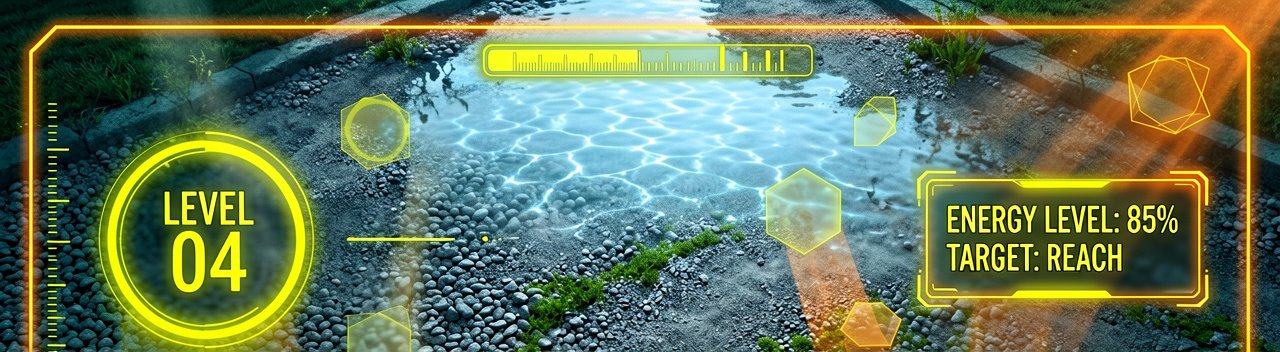
"We will communicate to the community that 'this is an enhancement to the traditional game engine that you've been asking for,' — whether it is water, clouds, or grass, those are the things you sometimes spend too much time building," Singh said. "Instead, offload it to us, the way we have offloaded safety, infrastructure, and the economy."
Singh also provided more clarity on David Baszucki's statement that "Roblox Reality will not be free" during Roblox's Q1 2026 earnings call on April 30. The subscription will be paid by players, meaning the launch of Roblox Reality will not mean any additional fees on the creator side. Players who opt in will pay a fee to help run server infrastructure supporting Roblox Reality, with players who don't pay the subscription accessing non-upscaled versions of the games they play.
The technical architecture behind this is worth examining. According to Roblox's official announcement, the system combines the distributed Game Engine's structured simulation with edge-based Video World Models for supersampling. Core world state is durably and efficiently stored on the server to ensure consistency across clients and support consistency over time, sessions, and days using cost and space-efficient storage.
Multiplayer gameplay is supported via strong server authority for fairness and consistency, alongside speculative client-side simulation to achieve low latency. For rendering, cloud-based level of detail (LOD) and compositing systems generate high-fidelity assets delivered via a content delivery network (CDN). The Roblox Video Model (Super Upsampler) leverages rendered video and rich data model context to produce stochastic visuals and striking realism, operating on the edge for every player with optimal performance powered by cloud-edge GPU infrastructure.
But there are real constraints here. The official documentation acknowledges that operating Video World Models within the video latent space faces specific technical limitations: the process is currently cost-intensive, and achieving high-fidelity, real-time performance, such as 2K resolution at 60 Hz, remains a development challenge. Crucially, with the world state represented in video space, these models are not currently multiplayer.
A key constraint is the fidelity of simulation versus visual plausibility: Merely seeing 500 people moving in a video does not imply they are individualized agents or "avatars with brains." It is not anticipated that the current video model scale will inherently support the complex, individualized agent simulation required for a true multiplayer experience. (This is where the rubber meets the road, and honestly, it's where most of these AI video demos fall apart.)
This capability is crucial when managing a living crowd of 20,000 people reacting in real time. But, a Video World Model alone cannot reliably manage the interactions between multiple players over a two-hour session. A world model struggles with strict rule enforcement and persistent state due to a lack of long-term memory and consistent logic. Video World Models lack user input control data, which is why playing a Video World Model is not fun.
The interactive video models we're seeing today are impressive, but basically vivid dreams—spectacular to look at, but fleeting and incredibly lonely. They lack interactivity, challenge, reward, and persistence—anything that makes a game a game. Pure neural world models alone cannot deliver on the promise of an expansive, persistent multiplayer experience. While neural world models are impressive in many ways, they fail in many critical areas. Some of these include coherence over time in a single session, long-term memory across sessions, latency, and fine-grained creator control.
Over the next decade, high-end game engine outputs will continue to advance in realism, but so will the requirements for developer sophistication and consumer hardware. The challenge the industry has not been able to address to date is how to deliver hyperrealism at scale, while making it accessible to developers large and small, and on broadly available consumer hardware.
"It is all about a small studio wanting to build something amazing, and everything that we can take off their plate so that they can focus on amazing gameplay," Singh said. "And we are humble enough to know that our creators know what great gameplay is."
Whether players actually want photorealistic graphics on a platform known for its blocky aesthetic remains an open question. The subscription model means creators don't pay, but it also means the feature's adoption depends entirely on whether players see enough value to upgrade. That's the real test here.
Artūras Malašauskas is an AI Systems Integrator with 20+ years of production-grade web engineering experience. He has designed, shipped, and scaled enterprise Python/PHP systems for logistics, SaaS, and public-sector clients. For the past year, he has focused exclusively on AI integrations: deploying open-source LLMs, building generative media pipelines (image, audio, video), and engineering multi-agent workflows for real production environments. His standard: reproducibility, security, cost-efficient inference—no vaporware. He documents and evaluates emerging AI tooling, separating verified capabilities from marketing noise. Technical editor at: muza-ai.eu, ai-verslas.lt, ai-naujinos.lt Connect on LinkedIn
Comments