SAP Acquires Prior Labs for €1 Billion AI Lab Investment

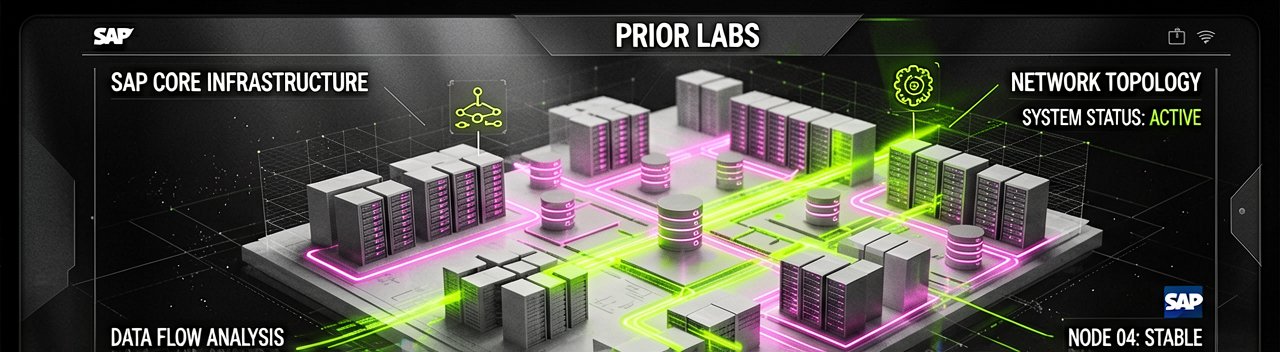
Enterprise software giant SAP has entered a definitive agreement to acquire Prior Labs, the German AI startup pioneering Tabular Foundation Models (TFMs). The transaction, announced May 4, 2026, includes a commitment of more than €1 billion over four years to scale Prior Labs into what SAP describes as a globally leading frontier AI lab for structured business data.
The deal remains subject to regulatory approval and is expected to close in Q2 or Q3 of 2026. Prior Labs will continue operating as an independent entity, maintaining its brand, research mission, and open-source commitments. This structure mirrors how Google or Microsoft might handle a similar acquisition, though SAP's approach keeps the research velocity intact (which matters more than most corporate integrations realize).
According to the official SAP announcement, the acquisition accelerates SAP's existing work in TFMs that began with SAP-RPT-1. The company recognizes that large language models struggle with structured business data—tables, numbers, and statistics require different architectural approaches than natural language.
TFMs are purpose-built for this reality. They can predict business outcomes based on tabular data: payment delays, supplier risks, upsell opportunities, customer churn. The physical difference matters. A data analyst clicking through spreadsheets no longer needs to wait hours for automated machine learning pipelines. TabPFN-2.6, Prior Labs' current flagship model, matches the accuracy of a four-hour pipeline instantly, in a single model.

Philipp Herzig, SAP CTO, stated the company recognized early that the greatest untapped opportunity in enterprise AI wasn't LLMs. It was AI built for the structured data running the world's businesses. Combining Prior Labs' frontier model work with SAP's enterprise data and customer reach becomes the strategy for leading this category globally.
Prior Labs' TabPFN has accumulated over 3 million downloads as an open-source tool for tabular AI. The model series, published in Nature, set state-of-the-art benchmarks across hundreds of independent academic studies. Frank Hutter, Noah Hollmann, and Sauraj Gambhir lead the research team, with scientists recruited from Google, Apple, Amazon, Microsoft, and CERN.
The scientific advisory board includes heavyweight names. Yann LeCun, ACM A.M. Turing Award winner and executive chairman at Advanced Machine Intelligence, will serve alongside Bernhard Schölkopf, director of Max Planck Institute for Intelligent Systems and ELLIS president. This isn't typical corporate advisory board padding—these are researchers who define the field.
From a user experience perspective, the technology enables conversational interfaces layered on top of predictive models. Business users can ask questions in natural language, generate or select datasets, and run "what-if" scenarios without needing data science expertise. The friction of traditional ML workflows—training, validation, deployment cycles—gets compressed into in-context learning. Users provide data records and receive instant predictions without model training.
GDPR compliance becomes easier when a single TFM adapts to any business use case on the fly. No need to train separate models for each customer or region. The model learns statistical reasoning directly from data, understanding tables natively rather than treating them as text to be tokenized.
Looking ahead, SAP and Prior Labs plan to deliver TFMs with superior predictive capability that power agentic AI systems. These systems combine tables, language, and images to reason, integrate domain knowledge, infer causality, and adapt dynamically. The distinction between correlation and causation matters here. Answering "what will happen" is useful. Answering "why it will happen" is transformative.
Prior Labs' official blog post confirms the independence structure. The company will retain its headquarters in Freiburg, Germany, with offices in Berlin and New York City. Customer relationships continue. The Discord community, GitHub repository, and academic collaborations all stay intact. SAP's explicit support for the open-source strategy means the developer ecosystem won't fragment.
The resource envelope changes dramatically. Research problems that previously sat outside feasibility become tractable. Models get tested against messy, high-stakes enterprise data at scales that sharpen the science. The broader research community gains a frontier lab in Europe, working in the open on a category of AI underinvested relative to its real-world importance.
Terms of the deal were not disclosed beyond the €1 billion investment commitment. This is standard for pending transactions, but the investment scale signals SAP's conviction. The company stands at the nexus of business and technology, with over 50 years of enterprise trust spanning finance, procurement, HR, supply chain, and customer experience.
Whether this translates to actual enterprise value remains the real question. Many AI acquisitions promise transformational capabilities that take years to productize. The open-source commitment helps, but regulatory approval, integration challenges, and market adoption all introduce friction. The technology works on benchmarks. Enterprise deployment is different.
Time will tell if the €1 billion investment delivers proportional returns. For now, the structured data category has a new champion. Whether that changes how businesses actually use AI depends on execution, not announcements.
Artūras Malašauskas is an AI Systems Integrator with 20+ years of production-grade web engineering experience. He has designed, shipped, and scaled enterprise Python/PHP systems for logistics, SaaS, and public-sector clients. For the past year, he has focused exclusively on AI integrations: deploying open-source LLMs, building generative media pipelines (image, audio, video), and engineering multi-agent workflows for real production environments. His standard: reproducibility, security, cost-efficient inference—no vaporware. He documents and evaluates emerging AI tooling, separating verified capabilities from marketing noise. Technical editor at: muza-ai.eu, ai-verslas.lt, ai-naujinos.lt Connect on LinkedIn
Comments