DARPA Seeks Materials That Compute, Sense, and Act Without Centralized Processors
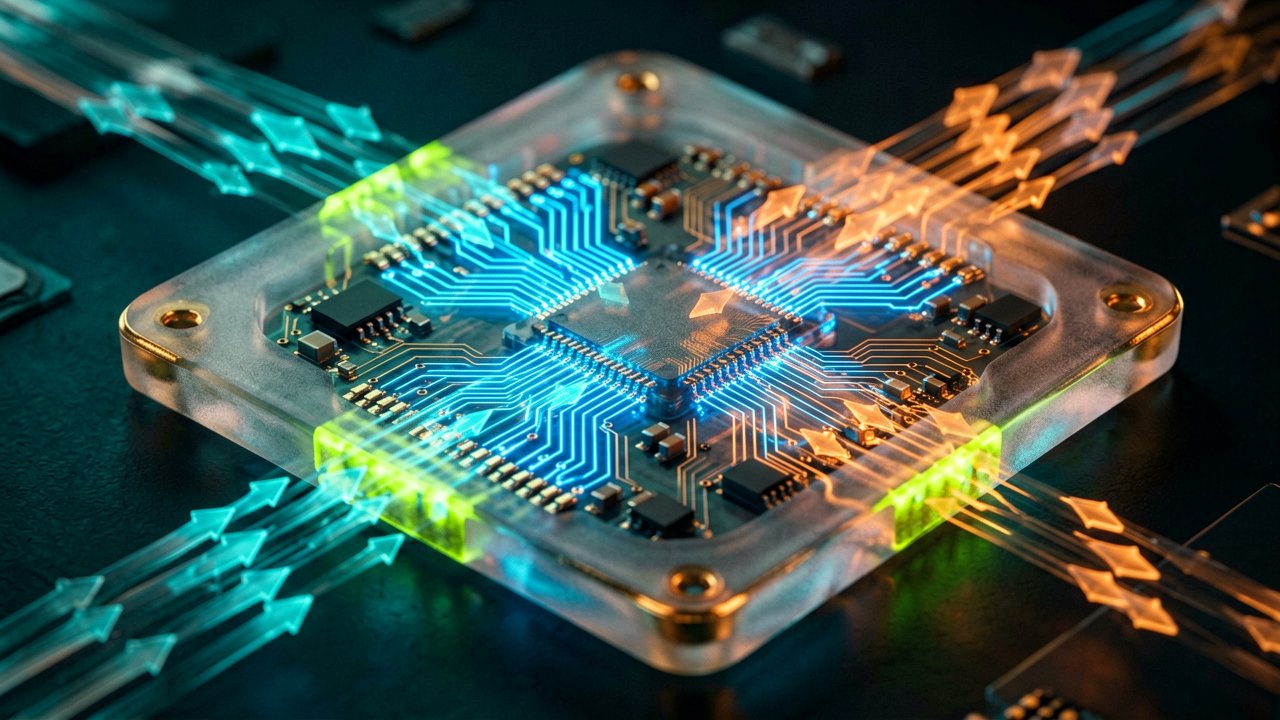
Defense research agency DARPA has issued a Request for Information targeting a fundamental shift in robotics: embedding intelligence directly into the physical materials of robotic systems. The RFI, designated Special Notice DARPA-SN-26-76, calls on researchers to help define materials capable of sensing, adapting, and acting in real time without relying on continuous external computation or communication links.
The announcement comes through DARPA's official news channel, which frames the initiative as a response to hardware limitations rather than software constraints. Documentation from the agency explains that systems depending on constant data processing, high-bandwidth communication, and centralized compute face delays, power constraints, and vulnerabilities that can prevent mission success in complex environments.
Commercial robotics has largely centered on building systems that operate alongside people, emphasizing familiar shapes and interfaces. National security applications demand something different. Robotic systems for defense must operate in extreme, unpredictable, and adversarial environments with limited communication and little opportunity for human intervention. In these conditions, performance is not defined by how much data a system can process, but by how quickly and reliably it can respond.
DARPA Program Manager Julian McMorrow articulated the core problem clearly. "Today's robots are often limited by the need to sense, process, and act as separate steps," McMorrow said. "We are interested in collapsing that loop by embedding intelligence directly into the hardware, so systems can respond in real time without relying on constant data movement."
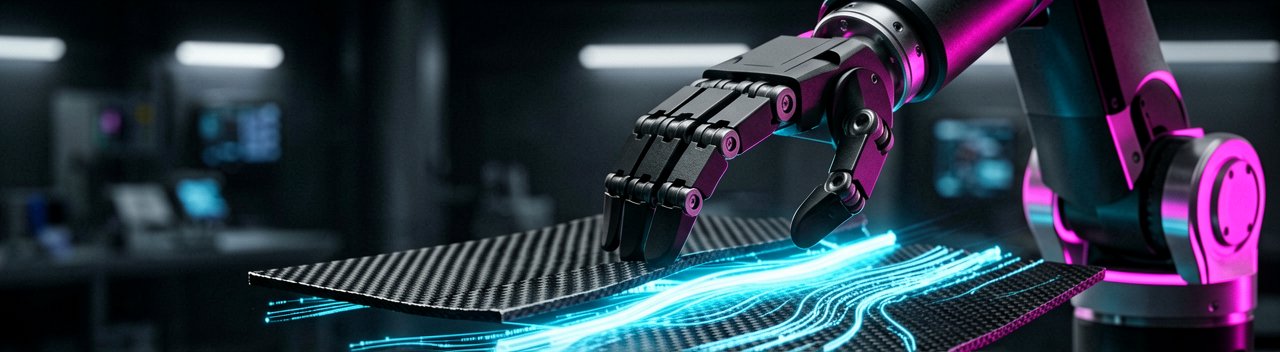
This approach, which DARPA terms "physical intelligence," embeds sensing, computation, and actuation directly into materials, components, and structures. Instead of routing information through centralized processors, future systems could respond through their physical design, enabling faster, more efficient, and more resilient operation in dynamic environments. The concept is less about adding AI to robots and more about making the robot itself the processor (a distinction that matters when milliseconds count in contested environments).
The RFI targets foundational advances at the material, component, and kernel level, with emphasis on two specific areas. First, actuation and sensing: DARPA wants materials and structures that integrate sensing, actuation, and even elements of control into the same physical substrate. Second, dynamic and adaptive closed-loop compute: rather than relying on centralized processors and large data flows, the agency is exploring materials that can perform computation directly. Embedding compute within sensors and actuators could enable real-time decision-making with minimal latency, reduced power demands, and the ability to adapt continuously to changing conditions.
HPCwire reported the RFI details on May 1, 2026, noting that while the RFI itself is exploratory, it represents a first step toward an invite-only, in-person workshop planned for summer 2026. Selected participants will have the chance to present their ideas, engage with DARPA, and inform future program directions.
Responses to the RFI are due by May 27, 2026, at 2 p.m. ET. Submissions will help inform future DARPA programs and guide the agenda for the upcoming workshop. Participation in the workshop will be limited, with invitations extended to respondents whose ideas align with the agency's technical interests and mission needs. Those selected may be asked to present their concepts and engage directly with DARPA program managers and peers across the research community.
DARPA is not seeking incremental improvements or system-level concepts divorced from enabling hardware. The focus is on breakthroughs that could fundamentally reshape what robotic systems can do. Additionally, while industry has emphasized human-like form factors designed to operate in human environments, the agency is interested in systems optimized for mission needs. Depending on the application, this could include designs that are smaller, larger, softer, or structurally unconventional, prioritizing performance and adaptability over familiarity.
The physical reality of this shift matters. Imagine a robotic arm that doesn't need to send sensor data to a central processor, wait for computation, then receive actuation commands. Instead, the material itself detects pressure, processes the response, and adjusts stiffness or shape in microseconds. The latency disappears because the intelligence lives in the substrate, not in a separate compute unit. This is not science fiction—it's the target DARPA is setting for the research community.
More broadly, this call underscores DARPA's focus on the hardware foundations of autonomy. Breakthroughs in this area could enable a new generation of systems capable of operating where today's technologies fall short. Whether the research community can deliver materials that truly compute, sense, and act as one integrated system remains the real question.
Artūras Malašauskas is an AI Systems Integrator with 20+ years of production-grade web engineering experience. He has designed, shipped, and scaled enterprise Python/PHP systems for logistics, SaaS, and public-sector clients. For the past year, he has focused exclusively on AI integrations: deploying open-source LLMs, building generative media pipelines (image, audio, video), and engineering multi-agent workflows for real production environments. His standard: reproducibility, security, cost-efficient inference—no vaporware. He documents and evaluates emerging AI tooling, separating verified capabilities from marketing noise. Technical editor at: muza-ai.eu, ai-verslas.lt, ai-naujinos.lt Connect on LinkedIn
Comments