Altera Releases FPGA AI Suite 26.1.1 with Deterministic Edge AI Support
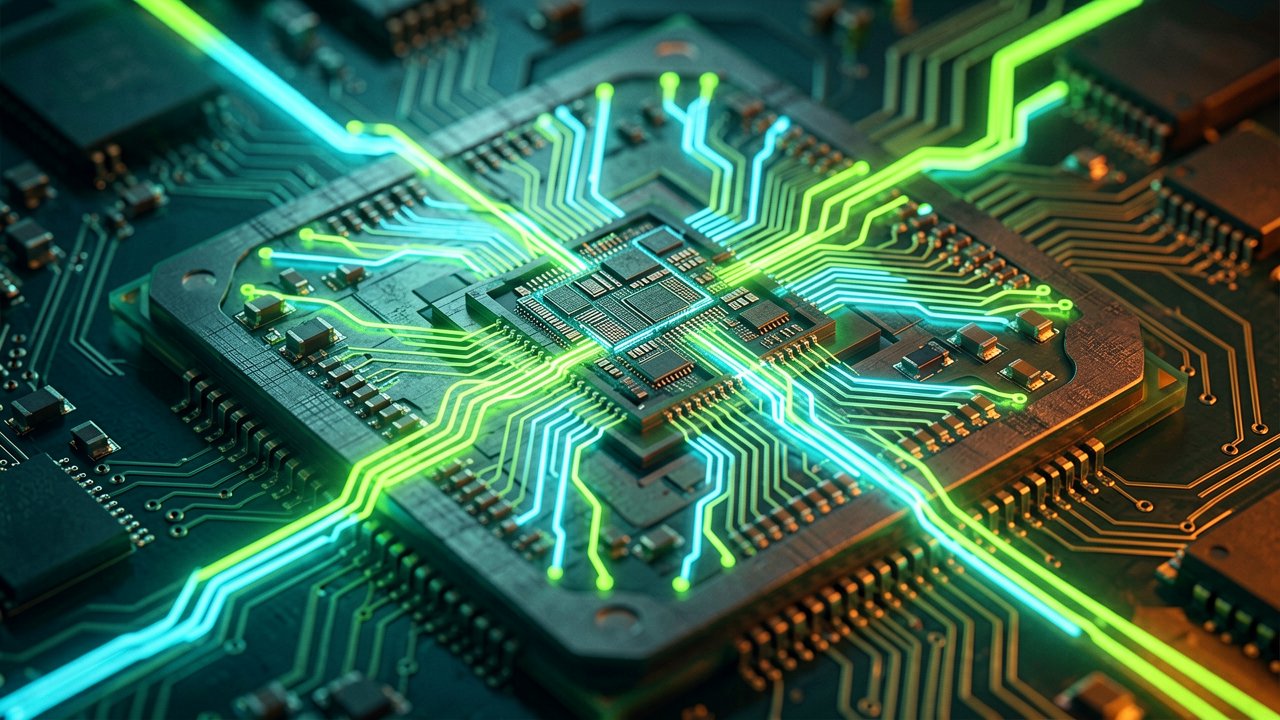
Altera announced FPGA AI Suite 26.1.1 on April 30, 2026, marking a significant shift in how developers deploy AI models onto programmable hardware. The update targets physical AI systems—robotics, autonomous machines, real-time sensor processing—where predictable latency isn't optional. It's the difference between a robot stopping before hitting an obstacle or not.
The core innovation is a spatial compiler architecture that maps neural networks directly onto Agilex FPGA hardware. Instead of traditional sequential processing, the new approach uses streaming dataflow. This means data moves through the chip in parallel streams rather than waiting for one operation to complete before starting the next. The result: deterministic execution with lower power consumption and higher throughput.
According to Altera's official press release, the spatial mapping delivers ASIC-like performance while maintaining reprogrammability. That's the FPGA advantage—developers can still update models without respinning silicon. For physical AI applications, this matters because workloads evolve. A warehouse robot trained on one layout might need adjustment when the facility reconfigures.
Independent coverage from HPCwire confirms the release timeline and technical specifications. The publication notes the suite supports industry-standard frameworks including PyTorch and TensorFlow, plus OpenVINO for model optimization. Developers won't need to abandon their existing toolchains.
Physical interaction with these systems reveals why determinism matters. In a robotics application, sensor data arrives continuously—camera feeds, LiDAR readings, proximity sensors. The FPGA processes this stream in real time. With sequential processing, latency varies based on queue depth. With spatial mapping, the latency becomes predictable. (Predictable latency is the kind of thing that keeps engineers from losing sleep at 2 AM.)
Venkat Yadavalli, head of Altera's Business Management Group, framed the release as part of a broader strategy. "FPGA AI Suite 26.1.1 reflects our broader strategy to make FPGA-based AI implementation more accessible and scalable," he said. The quote emphasizes accessibility, which suggests Altera is targeting developers who previously found FPGA development too complex.
The software supports Quartus Prime Pro Edition 26.1 and is available for immediate download. Early-stage development gets a practical break: license-free operation for up to 100,000 consecutive inferences. That's enough for prototyping and testing without immediate licensing overhead. The barrier to entry drops noticeably.
Agilex FPGAs come in various capacities and form factors, supporting different edge deployment scenarios. A small embedded controller might use a lower-capacity chip, while a server-class edge node could deploy a higher-density variant. The same software stack works across the portfolio, which simplifies development workflows.
Physical AI systems demand more than raw inference speed. They need safety, security, and reliability built into the hardware layer. FPGAs provide reconfigurability, but that flexibility introduces complexity. The FPGA AI Suite abstracts some of that complexity away, though developers still need to understand the underlying architecture to optimize effectively.
Competitors in the edge AI space include GPU-based solutions from NVIDIA and ASIC-based accelerators from various vendors. Each approach has trade-offs. GPUs offer high throughput but variable latency. ASICs deliver fixed performance but zero flexibility. FPGAs sit in the middle—deterministic enough for safety-critical applications, flexible enough for evolving workloads.
The spatial compiler represents a fundamental architectural choice. Traditional compilers optimize for general-purpose processors. Spatial compilers optimize for parallel hardware structures. This distinction becomes visible when examining the actual deployment. Developers see different resource utilization patterns, different power profiles, different thermal characteristics.
Whether this actually displaces GPU-based edge AI depends on several factors. The learning curve for FPGA development remains steep compared to GPU programming. The ecosystem around PyTorch and TensorFlow is more mature for GPU deployment. Altera's approach requires developers to understand hardware constraints that GPU developers often ignore.
For applications where determinism is non-negotiable—autonomous vehicles, industrial robotics, medical devices—the FPGA advantage becomes clearer. A self-driving car needs to process sensor data within a guaranteed time window. A manufacturing robot needs to stop within a guaranteed distance. These aren't optimization problems. They're safety requirements.
The release timing aligns with broader industry trends. Edge AI deployment is accelerating as cloud latency becomes unacceptable for real-time applications. 5G networks enable more edge compute, but the compute itself needs to be efficient. Power consumption matters when deploying hundreds of edge nodes across a facility.
Documentation and support materials will determine adoption rates. A powerful tool is useless if developers can't figure out how to use it. Altera's claim of accessibility needs to be validated by actual developer experience, not just marketing language.
Whether users actually pay for the flexibility remains the real question. The license-free tier for 100,000 inferences is generous for testing, but production deployments will require licensing. The value proposition needs to justify the cost compared to alternative architectures.
Artūras Malašauskas is an AI Systems Integrator with 20+ years of production-grade web engineering experience. He has designed, shipped, and scaled enterprise Python/PHP systems for logistics, SaaS, and public-sector clients. For the past year, he has focused exclusively on AI integrations: deploying open-source LLMs, building generative media pipelines (image, audio, video), and engineering multi-agent workflows for real production environments. His standard: reproducibility, security, cost-efficient inference—no vaporware. He documents and evaluates emerging AI tooling, separating verified capabilities from marketing noise. Technical editor at: muza-ai.eu, ai-verslas.lt, ai-naujinos.lt Connect on LinkedIn
Comments