GameMaker Launches GMRT Runtime with Claude AI Integration

GameMaker, the 2D game engine owned by Opera, announced a major platform update on April 30, 2026. The release introduces GMRT, a new runtime designed for larger teams and complex projects, alongside integration of Anthropic's Claude Code AI for natural language development workflows.
The announcement came through Opera's official press release, which details the technical scope of the update. GMRT lands on desktop immediately, with mobile and console support scheduled through the remainder of 2026. The runtime is positioned as a response to studios needing capabilities beyond what a closed integrated development environment can provide.
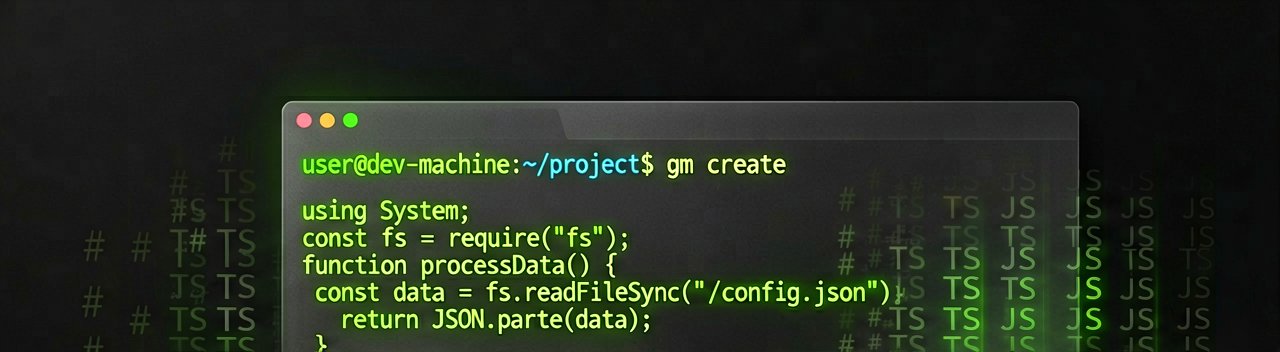
At the core of the AI integration is GM-CLI, a new command-line toolchain that works with both the new GMRT and existing runtimes. Developers can now interact with their projects through terminal commands without opening the visual IDE. Project files are plain text, making them easier to edit and track in Git repositories. This matters for teams running automated build processes that previously required manual intervention.
Claude Code sits inside the CLI, handling routine tasks through natural language prompts. According to Game Developer, users can query project structures, hunt down bugs, and manage build configurations by simply typing what they need. The integration uses standard API access and an MCP Server, with no embedded AI servers running on GameMaker's infrastructure.
Russell Kay, Head of GameMaker, explained the decision to embrace generative AI stems from shifting developer habits. AI-assisted coding has become essential for many creators' daily workflows. Because GameMaker supports everyone from first-time hobbyists to professional studios, the company wanted to reflect that reality while giving users who might benefit from AI the option to use it.
The opt-in approach addresses skepticism toward generative AI highlighted in recent industry surveys. Kay noted that the tools are complementary and can be completely disabled. Users maintain privacy since GameMaker isn't running any embedded AI servers. Purists can continue developing games exactly as they always have. Ultimately, it's up to users how they choose to engage with the tools.
Beyond AI, GMRT addresses specific needs of larger teams through better 3D handling and source-available access to desktop code. Developers can see exactly how their games run under the hood. The source code becomes publicly available for desktop, mobile, and web in Q2 2026. Enterprise users get access to console platform source code as well.
Language support expands significantly with the update. GameMaker's scripting language, GML, isn't going anywhere, but GMRT opens the door to JavaScript, TypeScript, and C#. These languages are planned for addition before the year ends. The tools work seamlessly across both existing and new runtimes, widening the pool of developers who can contribute without retraining.

3D capabilities receive a meaningful overhaul. Developers can now load 3D models directly from Blender via glTF, manage complex environments through a proper scene graph, and work with 3D mathematics that actually does what you need. It's not a full 3D engine, but for studios building stylized or hybrid projects, it no longer feels like a workaround.
The update arrives during a period of explosive growth for the platform. After making its software free for non-commercial use in 2023, GameMaker saw a 20% rise in games created. The move sparked a 63% surge in young users between ages 13 and 17. The engine has been downloaded more than 12 million times since Opera acquired it in January 2021.
Operating within a global game engine sector projected to reach $8.57 billion by 2031, GameMaker continues to hold a notable position in a market currently led by Unity at 40%. By embracing Claude Code, GameMaker positions itself to compete in the new era of AI-driven development alongside similar integrations in Unity and Unreal Engine.
Long-term support planning accompanies the launch. The LTS version establishes a clear path for stable development across five major releases from May 2026 through early 2028. The current GMS2 runtime becomes feature complete, with all new feature requests considered for GMRT moving forward. GMS2 continues receiving SDK updates and critical bug fixes until at least Q1 2028.
IDE plugins receive updates throughout the LTS26 lifecycle. Code Editor 2, Start Page, ProjectTool, and the long-awaited Prefab Builder all get improvements. Developers keen to create their own IDE plugins can expect more details toward the end of the year. The Prefab Builder allows creators to build and share prefabs with others.
GMRT v0.20 arrives in the near future with 99% compatibility functionality, Android target support, and Switch target support. 3D functions improve with model loading, scene graph handling, and better mathematical functions for matrices and quaternions. Simple animations load from glTF files initially, with expanded support coming later.
The CLI tools are open source with an Apache License. They interface with GM projects via API and CLI, allowing interactions from simple build and run commands to complex project creation and event management. This enables continuous integration capabilities that have long been requested by the community.
Whether the AI integration actually improves productivity or just adds another layer of abstraction remains to be seen. The technical foundation is solid, but developers will need to test whether natural language prompts genuinely speed up iteration or just create new debugging challenges. Time will tell if this works for actual production pipelines.
Artūras Malašauskas is an AI Systems Integrator with 20+ years of production-grade web engineering experience. He has designed, shipped, and scaled enterprise Python/PHP systems for logistics, SaaS, and public-sector clients. For the past year, he has focused exclusively on AI integrations: deploying open-source LLMs, building generative media pipelines (image, audio, video), and engineering multi-agent workflows for real production environments. His standard: reproducibility, security, cost-efficient inference—no vaporware. He documents and evaluates emerging AI tooling, separating verified capabilities from marketing noise. Technical editor at: muza-ai.eu, ai-verslas.lt, ai-naujinos.lt Connect on LinkedIn
Comments