Atos Group Unveils Integrated Digital Sovereignty Platform for Regulated AI Workloads

Atos Group announced the global launch of its integrated Digital Sovereignty offering on April 28, 2026, targeting organizations operating in highly regulated sectors where data control and jurisdictional compliance are non-negotiable. The platform combines advisory, deployment, and operational capabilities across cloud infrastructure, cybersecurity, AI systems, and applications.
The press release details an end-to-end approach that helps customers retain authority over their digital assets while managing critical dependencies and disruption risks. Official documentation from Atos outlines four core value propositions: a systematic framework built on open standards, decades of experience in mission-critical sectors, European regulatory expertise, and sovereign cybersecurity products as a foundational layer.
This isn't just another compliance checkbox exercise. The offering embeds sovereignty-by-design across the entire technology stack, from identity management to cryptographic key ownership. Cybersecurity functions as the enforcement layer, with controls implemented, monitored, and evidenced across logging, auditability, and access management. The guardrails extend to AI agents, which is becoming increasingly critical as organizations deploy autonomous systems in regulated environments.
Michael Kollar, Atos Group's digital sovereignty leader and head of Cloud & Modern Infrastructure and Digital Workplace, framed the launch as a response to board-level imperatives. "Digital Sovereignty has become a board-level imperative, especially as AI accelerates dependency and increases exposure across data, systems and supply chains," Kollar stated in the official announcement. The company positions sovereignty as an operational capability rather than a static compliance state.
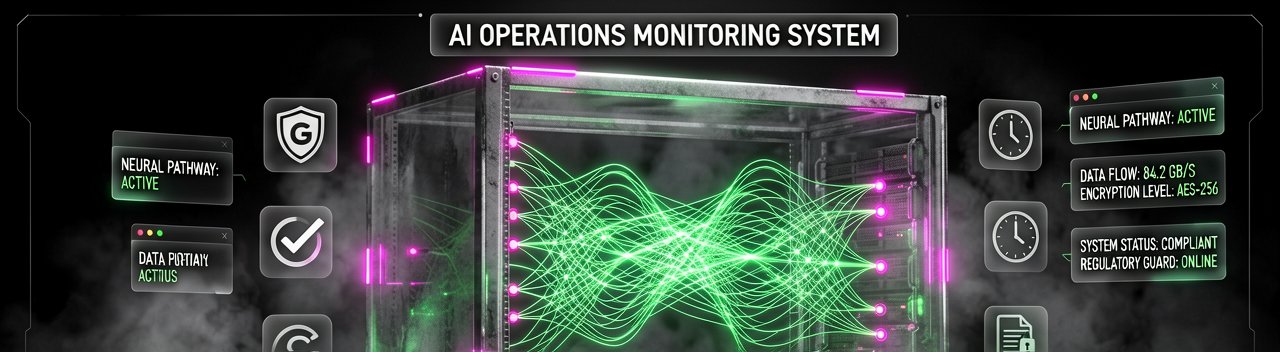
Independent coverage from HPCwire corroborates the scope and timing of the launch. The publication notes the offering is designed for Public Sector, Defense, Financial Services, and Healthcare sectors—industries where regulatory frameworks like the EU AI Act, DORA, and NIS2 create complex compliance landscapes.
The technical architecture draws on Eviden, Atos Group's product and systems brand, for European-developed data encryption products. This includes Eviden KMS for key management and Eviden Data Protect HSM solutions. The combination allows customers to maintain cryptographic control even when leveraging hyperscaler infrastructure—a critical requirement for organizations that cannot accept third-party access to encryption keys.
Atos Group operates with approximately 59,000 employees across 61 countries, generating annual revenue of roughly €7.2 billion. The company runs under two brands: Atos for services and Eviden for products. This dual structure supports the integrated offering, with Atos Amplify, the consulting arm, helping customers assess risk and define target sovereign states. The trade-offs between cost, friction, and time-to-market become explicit during this assessment phase.
The offering complements Atos Sovereign Agentic Studios, launched recently to help organizations move from AI pilots to production under sovereign control. This creates a coherent ecosystem where agentic AI, digital sovereignty, and cybersecurity form three interconnected pillars of the company's Tech Ambition strategy. The integration matters because AI systems introduce new dependency vectors—model provenance, training data jurisdiction, and runtime guardrails all require sovereign oversight.

Implementation requires granular, workload-specific controls rather than blanket policies. Most organizations operate a mix of sovereign and non-sovereign workloads, making graduated sovereignty levels essential. The framework enables portability and reduces vendor lock-in through open standards, though this flexibility comes with operational complexity. (Nobody wants to explain to their CISO why the AI model trained in Frankfurt is now querying a database in Virginia.)
Physical reality matters here. Sovereignty isn't abstract—it's about where servers sit, who holds encryption keys, and whether audit logs can be produced within hours during a regulatory inquiry. The Atos offering addresses these tangible requirements through AWS European Sovereign Cloud integration, AWS Outposts for local processing, and external key store capabilities that give customers single-tenant control.
European anchorage provides legitimacy for delivering sovereignty approaches tailored to other jurisdictions. The company's experience with EU and national public sector requirements positions it to help customers navigate sovereignty requirements across different legal frameworks. This geographic flexibility is increasingly valuable as multinational organizations face divergent regulatory demands.
Whether organizations actually pay for the premium that sovereign infrastructure commands remains the real question. The offering makes dependencies visible and implements enforceable controls, but the cost-benefit analysis varies significantly by sector and workload criticality. Some customers will find the trade-offs acceptable; others may struggle to justify the expense for non-critical systems.
Atos Group's whitepaper on Digital Sovereignty provides additional technical details for organizations evaluating the platform. The company also published documentation on agentic AI governance, which outlines how sovereignty guardrails extend across the full AI stack with automated policy enforcement. These resources help potential customers understand the operational implications before committing to implementation.
The launch arrives as regulatory pressure intensifies across Europe and beyond. Organizations must innovate while meeting increasingly stringent sovereignty, security, and regulatory requirements. For those in regulated industries, this directly impacts modernization velocity. The sovereignty gap—where innovation stalls due to compliance fears—remains a significant barrier that Atos claims to address through its modular framework.
Time will tell if this integrated approach becomes industry standard or remains a premium offering for highly regulated sectors. The technology exists; the question is whether organizations will prioritize control over speed when both cannot be maximized simultaneously.
Artūras Malašauskas is an AI Systems Integrator with 20+ years of production-grade web engineering experience. He has designed, shipped, and scaled enterprise Python/PHP systems for logistics, SaaS, and public-sector clients. For the past year, he has focused exclusively on AI integrations: deploying open-source LLMs, building generative media pipelines (image, audio, video), and engineering multi-agent workflows for real production environments. His standard: reproducibility, security, cost-efficient inference—no vaporware. He documents and evaluates emerging AI tooling, separating verified capabilities from marketing noise. Technical editor at: muza-ai.eu, ai-verslas.lt, ai-naujinos.lt Connect on LinkedIn
Comments